Tax & Incentives · May 7, 2026
Republic Act No. 12023 — the VAT on Digital Services Act — fundamentally changed the Philippines' tax treatment of digital services consumed within its borders. For foreign companies that provide software, streaming content, cloud infrastructure, or online advertising to Philippine consumers, or that purchase these services from foreign providers, understanding the new VAT framework is essential to staying compliant in 2025 and 2026. This guide covers the scope of covered digital services, registration requirements under the BIR's VDS Portal, B2B and B2C compliance pathways, VAT rates and exemptions, penalty exposure, and the practical steps foreign companies must take to address their digital services tax obligations.
Sarah Camille Francisco
Tax & Incentives · May 4, 2026
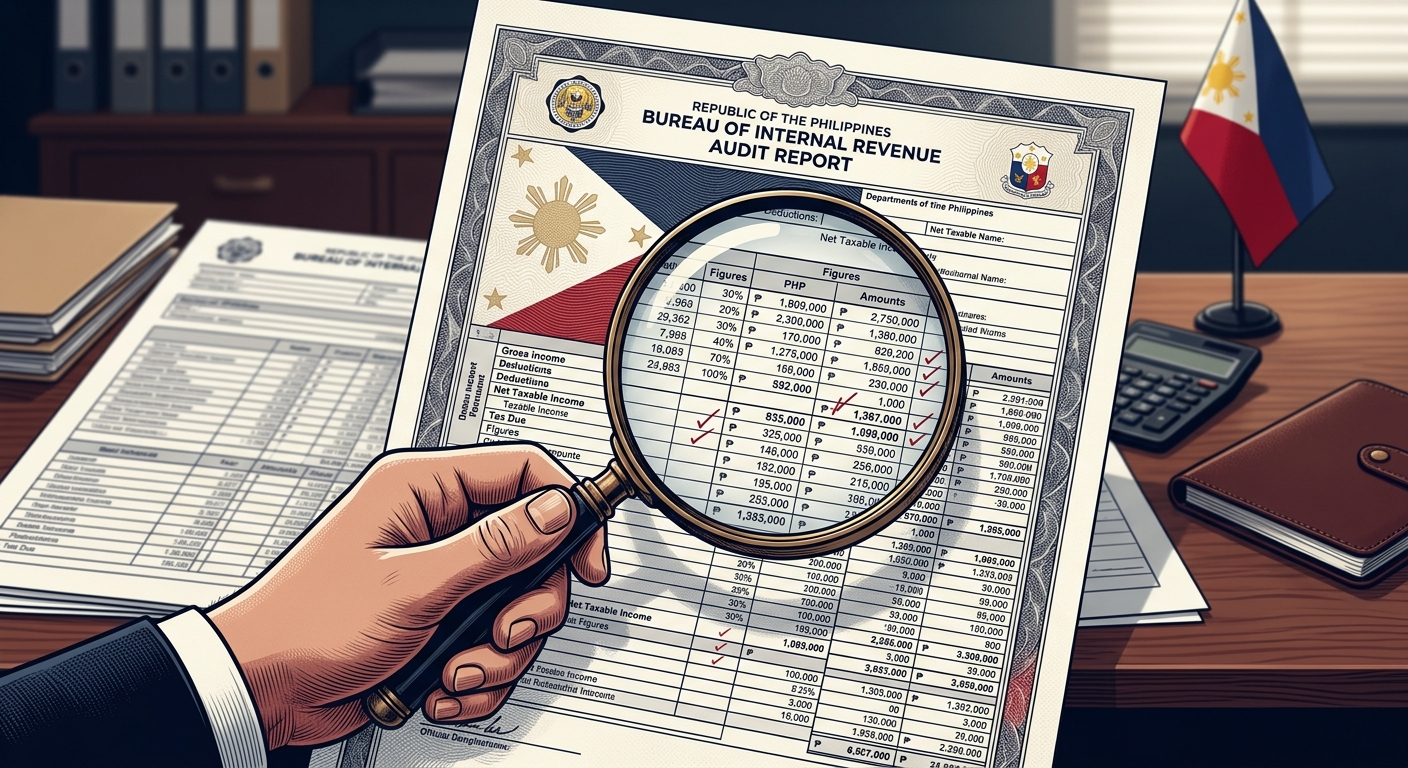
On January 27, 2026, the Bureau of Internal Revenue formally lifted its nationwide suspension of tax audits and field enforcement operations through Revenue Memorandum Circular No. 8-2026, which had been imposed under RMC No. 107-2025. For foreign companies with Philippine operations — whether operating as subsidiaries, branch offices, ROHQs, or representative offices — the resumption of BIR audit activity means that a compliance posture relaxed during the suspension is no longer adequate. This guide covers the revised audit policies, controls, and procedures under RMO 1-2026, with which audits conducted after RMC 8-2026 must comply, the types and phases of BIR tax audits, the rights and obligations of foreign taxpayers during examination, the most common audit findings affecting foreign companies, the penalties and assessment process, and the practical steps foreign investors should take now to prepare their Philippine operations for a renewed enforcement environment.
Joren Lex Tan
Tax & Incentives · April 30, 2026
Approved on November 8, 2024, Republic Act No. 12066 — the Corporate Recovery and Tax Incentives for Enterprises to Maximize Opportunities for Reinvigorating the Economy (CREATE MORE) Act — represents the most significant overhaul of the Philippine investment incentives framework since the CREATE Act of 2021. For foreign investors planning entry into the Philippine market, the changes are substantial: reduced income tax rates, extended incentive durations of up to 27 years, VAT exemptions for export enterprises, and a fundamentally restructured incentives architecture under the Strategic Investment Priority Plan. This guide breaks down everything a foreign investor needs to know about navigating the post-CREATE MORE landscape — with detailed analysis of the Enhanced Deductions Regime, the Special Corporate Income Tax option, the SIPP three-tier structure, BIR Revenue Regulations implementing the law, and the practical steps foreign companies should take to optimize their tax position from the moment they establish their Philippine presence.
Sarah Camille Francisco
Tax & Incentives · April 14, 2026
Every time a Philippine company pays a foreign service provider, royalty, or dividend to a non-resident foreign corporation, a withholding tax obligation is triggered. BIR RMC No. 24-2026, issued March 30, 2026, has significantly refined how the BIR applies these rules. This guide covers the legal framework, rates, tax treaty implications, and the compliance obligations that foreign investors and their Philippine counterparties must understand.
Sarah Camille Francisco
Tax & Incentives · March 31, 2026
Foreign companies with Philippine subsidiaries or branches must comply with strict transfer pricing rules. This guide covers the arm's length principle, BIR documentation requirements, materiality thresholds, approved pricing methods, penalties, and advance pricing arrangements under Philippine law.
Daniel John Fordan
Tax & Incentives · March 26, 2026
The Philippines has double taxation agreements with over 40 countries — but treaty relief isn't automatic. Here's a step-by-step guide to claiming reduced withholding tax rates on dividends, royalties, and interest.
Jose Ben Campos
Tax & Incentives · March 5, 2026
Foreign investors can freely repatriate profits from the Philippines — but only if the right registrations and documentation are in place. Here's a step-by-step checklist covering BSP registration, tax clearances, and banking requirements.
Joren Lex Tan
Tax & Incentives · February 18, 2026
A legal guide to investment incentives available through the Board of Investments (BOI) and Philippine Economic Zone Authority (PEZA) under the CREATE Act (RA 11534) and CREATE MORE Act (RA 12066) — covering income tax holidays, special corporate income tax rates, enhanced deductions, duty exemptions, the Strategic Investment Priority Plan, and practical application steps for foreign investors.
Garreth-Daniel Tungol
Tax & Incentives · February 13, 2026
A guide to Philippine corporate taxation for foreign companies, covering income tax rates under the CREATE and CREATE MORE Acts, branch profit remittance tax, withholding taxes, VAT obligations, transfer pricing rules, and BIR registration requirements.
Jose Ben Campos
Setting Up & Structuring · June 9, 2026
A legal guide for foreign investors on establishing a Philippine holding company — covering the tax optimization benefits of intercorporate dividends under the National Internal Revenue Code, the SEC's beneficial ownership disclosure rules and HARBOR registry, CREATE MORE Act (RA 12066) incentives for holding structures, thin capitalization considerations, anti-dummy law compliance, and practical structuring guidance for multi-jurisdiction investment vehicles in 2026.
Joren Lex Tan
Foreign Ownership & Property · June 2, 2026
The SEC's January 2026 revisions to the REIT Rules — SEC Memorandum Circular No. 1, Series of 2026 — are the latest revision of the Philippine REIT rules. For foreign investors seeking exposure to Philippine income-generating real estate, the new rules expressly list infrastructure and logistics assets as sources of REIT income, let REITs hold assets through unlisted special purpose vehicles and joint ventures, and give sponsors two years to reinvest. This article explains how foreign nationals and foreign-incorporated entities can legally invest in, sponsor, or structure a Philippine REIT in 2026 — covering the expanded qualifying assets, the 60/40 Filipino ownership rule and leasehold-only structures under RA 9856, beneficial ownership reporting under the separate HARBOR registry, tax treatment of REIT dividends and gains, the PSE brokerage account opening process, and a compliance checklist.
Garreth-Daniel Tungol
Corporate Compliance · May 26, 2026
For foreign investors and multinational companies operating in the Philippines, the decision to wind down a Philippine subsidiary, branch office, or ROHQ is never simple — and until recently, the process could be protracted, opaque, and administratively punishing. The Bureau of Internal Revenue's issuance of Revenue Memorandum Circular No. 47-2026 on May 19, 2026 marks a meaningful inflection point: micro taxpayers, and taxpayers with gross sales of up to PHP 3 million or gross assets upon retirement of up to PHP 8 million (including small foreign-invested enterprises), can obtain a tax clearance within three working days of submitting complete documents and paying any outstanding liabilities, and micro taxpayers are not subject to a mandatory audit for closure. This article walks foreign investors step by step through the closure and dissolution procedure for foreign-owned entities in the Philippines — covering BIR registration cancellation under RMC 47-2026 and RA 11976 (the Ease of Paying Taxes Act), Securities and Exchange Commission voluntary dissolution procedures, PEZA or BOI deregistration if applicable, employee separation and DOLE compliance, post-closure tax obligations and the extended prescriptive periods under the McDonald's Philippines Realty Corp. v. CIR doctrine, and the practical checklist every foreign investor's Philippine counsel should run through before initiating wind-down.
Jose Ben Campos
Setting Up & Structuring · May 9, 2026
A foreign company can enter the Philippines through a Regional Operating Headquarters (ROHQ), a Branch Office, a Representative Office, or a Domestic Subsidiary. The choice is not merely administrative — it determines your tax liability, the activities you may legally conduct, the capital you must commit, the regulators that oversee you, and whether your parent company answers for Philippine liabilities. This guide compares all four structures under current Philippine law, including the end of the ROHQ preferential rate and the CREATE MORE Act (RA 12066), and offers a practical decision framework.
Garreth-Daniel Tungol
Regulated Sectors · April 2, 2026
The Philippines now allows 100% foreign ownership in solar, wind, hydro, and ocean energy projects. This guide covers the legal basis under DOJ Opinion No. 21, DOE Circular No. DC2022-11-0034, the Revised Omnibus Guidelines, RA 9513 fiscal incentives, service contract requirements, and step-by-step entry strategies for foreign renewable energy investors.
Joren Lex Tan
Corporate Compliance · March 29, 2026
From SEC filings to BIR tax returns, here are the yearly deadlines and requirements every foreign-owned company in the Philippines must meet to stay in good standing.
Garreth-Daniel Tungol
Regulated Sectors · March 1, 2026
An in-depth legal analysis of the Philippines' free trade agreements — including RCEP, ATIGA, PJEPA, the PH-Korea FTA, and ASEAN dialogue partner agreements — and how foreign investors can leverage preferential tariffs, investment protections, and market access provisions to maximize their Philippine operations.
Sarah Camille Francisco