BIR Tax Audits for Foreign Companies in the Philippines: A Complete Guide to RMC 8-2026 and the New Audit Framework Effective 2026
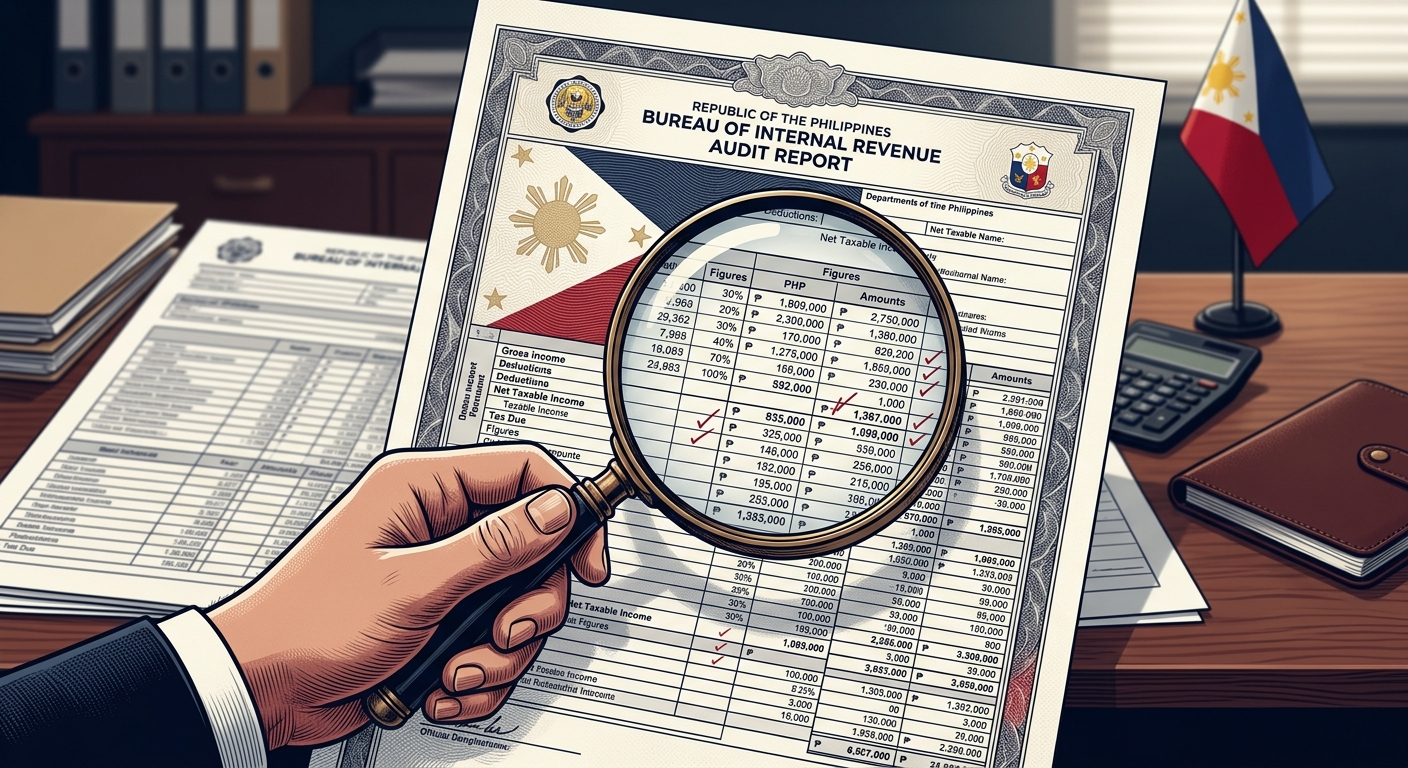
For much of the latter half of 2025, the Bureau of Internal Revenue was not auditing. A leadership transition within the BIR in late 2025 led to the suspension of audit issuance and field operations — a development that, predictably, caused many businesses — including some foreign-invested enterprises — to relax their tax compliance practices and defer housekeeping that might otherwise have attracted examiner attention. That pause ended on January 27, 2026, when the BIR issued Revenue Memorandum Circular No. 8-2026, formally lifting the suspension and authorizing the resumption of tax audit activities nationwide.
Revenue Memorandum Order No. 1-2026 followed shortly thereafter, establishing revised policies, controls, and procedural guidelines for tax audit and assessment activities following the lifting of the suspension. The result is a renewed enforcement environment with new procedural requirements and, critically, a backlog of potential audit cases that accumulated during the suspension period — meaning the BIR enters 2026 with both motivation and institutional pressure to be active.
For foreign companies with Philippine operations, this is not a drill. Foreign-invested corporations are a priority category for BIR audit selection: their cross-border transactions, intercompany pricing arrangements, expatriate compensation structures, and entitlement to treaty benefits make them inherently more complex audit targets than purely domestic enterprises. Understanding the BIR audit framework — the procedures, your rights as a taxpayer, the most common findings, and the preparation steps that will protect you — is not optional for foreign investors in the Philippines in 2026. It is one of the most consequential compliance matters you will face.
I. The Audit Suspension and Its Implications: What RMC 8-2026 Actually Changed
To understand the significance of the current enforcement environment, foreign investors need context on what the suspension was and what its lifting means in practice.
The November 2025 Suspension
Revenue Memorandum Circular No. 8-2026 references an earlier suspension of audit activities that began in November 2025 following a leadership transition at the BIR. While the formal grounds for the suspension were administrative — a change in the Revenue Commissioner role that required a review of pending audit authorizations — the practical effect was a nationwide moratorium on the issuance of new audit authorizations and the continuation of ongoing field examinations. Taxpayers who might otherwise have been selected for audit in the November 2025 to January 2026 window were effectively given a deferment.
The Resumption on January 27, 2026
RMC No. 8-2026, effective January 27, 2026, lifted the suspension and authorized BIR regional and district offices to resume normal audit and field operations. This is not merely an administrative resumption — it is a full reinstatement of the BIR's enforcement mandate, meaning that audit selection processes, field examination activities, and assessment operations are all active as of the effective date.
Critically, RMO No. 1-2026 establishes that any tax period that would have been subject to audit during the suspension period is not insulated from future examination. In practical terms: if a foreign company's fiscal year 2024 return was flagged for audit before the suspension but the audit authorization was not issued, the BIR retains full authority to examine that period once operations resumed. The backlog of suspended audits, combined with fresh audit selections for more recent periods, means the BIR has both historical and current tax periods to pursue.
II. The Types of BIR Audits: Office, Field, and Special Examinations
Foreign investors should understand that the BIR conducts multiple types of examinations, each with distinct characteristics, procedures, and risk profiles.
Office Audit
An office audit is conducted entirely at the BIR's premises, without a field visit to the taxpayer's place of business. The BIR requests documents and information through a Letter of Notice (LON) or a Letter of Authority (LOA), and the taxpayer or its authorized representative delivers the required documents and responds to queries in writing. Office audits are generally used for less complex cases — missing or inconsistent documentary submissions, straightforward mathematical errors, or apparent failures to file required returns or attachments. For foreign companies, an office audit may be triggered by a withholding tax discrepancy, a late filing penalty, or an apparent failure to submit an Annual Information Return (AIR).
The risk with office audits is deceptively low. Many taxpayers treat them casually, responding with incomplete documentation or inadequate explanations. The examining officer's findings in an office audit — even one that began with a minor discrepancy — can escalate if the taxpayer's response raises additional questions or reveals inconsistencies that were not apparent from the initial review. Foreign companies should treat every BIR correspondence, including office audit requests, as a potential gateway to a full field examination if the response is unsatisfactory.
Field Audit and Examination
A field audit is the most common and most consequential form of BIR examination. It involves a physical visit by BIR examiners to the taxpayer's place of business, conducted under the authority of a Letter of Authority (LOA) that identifies the specific tax periods and tax types under examination. The field examination typically involves:
- Review of books of accounts (journals, ledgers, subsidiary records) and the underlying source documents (invoices, receipts, contracts, bank statements)
- Physical inspection of assets, inventory, and property records
- Interview of the taxpayer's accounting and finance personnel
- Reconciliation of reported income and deductions against external evidence (bank statements, supplier records, customer records)
- Analysis of withholding tax compliance — particularly important for foreign companies with significant professional fees, royalties, or technical service payments to overseas related parties
For foreign companies, the field audit is the mechanism through which the BIR examines intercompany transactions, transfer pricing arrangements, and the allocation of income and deductions between the Philippine entity and its foreign affiliates. If the BIR determines that related-party transactions are not conducted at arm's length, adjustments to taxable income can be substantial — and the penalties on underdeclared taxes can be severe.
Special Audit or Investigation
A special audit or investigation is initiated when the BIR has specific reason to believe that a taxpayer has engaged in willful tax evasion or fraud. This is a more intensive process involving forensic examination of financial records, cross-referencing with third-party sources (banking transactions, import/export records, property registries), and — in serious cases — coordination with the DOJ for possible criminal prosecution. Foreign companies that are found to have engaged in systematic underdeclaration of income, fictitious expenses, or fraudulent withholding tax filings may be referred for special audit. The standard of proof in a special audit investigation is higher, but so are the consequences — criminal liability under the Tax Code for willful tax evasion carries imprisonment of not less than two years and not more than six years, in addition to substantial fines.
III. The Audit Process: Step by Step
Understanding the procedural sequence of a BIR field audit helps foreign companies know what to expect at each stage and how to manage their exposure.
Stage 1: Audit Selection and Authorization
BIR selects taxpayers for audit through a combination of random selection, statistical risk scoring, and intelligence-based targeting. Foreign-invested corporations are frequently selected based on indicators such as:
- Large intercompany transactions suggesting transfer pricing risk
- Significant expatriate compensation suggesting potential withholding tax misapplication
- Entitlement to tax treaty benefits (withholding tax reductions on outbound payments) that require post-credit verification
- Volume of deductible payments to overseas parties suggesting potential under-withholding
- History of amended returns or refund claims
- Discrepancies between GIS filings and BIR registrations
Once selected, the BIR issues a Letter of Authority (LOA) signed by the Commissioner or an authorized deputy commissioner. The LOA specifies the taxable periods under examination and the tax types covered. An LOA must be presented to the taxpayer before an audit can legally commence — a point that is sometimes overlooked by taxpayers who are unprepared for the examiner's arrival. If you receive an LOA that covers periods or tax types that were not previously reported to the BIR as part of your filing history, or if the LOA appears to be for periods beyond the statute of limitations, your Philippine tax counsel should review it immediately before allowing the examination to proceed.
Stage 2: Initial Conference and Document Request
Upon issuance of the LOA, the examining officer will typically schedule an initial conference with the taxpayer's authorized representative. At this conference, the officer outlines the scope of the examination, requests specific documents, and establishes a schedule for document production. For foreign companies, the initial document request will almost always include:
- Articles of Incorporation, bylaws, and all SEC registrations
- Books of accounts for the periods under examination
- Bank statements and reconciliation schedules for all bank accounts
- All BIR filings (corporate income tax returns, withholding tax returns, VAT returns, percentage tax returns, Documentary Stamp Tax returns)
- List of all intercompany transactions, including loans, management fees, royalties, technical service fees, and dividend payments
- Contracts with overseas related parties
- Transfer pricing documentation, if applicable
- Expatriate employment contracts and AEP documentation
- Any applicable tax treaty claim documents
Foreign companies should prepare a document room or establish a dedicated document management process for responding to audit requests. The ability to produce documents promptly and in an organized manner — rather than scrambling to locate records months after transactions occurred — has a meaningful impact on the impression the examining officer forms of the taxpayer's compliance culture.
Stage 3: Field Work and Findings
The examining officer conducts field work over a period that varies depending on the complexity of the taxpayer's operations and the volume of transactions under review. For a foreign-invested subsidiary with significant intercompany transactions, a field audit can take six months to eighteen months from the issuance of the LOA to the issuance of preliminary findings.
During field work, the examining officer will often raise preliminary findings informally — through queries, requests for explanations, or oral comments that something appears inconsistent. Foreign companies should treat every preliminary finding as a potential final finding, even if it is presented as informal or preliminary. The appropriate response to a preliminary finding is not denial or dismissal — it is documentation: contemporaneous evidence that supports the taxpayer's position and that can be formally submitted if the finding becomes a formal assessment.
Stage 4: Preliminary Assessment Notice (PAN)
Under the Tax Code and BIR's procedural rules, before issuing a final assessment, the BIR must issue a Preliminary Assessment Notice (PAN) to the taxpayer. The PAN specifies the deficiency tax found, the basis for the finding, and the applicable penalties. The taxpayer is given a period — typically 15 to 30 days from receipt of the PAN — to respond, submit supporting documentation, and contest the proposed assessment.
This stage is critical. The PAN response is the taxpayer's primary opportunity to present its case before a final assessment is issued. Foreign companies that fail to respond to a PAN — or that respond inadequately — will receive a final assessment that is much harder to challenge administratively. Every response to a PAN should be prepared with Philippine tax counsel, supported by contemporaneous documentation, and submitted within the prescribed period. Late PAN responses, even those with excellent substantive arguments, may be rejected as untimely.
Stage 5: Final Assessment Notice and Demand
If the BIR proceeds after the PAN stage, it issues a Final Assessment Notice (FAN) and a demand for payment of the deficiency taxes, interest, and penalties specified in the assessment. The taxpayer has two administrative remedies after receiving a FAN:
- Protest: Within 30 days of receipt of the FAN, the taxpayer may file a protest in writing, specifically identifying the portions of the assessment being contested and stating the factual and legal grounds for the protest. The protest suspends the obligation to pay the assessed deficiency — but only for the specific items protested, not for any uncontested items.
- Request for Reconsideration: After a protest is denied by the BIR, the taxpayer may file a request for reconsideration with the Commissioner, presenting new evidence or grounds not previously raised.
After exhausting administrative remedies, the taxpayer may appeal to the Court of Tax Appeals (CTA) within 30 days of the BIR's final decision on the protest. For foreign companies with substantial tax exposure, the CTA is the appropriate forum — the regular courts do not have jurisdiction over tax disputes.
IV. The New Audit Framework Under RMO 1-2026
RMO 1-2026, issued in conjunction with RMC 8-2026, introduced revised procedural guidelines for tax audit and assessment. Key changes relevant to foreign companies include:
Strengthened Pre-Audit Procedures
RMO 1-2026 requires BIR examining officers to conduct thorough pre-audit research before visiting a taxpayer's premises, including review of the taxpayer's filing history, third-party information returns, and any prior audit history. The objective is to reduce the length of field examinations by ensuring that examiners arrive with specific questions rather than conducting open-ended fishing expeditions. For foreign companies, this means that when an examiner arrives, they are likely to have specific concerns already identified — the pre-audit research should be a wake-up call to ensure your filing history tells a coherent story.
Stricter Controls on Field Examination Duration
RMO 1-2026 imposes target timelines for field examinations, requiring examiners to complete field work within prescribed periods and to seek supervisory approval for extensions. This is intended to prevent audits from dragging on indefinitely — a legitimate concern of taxpayers — but it also means that examining officers are under time pressure to complete their findings within the prescribed period. Under time pressure, examiners may be more inclined to adopt conservative positions that favor the government, rather than taking the time to understand complex intercompany arrangements. Foreign companies with complex structures should anticipate that the examiner may simplify findings to fit within their time constraints — which can actually result in overbroad assessments that need to be contested.
Enhanced Documentation Requirements for Treaty Benefit Claims
For foreign companies that claim treaty benefits — reduced withholding tax rates on dividends, interest, royalties, or technical service fees paid to overseas beneficiaries — RMO 1-2026 reinforces the BIR's authority to verify the existence and applicability of treaty qualifications. Foreign companies claiming treaty benefits should maintain a complete beneficial ownership analysis, a determination of the recipient's treaty residency, and documentation of the legal basis for the reduced rate. The BIR has been increasingly scrutinizing treaty shopping arrangements — where a foreign investor routes payments through an intermediary jurisdiction to access treaty benefits not available under the direct bilateral relationship — and RMO 1-2026's documentation requirements are the agency's tool for challenging these arrangements.
V. Common BIR Audit Findings Affecting Foreign Companies
Foreign-invested corporations face a distinctive set of audit exposures that the BIR examiners are specifically trained to identify. The following are the findings most frequently raised against foreign companies in our practice.
Transfer Pricing Adjustments
The most consequential audit finding for a foreign-invested corporation engaged in intercompany transactions is a transfer pricing adjustment. Under Revenue Regulations No. 30-2013 (as amended), the Philippines requires that related-party transactions be conducted at arm's length — meaning the price, terms, and conditions of the transaction must be equivalent to what would be agreed upon between unrelated parties dealing at arm's length. The BIR has the authority to adjust taxable income upward (or downward, though this is rarer in practice) if it determines that intercompany pricing did not meet the arm's length standard.
For foreign companies with significant intercompany transactions — including management fees, royalties for the use of trademarks or technology, technical service fees paid to foreign affiliates, and intercompany loans — transfer pricing is the central audit risk. The BIR's transfer pricing examination requires the taxpayer to demonstrate arm's length pricing through one of the accepted methods (comparable uncontrolled price, cost plus, resale price, profit split, or transactional net margin method). If the taxpayer has no transfer pricing documentation, the BIR may apply a default method or estimate the adjustment based on available benchmarks.
Transfer pricing adjustments can be enormous. For a foreign subsidiary with PHP 500 million in annual related-party transactions, an adjustment of 10-20% on an arm's length basis could mean additional taxable income of PHP 50 to 100 million, with corporate income tax at 25% (or 20% for RBE-status entities) plus a 25% penalty surcharge and interest at 20% per annum. The financial exposure can rapidly exceed the original investment in the enterprise.
Withholding Tax Deficiencies
Foreign companies that pay professional fees, royalties, technical service fees, or management fees to overseas recipients are generally required to withhold the applicable withholding tax at the treaty rate (if treaty benefits are claimed) or the regular statutory rate, and to remit those withholdings to the BIR. The BIR routinely audits withholding tax compliance for foreign companies, and common findings include:
- Failure to withhold on deemed dividend transactions (loans from a foreign parent that are treated as equity contributions for tax purposes, or excessive intercompany charges)
- Incorrect treaty rate application due to failure to maintain beneficial ownership documentation
- Failure to withhold on one-time payments (equipment purchases, contract terminations, settlement payments)
- Late remittance of withholding taxes — which triggers penalties even where the withholding obligation itself is not in dispute
Expatriate Compensation and Per Diem Allowances
BIR examiners are specifically trained to examine expatriate compensation packages for withholding tax and fringe benefit tax (FBT) compliance. Common findings include:
- Failure to withhold tax on the full value of compensation — particularly where a portion is paid overseas and not reported as Philippine-source income
- Incorrect characterization of compensation as non-taxable allowances or reimbursements when the substance is taxable compensation
- Failure to file the required BIR Form 2316 (Statement of Compensation Paid) for expatriate employees
- Failure to pay fringe benefit tax on non-cash benefits provided to expatriate executives
The FBT issue is particularly common for foreign companies that provide housing allowances, school fees for expatriate dependents, home leave travel allowances, or company-provided vehicles. These are fringe benefits under the Tax Code and are subject to FBT at the employer level — a commonly overlooked obligation that generates significant penalties when discovered in an audit.
VAT Input Tax Credits on Importations
For foreign companies that import goods — whether for resale or for use in operations — the BIR scrutinizes the VAT treatment of importations and the subsequent use of input tax credits. Common findings include:
- Claiming input VAT credits on importations that were not used in the registered project or activity (particularly relevant for PEZA-registered entities that are export-oriented and have limited domestic VAT liability)
- Failure to maintain the required import documentation (BIR-certified import entries, customs release documents) to support input VAT claims
- Incorrect allocation of input VAT between taxable and exempt activities
PEZA or BOI Incentive Compliance
Foreign companies operating under PEZA or BOI registration face a specific category of audit risk: compliance with the conditions of their incentive entitlements. IPAs like PEZA and BOI have their own compliance monitoring functions, and the BIR has authority to examine whether an RBE's tax positions are consistent with its registered status. Common findings include:
- Failure to maintain the minimum export performance required for PEZA registration
- Applying the wrong income tax rate (5% SCIT vs. 20% EDR vs. 25% regular) to the wrong categories of income
- VAT zero-rating claims on local purchases that do not qualify as directly attributable to the registered project
VI. Penalties and Interest: The Full Financial Exposure
Understanding BIR penalties is essential for foreign companies to properly assess their audit exposure and to make informed decisions about contesting assessments versus accepting them.
Deficiency Tax Penalties
Under the Tax Code, deficiency taxes — taxes that should have been paid but were not — are subject to a graduated penalty structure:
- 25% surcharge — imposed when the deficiency tax arises from negligence or late filing
- 50% surcharge — imposed when the deficiency tax arises from fraud or willful evasion
- Interest — compounded monthly at 20% per annum (or 20% per annum plus 1% per month for fraud cases) from the due date of the return to the date of payment
For a deficiency tax that has been outstanding for three years, the interest component alone can exceed the original tax deficiency. A PHP 10 million income tax deficiency from fiscal year 2023, assessed in 2026 with three years of compounded interest at 20% per annum, can grow to approximately PHP 17 million in interest — on top of the original PHP 10 million tax. Adding the 25% surcharge brings the total exposure to approximately PHP 34 million on a PHP 10 million original deficiency.
Civil Penalties Under the Tax Code
Beyond the deficiency tax penalties, the Tax Code imposes civil penalties for specific violations, including:
- Failure to file a return — PHP 1,000 for individuals, PHP 10,000 for corporations, plus 25% surcharge on the tax due
- Failure to pay the tax due on time — 25% surcharge on the unpaid tax
- Understatement of taxable income — a PHP 50,000 penalty for each instance of a substantial understatement
- Willful neglect to file a return — penalty in lieu of criminal prosecution in appropriate cases
Criminal Liability
For willful tax evasion or fraudulent returns, criminal prosecution may be initiated under the Tax Code. The penalty is imprisonment of not less than two years and not more than six years, and a fine of not less than PHP 10,000 and not more than PHP 100,000. Criminal prosecution requires proof beyond reasonable doubt and is generally pursued only in cases of clear fraud — not in cases of mere negligence or disagreement over legal interpretation. However, foreign companies whose transfer pricing arrangements involve deliberate underpricing of inbound transactions to reduce Philippine taxable income should understand that the fraud penalty (50% rather than 25%) and the potential for criminal referral are real risks.
VII. Preparing for BIR Audits: A Practical Checklist for Foreign Companies
The following framework provides foreign companies with a structured approach to BIR audit readiness. This is not a substitute for advice from Philippine tax counsel specific to your situation, but it is a guide to the categories of preparation that matter most.
Pre-Audit Preparation (Do This Now, Before You Receive an LOA)
- Reconcile all BIR filings against your books: Ensure that every corporate income tax return, VAT return, withholding tax return, and percentage tax return filed with the BIR is supported by corresponding entries in your books and financial statements. Identify and document any discrepancies before they become audit findings.
- Prepare transfer pricing documentation: If your company has intercompany transactions with foreign affiliates exceeding a material threshold, prepare contemporaneous transfer pricing documentation that demonstrates arm's length pricing. The documentation should identify the related parties, describe the transactions, specify the pricing method used, and provide benchmarking analysis. This is not just good practice — it is your primary defense against a transfer pricing adjustment.
- Audit your withholding tax compliance: Review every outbound payment to overseas recipients — dividends, interest, royalties, technical service fees, management fees, professional fees — and confirm that the correct withholding tax was applied, remitted, and reported on the applicable BIR return. Correct any deficiencies before they are discovered by an examiner.
- Review expatriate compensation packages: Each expatriate employee should have a fully documented compensation package identifying every component of their pay — cash salary, allowances, benefits in kind, overseas payments — with a clear characterization of what is taxable compensation under Philippine law and what is a nontaxable reimbursement or allowance. Ensure BIR Form 2316 is filed correctly for each expatriate.
- Verify VAT positions: Confirm that input VAT credits claimed on local purchases and importations are supported by valid VAT invoices and import documents, and that the inputs were used in the company's taxable activities (or in the case of partially-exempt activities, that the allocation is correct and documented).
- File all required annual information returns: Ensure that AIR, the Annual List of Stockholders (for closely-held corporations), and all other required annual filings are current. Missing annual filings are a common trigger for BIR audit selection.
When You Receive an LOA
- Immediately notify your Philippine tax counsel and designate an authorized representative
- Conduct an internal review of the periods and tax types covered before producing any documents to the BIR examiner — your tax counsel should lead this review
- Establish a document management process for responding to document requests in an organized, timely manner
- Brief your finance and accounting team on the audit and the importance of directing all BIR communications through the authorized representative and tax counsel
- Conduct a preliminary analysis of the company's positions and identify any areas of potential vulnerability
During the Field Examination
- Maintain a contemporaneous log of all examiner interactions — dates, names, documents requested, responses provided
- Treat every preliminary finding as a formal finding — respond with documentation, not denials
- Do not volunteer additional documents beyond what is specifically requested — the examiner's scope should not expand beyond the LOA without supervisory authorization
- Engage your tax counsel to participate in key conferences with the examining officer, particularly where legal or interpretive questions are being raised
Responding to PAN and FAN
- File PAN responses within the prescribed period without exception — even one day late can result in a default final assessment
- Present a complete, documented response — the BIR examining officer is required to consider the taxpayer's PAN response before proceeding to the FAN
- If the assessment is contested, file a formal protest within 30 days of the FAN — specifically identify each item being contested and the factual and legal grounds for the protest
- Engage experienced Philippine tax counsel for all protest and appeal proceedings — the procedural and substantive rules for tax litigation are highly specialized
VIII. The Bigger Picture: Audit Risk as Part of a Broader Compliance Posture
Foreign companies sometimes view BIR audit risk as an isolated compliance issue — something that either happens or does not happen, and that can be addressed reactively if and when an LOA arrives. This is a dangerous frame. In the current enforcement environment — with RMC 8-2026 fully operational, RMO 1-2026's backlog-processing mandate active, and the BIR under pressure to demonstrate enforcement outcomes — audit risk for foreign-invested enterprises must be managed proactively as part of a continuous compliance posture.
The preparation steps described above — reconciling filings, documenting intercompany pricing, auditing withholding tax compliance, reviewing expatriate compensation — are not just audit defense measures. They are the components of a well-governed Philippine entity. Companies that maintain these practices as ongoing disciplines, rather than scrambling to prepare them in response to an LOA, find that audits are shorter, findings are smaller, and the overall compliance cost is a fraction of what it is for companies that neglected these disciplines until an examiner was standing at the door.
Conclusion
The lifting of the BIR audit suspension through RMC 8-2026 on January 27, 2026, marks the beginning of a new phase of tax enforcement activity in the Philippines. For foreign companies with Philippine operations, the message is clear: the compliance environment that may have been acceptable during the 2023-2025 period of reduced enforcement is no longer adequate. With RMO 1-2026's revised procedures now in force, with a backlog of suspended audits to process, and with enhanced tools for identifying audit targets, the BIR is positioned to be more active and more targeted than at any prior point in recent memory.
Foreign investors should respond not with anxiety but with action. The steps that prepare a company for a BIR audit — accurate filings, documented intercompany transactions, compliant withholding tax practices, complete expatriate compensation records — are the same steps that make a company a well-governed, defensible enterprise. The BIR audit is not a test you can cram for. It is a reflection of how you have been running your affairs since the day you registered your Philippine entity.
The team at TTFC Law regularly advises foreign companies on BIR audit defense, tax controversy, transfer pricing documentation, withholding tax compliance, and the full range of Philippine tax matters affecting foreign-invested enterprises. Contact us to discuss your audit readiness or to respond to a BIR examination.
This article is for informational and educational purposes only and does not constitute legal or tax advice. For specific guidance on BIR audit procedures, transfer pricing compliance, or Philippine tax controversy matters, please consult a qualified Philippine tax attorney or CPA.
Related Articles

The Foreign Corporation's Comprehensive Year-End Tax Planning Guide for the Philippines: Deadlines, Rates, and Strategies for 2026
As the Philippines' tax and regulatory landscape continues to evolve — from the CREATE MORE Act's reduced rates for Registered Business Enterprises to the BIR's expanded withholding tax adjustments and the looming December 31, 2026 e-invoicing mandate — foreign corporations operating in the country face a compressed window to optimize their tax positions before year-end. This guide walks through the critical compliance dates, substantive rate changes, planning strategies, and common pitfalls that every foreign investor, legal counsel, and finance team should address in the final quarter of 2026.

The Foreign Corporation's Guide to Surviving a BIR Tax Audit in the Philippines: RMO 1-2026, Your Rights, and Practical Compliance Steps
The Bureau of Internal Revenue's suspension of tax audits in late 2025, followed by the issuance of Revenue Memorandum Order (RMO) No. 1-2026 and Revenue Memorandum Circular (RMC) No. 8-2026, has fundamentally reshaped the audit landscape for foreign corporations operating in the Philippines. This guide explains the new audit framework in detail, outlines your procedural rights during an audit, and provides a practical roadmap for compliance — written for the foreign business owner, investor, or legal counsel who needs to understand exactly what to expect when the BIR comes knocking.

The Foreign Investor's Compliance Crossroads: Stockholder Inspection Rights, Data Privacy, and Merger Notification Thresholds Every Foreign Buyer Must Navigate in 2026
Three converging legal obligations — the Revised Corporation Code's stockholder inspection rights, the Data Privacy Act's constraints on personal data disclosure, and the Philippine Competition Commission's recalibrated merger notification thresholds — create a compliance labyrinth that no foreign investor acquiring a Philippine company can afford to navigate blindly. This guide unpacks each obligation, explains how they interact, and provides a practical roadmap for foreign buyers conducting due diligence and post-acquisition governance in the Philippines.