Philippines Digital Nomad Visa: 5 Questions Every Remote Worker Should Ask

Since Executive Order No. 86 took effect on May 5, 2025, the Philippines finally has a dedicated immigration pathway for foreign remote workers. The Digital Nomad Visa (DNV) lets qualifying foreigners live in the country for up to two years while working remotely for overseas clients or employers.
If you are a freelancer, contractor, or remote employee thinking about basing yourself in the Philippines, here are the five questions we get asked most — and the answers that matter.
1. Who Is Eligible for the Digital Nomad Visa?
Under EO 86, you must meet all of the following requirements:
- Be at least 18 years old.
- Work remotely using digital technologies and earn income exclusively from foreign employers or clients — no Philippine-sourced income is allowed.
- Be a national of a country that offers a reciprocal digital nomad visa to Filipino citizens and maintains a Philippine Foreign Service Post.
- Hold valid international health insurance covering your entire stay.
- Have a clean criminal record, verified through an apostilled police clearance from your home country.
- Pose no security threat to the Philippines.
The Department of Foreign Affairs (DFA) issues the visa, while the Bureau of Immigration (BI) handles arrival registration and security clearances.
2. How Long Can I Stay — and Can I Extend?
The DNV is initially valid for one year, with the option to renew once for an additional year — giving you a maximum stay of two years. The visa also grants multiple-entry privileges, so you are free to leave and re-enter the Philippines as often as you like during the visa's validity without reapplying.
After two years, the DNV cannot be extended further. If you wish to stay longer, you would need to explore a different visa category — such as the Special Investor's Resident Visa (SIRV) or a 9(g) pre-arranged employment visa if you take on a Philippine employer.
3. Do I Need to Pay Philippine Taxes on My Remote Income?
This is the question everyone asks first. Under the National Internal Revenue Code (RA 8424, as amended), tax liability in the Philippines depends on the source of income. Non-resident aliens are generally taxed only on Philippine-sourced income.
Because the DNV requires that your income comes exclusively from foreign sources, your remote earnings should not be subject to Philippine income tax. However, EO 86 does direct the Bureau of Internal Revenue (BIR) to participate in the visa's implementation framework, which means tax monitoring is built into the program.
Practical advice: You are still subject to the tax laws of your home country. Many countries tax their citizens or residents on worldwide income regardless of where they physically sit. Consult a tax professional who understands both Philippine and home-country rules before assuming you owe nothing.
4. What Documents Do I Need to Apply?
Applications are submitted through the DFA's e-visa portal (evisa.gov.ph), followed by an in-person appointment at your nearest Philippine embassy or consulate. Prepare the following:
- Valid passport — at least six months validity beyond your intended stay.
- Proof of remote work — employment contracts, freelance agreements, or business registration documents showing foreign income.
- Bank statements — typically the last three months, demonstrating financial self-sufficiency (estimated at around US$24,000 annually based on regional benchmarks).
- International health insurance — coverage for your full stay in the Philippines.
- Apostilled police clearance — from your home country, not older than six months.
- Passport-sized photographs — per DFA specifications.
- Proof of accommodation — hotel reservation, lease agreement, or invitation letter.
Processing typically takes two to six weeks. Upon arrival, you must register with the Bureau of Immigration within 30 days and obtain an ACR I-Card (Alien Certificate of Registration).
5. Can I Bring My Family?
EO 86 focuses on the primary applicant and does not explicitly create a dependent visa category under the DNV framework. In practice, your spouse and children may enter the Philippines on tourist visas (Section 9(a) of the Philippine Immigration Act) and extend their stay for up to 36 months through successive extensions at the Bureau of Immigration.
If you need longer-term certainty for dependents, consider whether an SRRV (for those who qualify by age or investment) or an SIRV (minimum US$75,000 investment) might provide a more stable family arrangement. We have covered both visa types in our SRRV guide and our visa overview.
Key Takeaway
The Philippines' Digital Nomad Visa is one of the most straightforward remote-worker visa programs in Southeast Asia — affordable cost of living, English as an official language, and no local tax on foreign income. But like any immigration matter, the details matter. Make sure your documents are airtight, your health insurance is current, and your home-country tax obligations are sorted before you book your flight.
Need help with your DNV application or have questions about your tax position in the Philippines? Get in touch with our team — we assist foreign professionals with Philippine immigration, tax, and corporate matters every day.
Related Articles

The Philippine Privacy Impact Assessment Revolution: What the 2026 Draft Circular Means for Foreign Companies
The NPC's August 2026 draft circular would replace the blanket Privacy Impact Assessment obligation that has governed Philippine data privacy compliance since 2017 with a risk-tiered framework. For foreign companies operating in or serving the Philippine market, the shift from a one-size-fits-all requirement to a threshold-based trigger system carries significant compliance and cost implications. This guide explains the eight mandatory PIA trigger categories, the new quantitative thresholds, what the draft circular means for AI systems and cross-border transfers, and the practical steps foreign companies must take now.
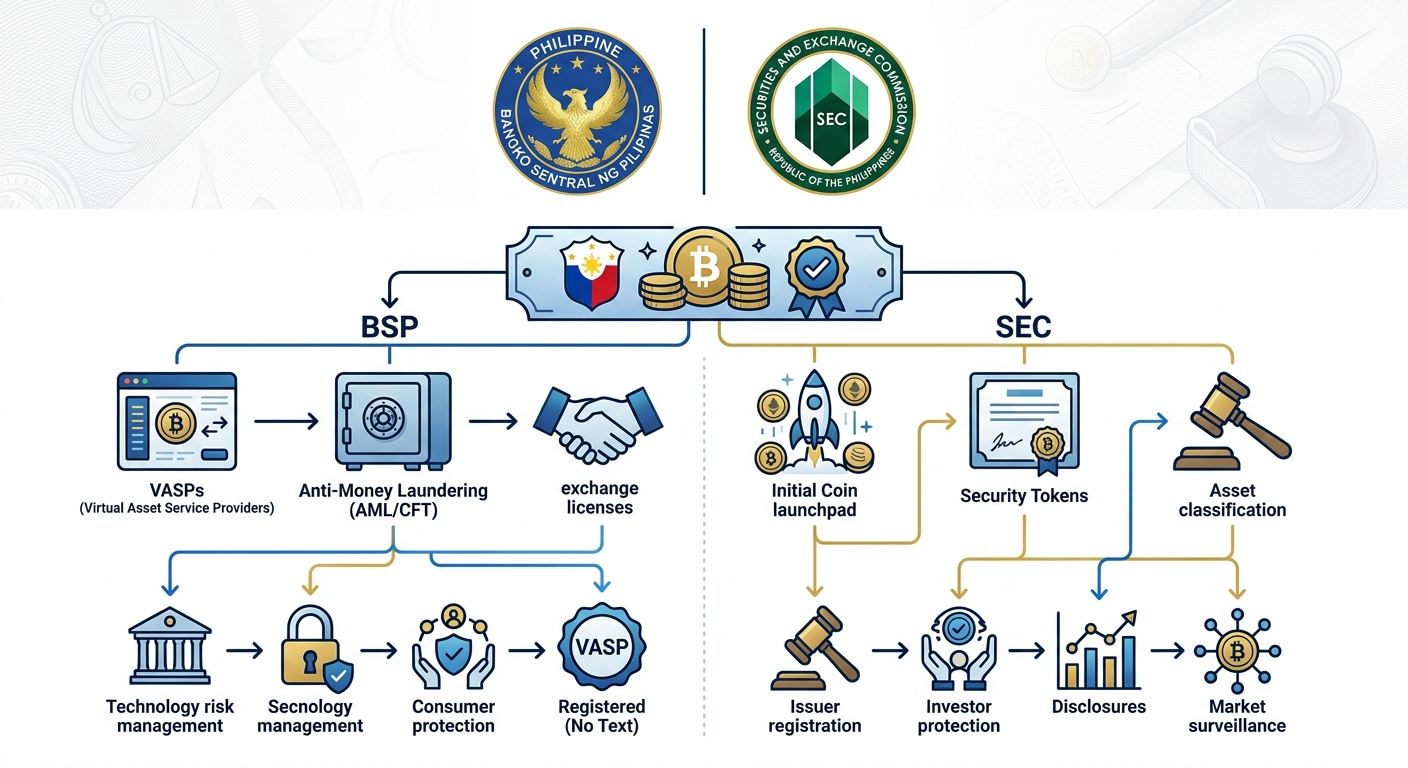
The Philippine Dual-Regulatory Framework for Cryptocurrency and Virtual Assets: A Comprehensive Guide for Foreign Investors in 2026
With the BSP's Circular No. 1108 and the SEC's CASP Rules (MC Nos. 04 and 05 of 2025) now both in force, foreign investors entering the Philippine virtual asset space face a bifurcated regulatory landscape that did not exist three years ago. This guide maps the jurisdictional boundaries between the Bangko Sentral ng Pilipinas and the Securities and Exchange Commission, explains the licensing pathways, capitalization requirements, AML/CTF obligations, the BSP's continued VASP license moratorium, and the practical steps a foreign investor must take to operate lawfully in the Philippines' digital asset market.
The Philippine E-Invoicing Mandate: A Comprehensive Compliance Guide for Foreign Companies in 2026
With the December 31, 2026 deadline for mandatory e-invoicing under BIR Revenue Regulations No. 11-2025 fast approaching, foreign companies operating in the Philippines face an urgent compliance obligation that cannot be deferred. This guide provides a complete analysis of who must comply, what constitutes a compliant electronic invoice, the step-by-step implementation process, tax deduction opportunities under the CREATE MORE Act, and the penalties for non-compliance — with every legal citation verified against primary sources.