5 Tax Incentives Foreign Investors Can Claim Under the CREATE MORE Act

If you are a foreign investor evaluating the Philippines as your next business destination, the tax incentive landscape has shifted significantly in your favor. Republic Act No. 12066, known as the CREATE MORE Act, was signed into law on November 11, 2024, and took effect on November 28, 2024. It builds on the original CREATE Act (RA 11534) by enhancing incentives and broadening who can claim them.
Here are five incentives that matter most to foreign investors setting up in the Philippines.
1. A Flat 20% Corporate Income Tax Under the Enhanced Deductions Regime
Under the original CREATE Act, registered business enterprises (RBEs) choosing the Enhanced Deductions Regime (EDR) were taxed at the regular 25% corporate income tax rate but received additional deductions on qualifying expenses.
The CREATE MORE Act changed this by introducing a flat 20% corporate income tax rate for all RBEs under the EDR — regardless of net taxable income or total assets. This means a foreign-owned company registered with the Board of Investments (BOI) or PEZA can now enjoy both enhanced deductions and a lower base tax rate simultaneously.
For context, the standard corporate income tax rate in the Philippines is 25%, and the minimum corporate income tax is 1% of gross income. The 20% EDR rate represents a meaningful reduction, especially for capital-intensive projects.
2. Bigger Deductions on Operating Expenses
The CREATE MORE Act increased the percentage of deductible expenses under the EDR. The most notable change:
- Power expenses: Additional deduction increased from 50% to 100%. This is significant for foreign manufacturers and BPO operators, given that Philippine electricity costs are among the highest in Southeast Asia.
- Trade fairs and exhibitions: A new deductible category was added, benefiting companies that promote products locally and internationally.
- Net Operating Loss Carry-Over (NOLCO): Losses can now be carried forward for five consecutive taxable years immediately following the end of the Income Tax Holiday (ITH) period, rather than from the year of loss itself. This gives startups and new entrants a longer runway to offset early losses.
These expanded deductions are designed to address long-standing investor complaints about high operating costs in the Philippines.
3. Broader Eligibility — Foreign Companies Now Explicitly Included
Under the original CREATE Act, incentives were available primarily to registered export enterprises (REEs) and domestic market enterprises (DMEs). The eligibility criteria were somewhat narrow.
The CREATE MORE Act widens the definition of "registered business enterprise" to expressly include both foreign and local businesses, provided they are:
- Organized and existing under Philippine laws (this includes Philippine branches of foreign corporations); and
- Registered with an Investment Promotion Agency (IPA), such as BOI or PEZA.
This means a foreign investor who incorporates a Philippine subsidiary or registers a branch office can qualify as an RBE — opening the door to the full suite of CREATE MORE incentives.
4. VAT Exemptions and Zero-Rating for Export Enterprises
The CREATE MORE Act clarified and expanded VAT incentives that were vaguely drafted in the original law. For foreign investors operating export-oriented businesses, the key rules are:
- VAT-exempt importation of goods by REEs whose export sales are at least 70% of total annual production.
- 0% VAT on local purchases of goods and services by qualifying REEs.
- 0% VAT on sales to bonded manufacturing warehouses of REEs.
The law also specifies which services qualify as "directly attributable" to the registered activity — including janitorial, security, financial, consultancy, marketing, and administrative services (HR, legal, accounting). This eliminates much of the ambiguity that caused disputes under the original CREATE Act.
For high-value domestic market enterprises (investment capital of at least PHP 15 billion, or export sales of at least USD 100 million), even more favorable VAT treatment applies, including 0% VAT on local purchases and VAT exemption on importation.
5. Income Tax Holiday of Up to Seven Years
The CREATE MORE Act retained and refined the Income Tax Holiday (ITH) framework under the Strategic Investment Priority Plan (SIPP). Depending on the location, industry, and classification of your project, a foreign-owned RBE may qualify for:
- Up to 4–7 years of ITH (complete exemption from corporate income tax) for projects in priority sectors.
- After the ITH period, the enterprise transitions to the EDR (at 20% CIT) or the Special Corporate Income Tax (SCIT) rate of 5% on gross income for up to 10–17 years.
The total incentive period can extend up to 27 years for export enterprises in less-developed areas, making long-term investment planning significantly more attractive.
How to Claim These Incentives
To avail of CREATE MORE incentives, a foreign investor must:
- Incorporate or register a legal entity in the Philippines (subsidiary, branch, or partnership).
- Register with an IPA — typically BOI for general manufacturing and services, or PEZA for businesses inside economic zones.
- Apply for incentives through the Fiscal Incentives Review Board (FIRB), which must act on applications within 20 working days.
- Ensure your activity is listed in the current SIPP.
The process is more streamlined than it used to be, but legal guidance is still essential — particularly for foreign investors navigating the Foreign Investments Act (RA 7042) restrictions alongside CREATE MORE eligibility.
The Bottom Line
The CREATE MORE Act is the most investor-friendly tax incentive law the Philippines has enacted in years. For foreign investors, the combination of a reduced 20% CIT rate, expanded deductions, clearer VAT rules, and long ITH periods makes the Philippines significantly more competitive against regional alternatives like Vietnam, Thailand, and Indonesia.
If you are considering an investment in the Philippines, now is the time to evaluate how CREATE MORE applies to your specific project. Contact TTFC Law — we help foreign investors structure their Philippine operations to maximize available incentives from day one.
Related Articles

The Philippine Privacy Impact Assessment Revolution: What the 2026 Draft Circular Means for Foreign Companies
The NPC's August 2026 draft circular would replace the blanket Privacy Impact Assessment obligation that has governed Philippine data privacy compliance since 2017 with a risk-tiered framework. For foreign companies operating in or serving the Philippine market, the shift from a one-size-fits-all requirement to a threshold-based trigger system carries significant compliance and cost implications. This guide explains the eight mandatory PIA trigger categories, the new quantitative thresholds, what the draft circular means for AI systems and cross-border transfers, and the practical steps foreign companies must take now.
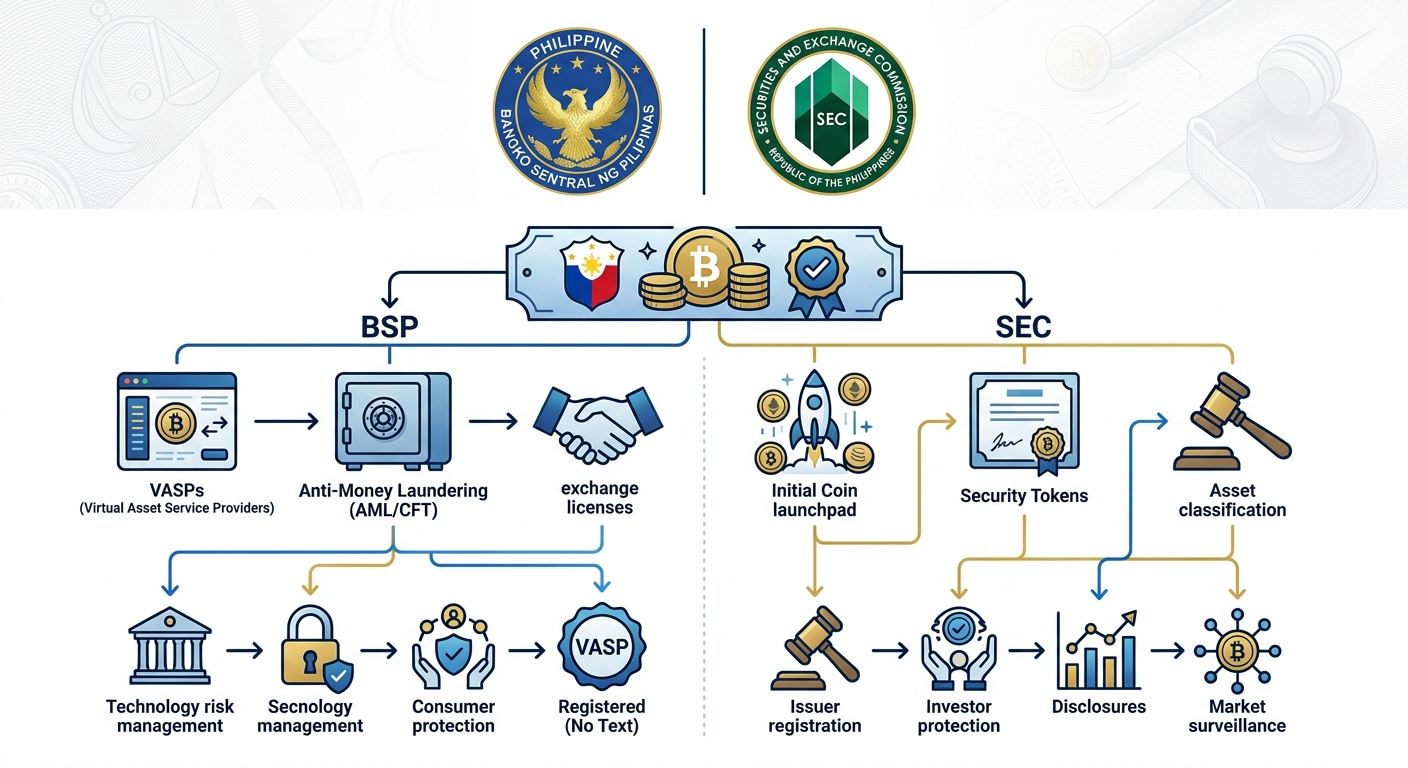
The Philippine Dual-Regulatory Framework for Cryptocurrency and Virtual Assets: A Comprehensive Guide for Foreign Investors in 2026
With the BSP's Circular No. 1108 and the SEC's CASP Rules (MC Nos. 04 and 05 of 2025) now both in force, foreign investors entering the Philippine virtual asset space face a bifurcated regulatory landscape that did not exist three years ago. This guide maps the jurisdictional boundaries between the Bangko Sentral ng Pilipinas and the Securities and Exchange Commission, explains the licensing pathways, capitalization requirements, AML/CTF obligations, the BSP's continued VASP license moratorium, and the practical steps a foreign investor must take to operate lawfully in the Philippines' digital asset market.

The Philippine E-Invoicing Mandate: A Comprehensive Compliance Guide for Foreign Companies in 2026
With the December 31, 2026 deadline for mandatory e-invoicing under BIR Revenue Regulations No. 11-2025 fast approaching, foreign companies operating in the Philippines face an urgent compliance obligation that cannot be deferred. This guide provides a complete analysis of who must comply, what constitutes a compliant electronic invoice, the step-by-step implementation process, tax deduction opportunities under the CREATE MORE Act, and the penalties for non-compliance — with every legal citation verified against primary sources.