The Philippine E-Invoicing Mandate: A Comprehensive Compliance Guide for Foreign Companies in 2026
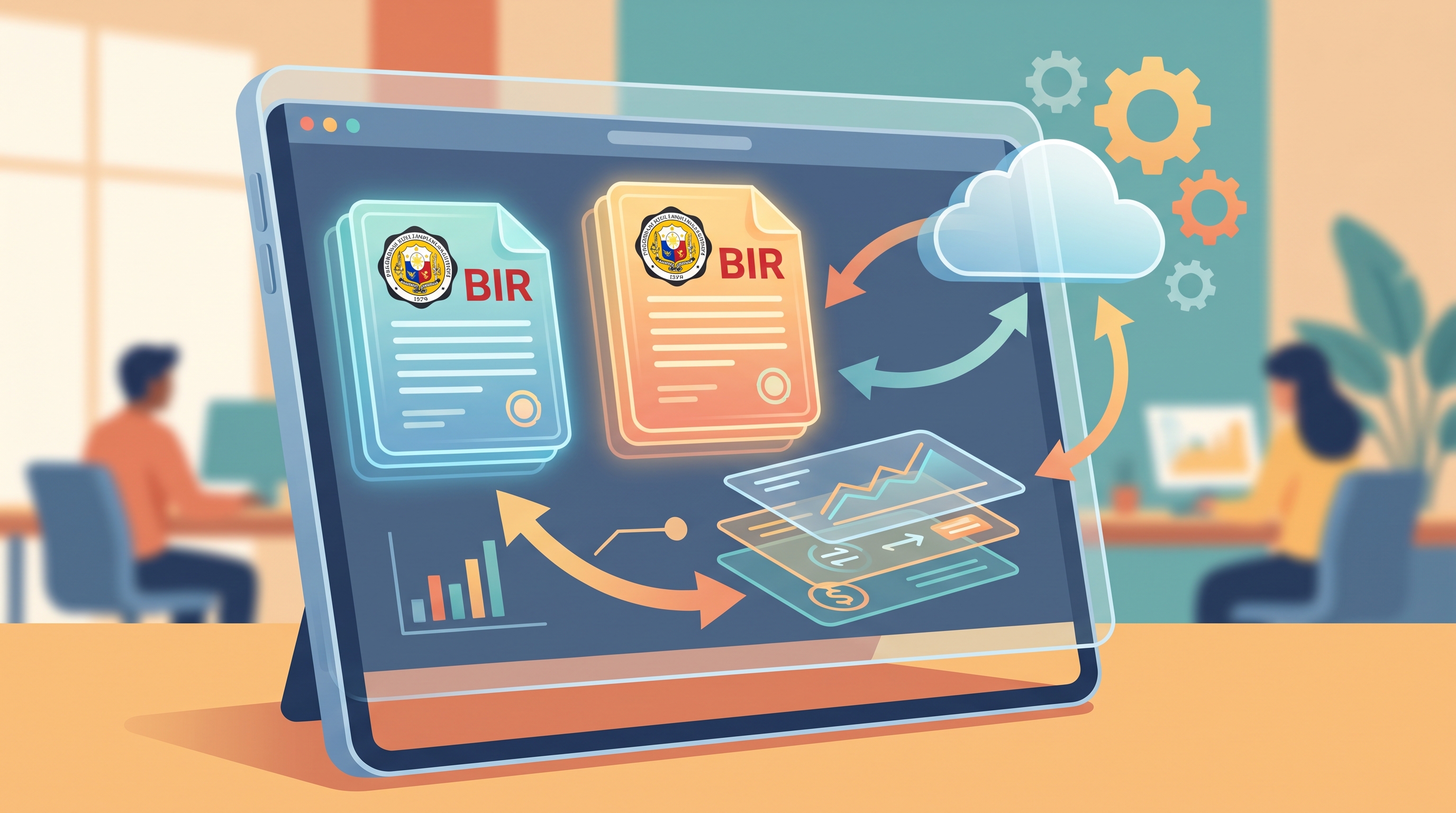
For foreign companies with Philippine subsidiaries, branch offices, representative offices, or registered business enterprises, the December 31, 2026 deadline for mandatory electronic invoicing under Bureau of Internal Revenue (BIR) Revenue Regulations (RR) No. 11-2025 is not a distant concern — it is an immediate operational imperative. The BIR has been building toward this moment since 2018, when the Tax Reform for Acceleration and Inclusion (TRAIN) Act first introduced the statutory framework for electronic invoicing. The compliance architecture is now largely in place, the deadline has been set, and the BIR's enforcement posture is tightening.
Yet many foreign investors and their Philippine counsel remain uncertain about what the e-invoicing mandate actually requires, which categories of taxpayers are covered, what qualifies as a compliant electronic invoice (and critically, what does not), and how to structure implementation in a way that satisfies BIR requirements without disrupting business operations. This article addresses each of those questions with the precision and depth that foreign companies operating in the Philippines require.
The Legal Foundation: Where the E-Invoicing Mandate Comes From
The Philippine e-invoicing mandate is not a BIR policy preference — it is a statutory obligation rooted in the National Internal Revenue Code (NIRC), as amended. Understanding the legal hierarchy is essential before examining the practical compliance requirements.
Section 237 of the NIRC, as originally enacted, required every person engaged in business to issue receipts or sales invoices for every sale of goods or properties and for every rendition of services. The TRAIN Act (Republic Act No. 10963), signed into law on December 19, 2017 and effective January 1, 2018, added Section 237-A, which directed the BIR to adopt within five years an electronic invoicing and sales reporting system. The TRAIN Act's legislative history makes clear that the objective was modernization of tax administration through automated system-to-system reporting, improved accuracy and timeliness of tax data, strengthened revenue collection, reduced opportunities for tax evasion and underreporting, and enhanced transparency through reliable and verifiable sales information.
The CREATE MORE Act (Republic Act No. 12066), signed on February 23, 2024, further expanded the e-invoicing framework and introduced the tax deduction for setup costs discussed in detail below. On February 27, 2025, the BIR issued RR No. 11-2025, the primary implementing regulation under the CREATE MORE Act, which set the first compliance deadline at March 14, 2026. On September 5, 2025, the BIR issued RR No. 26-2025, which extended the deadline to December 31, 2026 — a reprieve that should not be mistaken for optionality.
Who Must Comply: The Group 1 Coverage Rules
RR No. 11-2025 divides covered taxpayers into two groups. Group 1 has a firm December 31, 2026 deadline. Group 2 has no firm deadline yet, pending BIR system readiness. Foreign companies are almost certainly in Group 1 if they meet any of the following criteria.
1. Large Taxpayers Under the BIR's Large Taxpayers Service (LTS)
The BIR's LTS covers the largest and most revenue-significant taxpayers in the Philippines. Foreign-owned or foreign-affiliated companies that have been classified as large taxpayers by the BIR — typically because their annual tax remittances or gross sales exceed prescribed thresholds — are automatically covered. The LTS classification is not self-selected; it is imposed by the BIR based on revenue significance, and foreign companies should verify their LTS status with their Philippine tax counsel.
2. Large Taxpayers Under the Ease of Paying Taxes (EOPT) Act
Republic Act No. 11976, the Ease of Paying Taxes Act, which took effect in 2024, restructured taxpayer classifications. Under RR No. 8-2024 and the EOPT framework, businesses with annual gross sales exceeding ₱1 billion are generally classified as large taxpayers. For a foreign company with a Philippine subsidiary or branch, this threshold is not difficult to approach or exceed, particularly for companies in sectors such as consumer goods, manufacturing, real estate, logistics, or technology. Foreign companies should assess whether their Philippine operations — on a standalone or consolidated basis within the same corporate community — exceed this threshold.
3. Taxpayers Engaged in E-Commerce or Internet Transactions
This category covers a broader range of foreign companies than might initially be apparent. Under RR No. 11-2025, covered e-commerce and internet businesses include those selling digital goods, digital content, online services, digital financial services, online entertainment, or conducting social or platform commerce transactions. Critically, this category applies to businesses classified as Small, Medium, or Large Taxpayers — meaning that even a foreign company with a small or medium Philippine subsidiary engaged in online sales is covered if that subsidiary is registered as a taxpayer in those categories.
Foreign companies should note the breadth of "internet transactions" as a category. A company that sells products through Lazada, Shopee, or its own e-commerce platform is clearly covered. But a company that operates a website through which Philippine customers can purchase goods or services — even if the actual payment processing is handled by a third-party payment gateway — may also fall within this category.
4. Businesses Using Computerized Accounting Systems (CAS) or Computerized Books of Accounts (CBA)
This is the most consequential coverage category for foreign companies and the one most frequently misunderstood. If a taxpayer — including a foreign company's Philippine subsidiary, branch, or representative office — uses any computerized accounting system, computerized books of accounts with electronic invoicing capability, or any other invoicing software capable of producing structured data, that taxpayer is covered.
The practical implication is significant: if a foreign company's Philippine entity uses QuickBooks, SAP, Oracle, Xero, or any ERP or accounting software to generate invoices, that entity falls within the e-invoicing mandate. The question is not whether the software was designed as an "e-invoicing system" — it is whether the software is capable of producing structured invoice data. For virtually all modern accounting software, the answer is yes. This means the CAS/CBA category casts a wide net that captures most formal business operations.
An important practical question has arisen: if a taxpayer uses a CAS but has not yet activated the invoicing module, does the mandate still apply? Under BIR guidance, the coverage determination is based on the capability of the system, not its actual usage. A taxpayer with registered CAS software that has invoicing capability — even if currently unused — is covered. Attempting to revert to manual invoicing solely to avoid the mandate is a compliance strategy the BIR is likely to view skeptically, and it would undermine the digital transformation objectives that the e-invoicing framework is designed to advance.
5. Head Office and All Branches Must Comply
RR No. 11-2025 is explicit: if a business has a head office and branch offices, all locations must comply, not just the head office. For foreign companies with multi-location Philippine operations, this means each registered business entity and each physical location must be e-invoicing compliant. Centralized invoicing through a single system is permissible, but each issuance point must be properly registered.
What Group 2 Taxpayers Should Know (Even Without a Firm Deadline)
Group 2 includes exporters, Registered Business Enterprises (RBEs) availing of tax incentives under Section 304(D) of the NIRC, Point-of-Sale (POS) system users, and other designated taxpayers. While these categories do not yet have a firm compliance deadline, they should not defer preparation. The BIR has stated that separate Revenue Regulations will set Group 2 deadlines once the EIS is ready to process their data. Given the BIR's aggressive digital transformation agenda — the DARES reform framework launched in 2026 reflects a comprehensive commitment to electronic tax administration — Group 2 deadlines will arrive. Foreign companies with PEZA or BOI registered enterprises that fall into Group 2 should begin system readiness planning now.
One important caveat: under RR No. 11-2025, if an exporter or PEZA/BOI-registered enterprise is already running SAP or Oracle as its enterprise resource planning system, that entity is treated as covered under Group 1, with a December 31, 2026 deadline. Many established foreign companies with Philippine operations use SAP or Oracle precisely because of their global scale and integration capabilities — for those companies, the deadline is already binding.
What Qualifies as an Electronic Invoice: The Three-Element Test
One of the most significant practical confusions the BIR has had to address is what actually constitutes an electronic invoice under the new framework. A document does not become an electronic invoice merely because it was generated on a computer, saved as a PDF, or emailed to a customer. Under RR No. 11-2025, all three of the following elements must be present.
First, the invoice must be generated through a duly registered, approved, or accredited accounting or invoicing software or system in a structured electronic format. The BIR's primary format is JSON (JavaScript Object Notation), though XML is also accepted for internal generation and processing. The critical characteristic is that the data is organized in a standardized, machine-readable form — not embedded within a document image or presented as a formatted page. A scanned image of a manually prepared invoice, a simple PDF copy of a paper invoice, or a Word document converted to PDF does not satisfy this requirement, regardless of how it is transmitted.
Second, the invoice must be issued electronically to the buyer through electronic means. The buyer must receive the invoice in its electronic form, not a printed version that is subsequently scanned and emailed. The transmission must preserve the structured data — a printed PDF attached to an email may satisfy this element if the underlying PDF contains the structured data, but a printed document that is then physical-mailed or hand-delivered does not.
Third, the invoice data must be capable of electronic extraction, processing, and transmission to the BIR for purposes of the Electronic Invoicing System and future Electronic Sales Reporting. This is the element that connects the invoice to the BIR's systems: the data must be structured in a way that allows the BIR to extract, validate, and store it without manual re-entry.
The 54 Mandatory Data Fields
Every compliant electronic invoice under RR No. 11-2025 must contain at least 54 mandatory data fields. These include, among others:
- Unique document identification number (linked to the specific transaction)
- Date and precise timestamp of issuance
- Seller's legal name, registered address, and BIR Tax Identification Number (TIN)
- Buyer's legal name, registered address, and BIR TIN (where applicable)
- Line items specifying the quantity, unit, description, and value of each good or service
- Taxable value, applicable charges, discounts, and adjustments
- VAT rate (12% for VATable, 0% for zero-rated, or exemption classification)
- Tax label: "VATable Sale," "Zero-Rated Sale," or "VAT-Exempt Sale"
- Grand total inclusive of all applicable taxes
- QR Code generated by the taxpayer's invoicing system
The QR Code requirement deserves particular attention. RR No. 11-2025 requires that every electronic invoice contain a QR Code generated by the taxpayer's own invoicing system. This QR Code serves as a BIR verification feature and must be clearly visible on both the electronic version of the invoice and any printed version. The QR Code requirement has raised practical questions — in B2B transactions where structured invoice data is exchanged directly between business systems, the QR Code's incremental value is limited. However, the BIR has maintained the requirement, and compliance is mandatory regardless of transaction type.
The BIR Electronic Invoicing System (EIS) and Transmission Requirements
The BIR's Electronic Invoicing System is the government-side infrastructure that receives, validates, and stores invoice data transmitted by covered taxpayers. Under Wave 1 of RR No. 11-2025, covered taxpayers must transmit invoice data to the BIR EIS. Wave 2 — which will apply to electronic sales reporting obligations — will define specific transmission timelines, currently identified as within 3 calendar days of invoice issuance.
For the December 31, 2026 compliance date, the immediate obligation is the issuance of compliant structured electronic invoices. The electronic sales reporting obligations will follow through subsequent implementing rules. Taxpayers should not interpret this phased approach as a basis for deferring system investments. As the BIR has stated, the electronic invoices generated today must already be in a format that supports future electronic sales reporting — systems implemented today must be designed with the full reporting framework in mind.
Step-by-Step Compliance Roadmap for Foreign Companies
Step 1: Coverage Assessment
The first step is an honest assessment of whether the Philippine entity falls within Group 1 coverage. This assessment should be conducted with Philippine tax counsel and should examine: LTS classification status; EOPT taxpayer classification (and whether gross sales exceed ₱1 billion); engagement in e-commerce or internet transactions; use of CAS, CBA, or any invoicing software; and whether SAP or Oracle is in use (which accelerates coverage even for exporters and RBEs).
Step 2: System Evaluation and Selection
Covered taxpayers must use an e-invoicing system that is capable of generating structured invoice data and connecting to the BIR EIS via API. The BIR publishes technical specifications for system accreditation, and taxpayers should evaluate their current accounting or ERP systems against those specifications before procuring new solutions. Many existing systems — including SAP, Oracle, QuickBooks Enterprise, and other major platforms — can be configured to meet BIR requirements without full replacement. However, system evaluation should be conducted by qualified IT and tax technology professionals familiar with BIR specifications.
For foreign companies using global ERP systems, the Philippine e-invoicing requirements should be flagged to the global IT and tax teams as a local statutory requirement that may necessitate configuration changes, localization of invoice templates, and API integration with the BIR EIS. This is not a trivial technical project and should be started well before the December 31, 2026 deadline.
Step 3: CAS Registration and Permit to Transmit (PTT) Application
Before transmitting invoice data to the BIR, covered taxpayers must apply for and obtain an EIS Certification and a Permit to Transmit (PTT) from the BIR. Only mandated or notified taxpayers — i.e., those confirmed to be in Group 1 — are currently eligible to apply. The application process involves BIR Form 1900 and related documentary requirements. Foreign companies should engage their Philippine tax counsel to manage the PTT application process.
Step 4: Testing and Go-Live
The BIR strongly advises against waiting until December 2026 to begin system testing. Covered taxpayers should aim to have their e-invoicing systems tested and operational at least three to six months before the deadline. This allows time to identify and resolve technical issues, train finance and accounting staff, update internal controls and procedures, and coordinate with customers and vendors on the new invoice format. Given that BIR system access and the PTT approval process have their own timelines, starting the process in the first half of 2026 is strongly advisable.
Tax Deduction for E-Invoicing Setup Costs Under the CREATE MORE Act
One of the most practically significant provisions of the CREATE MORE Act (RA 12066) for foreign companies is the explicit tax deduction for e-invoicing and electronic sales reporting setup costs. Under RA 12066, the costs of setting up an e-invoicing system and an electronic sales reporting system are allowable deductions from gross income. This includes:
- Software licensing fees
- Hardware purchases directly related to e-invoicing
- Implementation and consulting fees paid to system integrators or tax technology advisors
- Staff training costs for e-invoicing operations
The deduction is available at 100% of qualifying costs for micro and small taxpayers and at 50% for medium and large taxpayers under the CREATE MORE Act framework. For a foreign company with a Philippine subsidiary classified as a large taxpayer — which is common for significant foreign investments — the 50% deduction still represents a meaningful reduction in the net cost of compliance. These costs should be claimed as ordinary and necessary business expenses in the annual income tax return, properly documented with contracts, invoices, and payment records.
Penalties for Non-Compliance
The penalties for failure to comply with the e-invoicing mandate are substantial and should not be underestimated. Under Section 264 of the NIRC, as amended, any person who fails to issue receipts or invoices as required shall be subject to a fine of ₱1,000 to ₱50,000 per offense. For willful non-compliance — i.e., knowing and intentional failure to comply — the penalty extends to include imprisonment of two (2) to four (4) years per offense. In practice, BIR examiners have considerable discretion in how violations are characterized, and a pattern of non-compliant invoicing can result in multiple counts of violation.
Beyond the direct Section 264 penalty, non-compliant taxpayers face additional consequences: suspension of the Authority to Print or use receipts and invoices; additional surcharges and interest on assessments tied to unreported or underreported sales identified during BIR audits; and heightened audit risk, as the BIR's DARES reform agenda explicitly prioritizes digital compliance monitoring. For foreign companies, an adverse BIR enforcement action can also have reputational implications in the context of parent company reporting, audit committee oversight, and cross-border tax authority information exchange.
Special Considerations for Foreign Companies with Multiple Philippine Entities
Foreign companies that operate multiple legal entities in the Philippines — which is common for investment holding structures, multi-subsidiary groups, or companies with separate operating entities for different business lines — face particular complexity. Each registered taxpayer entity must separately assess its coverage status, separately apply for PTT if covered, and ensure that its e-invoicing system correctly reflects the correct taxpayer entity in each invoice. Intercompany invoicing between Philippine entities of the same foreign group must also comply with BIR e-invoicing rules.
For foreign companies with intragroup service arrangements — management fees, technical assistance fees, royalties, or similar charges — the e-invoicing mandate applies equally to those transactions. The structured invoice must correctly identify the service, the transfer pricing arrangement, and the applicable taxes (which, under RMC No. 24-2026 and related guidance, may include both withholding tax and VAT). This is an area where foreign companies should engage both Philippine tax counsel and transfer pricing advisors to ensure that e-invoicing compliance is consistent with the group's transfer pricing documentation.
PEZA and BOI-Registered Enterprises: An Important Caveat
Foreign companies operating through Philippine Economic Zone Authority (PEZA) or Board of Investments (BOI) registered enterprises should note that registered business enterprises (RBEs) availing of tax incentives under Section 304(D) of the NIRC are currently in Group 2 — no firm compliance deadline has been set. However, as noted above, if the RBE uses SAP or Oracle, it is already covered under Group 1 with a December 31, 2026 deadline.
Even for RBEs not yet covered, the transition to e-invoicing will arrive. PEZA and BOI registered enterprises should use the current period to evaluate their accounting systems, assess readiness, and begin internal preparations. The BIR's phased approach gives RBEs a window — but that window is not permanent.
Looking Ahead: Electronic Sales Reporting and Future Expansion
The December 31, 2026 deadline marks the beginning of full e-invoicing compliance, not its conclusion. The BIR has been clear that Wave 2 will impose electronic sales reporting obligations — the real-time or near-real-time transmission of sales data to the BIR EIS. When fully implemented, this will give the BIR visibility into sales transactions as they occur, fundamentally changing the relationship between taxpayers and the revenue authority.
For foreign companies, the strategic message is clear: invest in compliance infrastructure now, not as a cost center but as a risk management and operational efficiency initiative. The BIR's digital transformation is irreversible, and the direction of travel is toward real-time, system-to-system tax administration. Companies that treat e-invoicing compliance as merely a checkbox exercise will find themselves perpetually behind; companies that treat it as an opportunity to modernize their Philippine tax operations will be better positioned for whatever comes next.
Conclusion
The December 31, 2026 deadline for mandatory e-invoicing under BIR RR No. 11-2025 is 115 days away. For foreign companies with Philippine operations that fall within Group 1 coverage — which includes virtually all formal foreign business entities using computerized accounting systems, engaged in e-commerce, classified as large taxpayers, or operating SAP or Oracle — the time for action is now. System evaluation, vendor selection, CAS registration, PTT applications, staff training, and end-to-end testing all require lead time that cannot be compressed into a last-minute sprint. The tax deduction for setup costs under the CREATE MORE Act makes the investment more manageable; the penalties for non-compliance make the cost of inaction unacceptable. Philippine counsel should be engaged immediately to conduct a coverage assessment, map the implementation roadmap, and ensure that the company's Philippine operations achieve compliance before the BIR's deadline becomes a enforcement reality.
This article is for informational purposes only and does not constitute legal advice. Foreign companies operating in the Philippines should consult with qualified Philippine legal and tax counsel regarding their specific e-invoicing compliance obligations.
Related Articles

BIR RMC No. 24-2026: The Definitive Guide to Cross-Border Services Taxation for Foreign Investors in the Philippines
Revenue Memorandum Circular No. 24-2026 resolves years of confusion over when Philippine income tax applies to cross-border services. This guide explains every key provision, the essential elements test, documentary requirements, treaty implications, and the step-by-step compliance roadmap for foreign investors and their Philippine counsel.

NPC Advisory No. 2026-01: The National Privacy Commission's New Rules on Data Scraping and What Foreign Companies in the Philippines Must Do Now
On April 13, 2026, the National Privacy Commission issued Advisory No. 2026-01, titled 'Guidelines on Scraping Publicly Available Personal Data' — the most direct regulatory statement yet on one of the most contested practices in the digital economy. For foreign companies that scrape, purchase, aggregate, or commercially exploit publicly available personal data of Philippine residents, this Advisory removes any remaining ambiguity: public availability is not consent, and automated data collection is regulated processing under Republic Act No. 10173. This article explains every provision of the Advisory, the legal consequences of non-compliance, and the concrete steps foreign investors and their Philippine legal counsel must take to align their data practices with NPC expectations in 2026.

SEC Memorandum Circular No. 15, Series of 2025: The Beneficial Ownership Disclosure Rules of 2026 and What Foreign Corporations Must Do Now
The Securities and Exchange Commission's revised Beneficial Ownership Disclosure Rules — effective January 1, 2026 — represent the most significant tightening of corporate transparency obligations for foreign corporations operating in the Philippines in nearly seven years. With mandatory 7-day reporting of ownership changes, a new HARBOR registry, reduced reporting thresholds from 25% to 20%, and penalties increased up to 500% from prior levels, foreign investors can no longer treat beneficial ownership disclosure as a checkbox exercise. This comprehensive guide explains every requirement, the new categories, the expanded disclosure fields, the nominee reporting obligation, and the step-by-step compliance roadmap for foreign corporations.