Employee Discipline and Termination in the Philippines: A Guide for Employers

Philippine labor laws provide strong protections for employees, recognizing that employment is not merely a human activity but a property right that cannot be taken away without due process. Employers must navigate these requirements carefully to avoid costly illegal dismissal claims.
The Two Aspects of Due Process
Every disciplinary action and termination of employment must satisfy two aspects of due process:
- Substantive Due Process - There must be a valid ground for dismissal
- Procedural Due Process - The required process for termination must be followed
Both aspects must be complied with for a valid disciplinary action or termination. Failure to comply with either can result in illegal dismissal findings and significant liability for employers.
Just Causes for Termination
Just causes are those directly attributable to the fault or negligence of the employee. Under the Labor Code, these include:
1. Serious Misconduct
This refers to misconduct of such grave and aggravated character relating to the performance of the employee's duties that renders the employee unfit to continue working. Examples include sexual harassment, fighting within company premises, forging customer signatures, fabrication of time records, and using employer's property for personal business.
2. Willful Disobedience or Insubordination
The willful or intentional disregard of lawful and reasonable instructions from the employer. Examples include intentional refusal to submit required reports despite repeated directives, or refusal to transfer or report to new work assignments.
3. Gross and Habitual Neglect of Duties
"Gross neglect" refers to the absence of diligence that an ordinary prudent person would use in their own affairs. "Habitual neglect" refers to repeated failure to perform duties over time. Important: The negligence must be both gross AND habitual. An isolated incident of gross negligence is generally insufficient for dismissal.
4. Fraud or Willful Breach of Trust
Fraud comprises anything calculated to deceive, including acts, omissions, and concealment involving a breach of legal or equitable duty. Examples include falsifying time records, covering up pilferage, stealing company property, or using fictitious requisition slips.
5. Loss of Confidence
This applies only to: (i) employees occupying positions of trust and confidence (managerial and confidential employees); and (ii) employees routinely charged with the care and custody of the employer's money or property. The employer must have reasonable grounds to believe the employee is responsible for misconduct.
6. Commission of a Crime
A crime or offense committed against the employer, any immediate family member, or their authorized representative. A court conviction is not necessary - the commission of acts constituting the crime is sufficient.
7. Analogous Causes
Causes similar to the above, provided the employee's act was voluntary and/or willful. Examples include gross inefficiency and moral depravity.
Authorized Causes for Termination
Authorized causes are brought about by business necessity, changing economic conditions, or illness:
- Installation of labor-saving devices or automation
- Redundancy - When services are superfluous or in excess of actual requirements
- Retrenchment - Reduction of personnel due to poor financial returns
- Closure or cessation of operations
- Disease - When certified by a competent public health authority as incurable within six months
Key Differences: Just Cause vs. Authorized Cause
| Aspect | Just Cause | Authorized Cause |
|---|---|---|
| Nature | Employee's fault | Business necessity or illness |
| Separation Pay | Generally not entitled | Required (see rates below) |
| Procedure | Twin Notice Rule | 30-day notice to DOLE and employees |
Separation Pay for Authorized Causes
- Installation of Labor-Saving Device or Redundancy: At least one (1) month pay per year of service
- Retrenchment or Closure (not due to serious losses): At least one-half (1/2) month pay per year of service
- Closure due to serious losses: No separation pay required
Note: A fraction of six (6) months is considered as one whole year. Separation pay shall not be less than one month's pay.
The Twin Notice Rule
For terminations based on just causes, employers must comply with the Twin Notice Rule:
First Notice (Notice to Explain)
A written notice must be served to the employee containing:
- The specific causes or grounds for termination, including company policy violated
- A detailed narration of facts and circumstances (general descriptions are insufficient)
- A directive to submit a written explanation within at least five (5) calendar days
Opportunity to be Heard
The employee must be afforded an ample opportunity to be heard and defend themselves. This need not be a formal hearing - any meaningful opportunity to answer charges suffices. A formal hearing is mandatory only when:
- Requested by the employee in writing
- Substantial evidentiary disputes exist
- Company rule or practice requires it
- Similar circumstances justify it
Second Notice (Notice of Decision)
After determining just cause exists, serve a second written notice containing:
- A statement that all circumstances have been considered
- The grounds established to justify dismissal
Preventive Suspension
Employers may place an employee under preventive suspension during an investigation only if continued employment poses a serious and imminent threat to the life or property of the employer or co-employees. Key rules:
- Maximum period: 30 days
- After 30 days, the employee must be reinstated or placed on payroll
- Extensions require payment of wages during the extension period
- Failure to recall after 30 days may constitute constructive dismissal
Consequences of Non-Compliance
Illegal Dismissal
When substantive due process is not met (no valid cause), the employer becomes liable for:
- Reinstatement without loss of seniority rights, or separation pay if reinstatement is no longer viable
- Full backwages, inclusive of allowances and benefits, from the time compensation was withheld until actual reinstatement
Procedural Violations
When there is a just cause but procedural due process is not followed:
- For just causes: Nominal damages of approximately PhP30,000
- For authorized causes: Nominal damages of approximately PhP50,000
Constructive Dismissal
Even without outright termination, employers may be liable for constructive dismissal when:
- Continued employment becomes impossible, unreasonable, or unlikely
- There is demotion in rank and/or diminution in pay
- Clear discrimination or disdain makes the working environment unbearable
- Preventive suspension exceeds 30 days without proper action
Not every inconvenience constitutes constructive dismissal - the harsh conditions must go far beyond occasional discomfort from employer-employee misunderstandings.
Best Practices for Employers
- Document everything - Maintain detailed records of incidents, notices, and responses
- Follow the timeline - Give employees the required five calendar days to respond
- Be specific - General descriptions in notices are insufficient; provide detailed facts
- Apply proportionality - Ensure penalties are proportional to the offense
- Serve notices properly - Personally or to the employee's last known address
- Consult legal counsel - Before implementing termination, especially for complex cases
Proper compliance with due process requirements protects both employers and employees, ensuring fair treatment while allowing businesses to maintain discipline and productivity in the workplace.
Related Articles

The Philippine Privacy Impact Assessment Revolution: What the 2026 Draft Circular Means for Foreign Companies
The NPC's August 2026 draft circular would replace the blanket Privacy Impact Assessment obligation that has governed Philippine data privacy compliance since 2017 with a risk-tiered framework. For foreign companies operating in or serving the Philippine market, the shift from a one-size-fits-all requirement to a threshold-based trigger system carries significant compliance and cost implications. This guide explains the eight mandatory PIA trigger categories, the new quantitative thresholds, what the draft circular means for AI systems and cross-border transfers, and the practical steps foreign companies must take now.
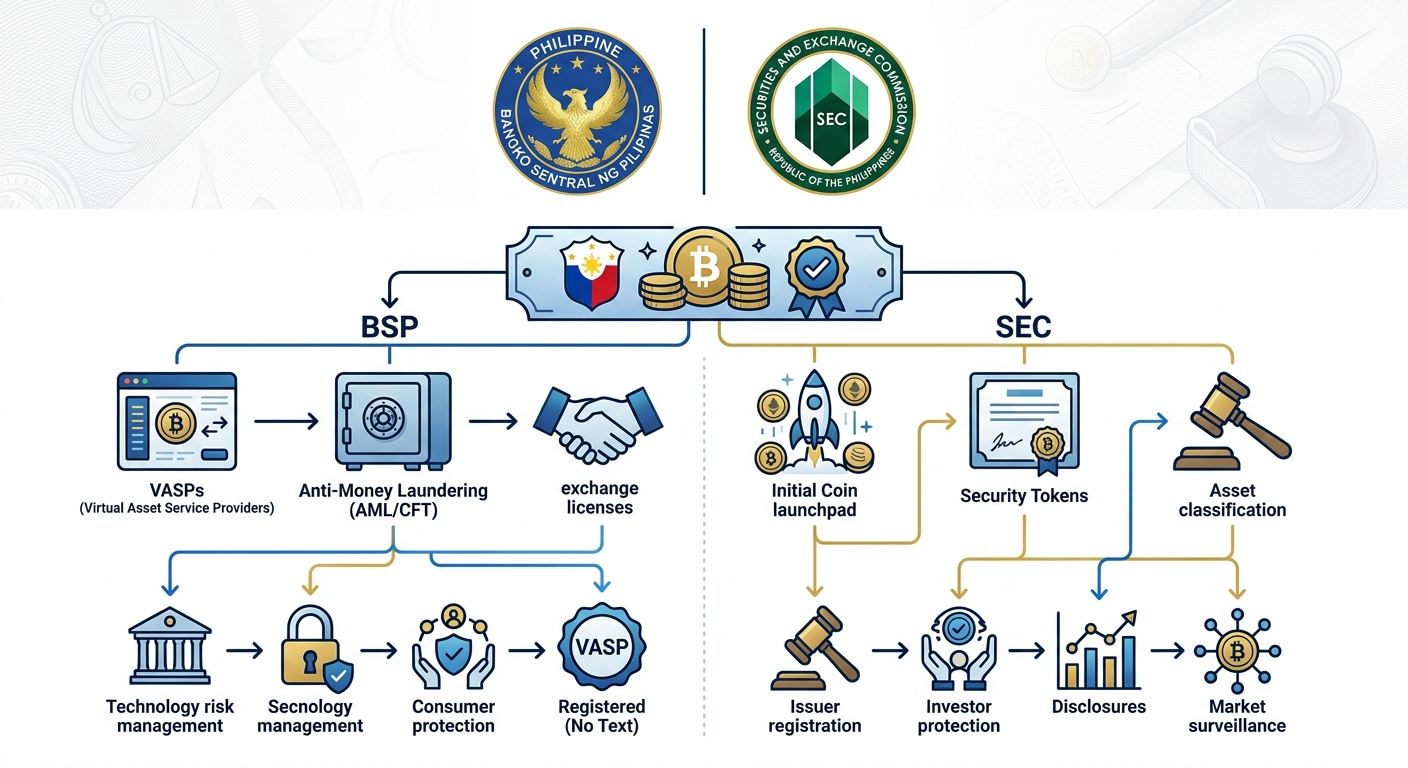
The Philippine Dual-Regulatory Framework for Cryptocurrency and Virtual Assets: A Comprehensive Guide for Foreign Investors in 2026
With the BSP's Circular No. 1108 and the SEC's CASP Rules (MC Nos. 04 and 05 of 2025) now both in force, foreign investors entering the Philippine virtual asset space face a bifurcated regulatory landscape that did not exist three years ago. This guide maps the jurisdictional boundaries between the Bangko Sentral ng Pilipinas and the Securities and Exchange Commission, explains the licensing pathways, capitalization requirements, AML/CTF obligations, the BSP's continued VASP license moratorium, and the practical steps a foreign investor must take to operate lawfully in the Philippines' digital asset market.
The Philippine E-Invoicing Mandate: A Comprehensive Compliance Guide for Foreign Companies in 2026
With the December 31, 2026 deadline for mandatory e-invoicing under BIR Revenue Regulations No. 11-2025 fast approaching, foreign companies operating in the Philippines face an urgent compliance obligation that cannot be deferred. This guide provides a complete analysis of who must comply, what constitutes a compliant electronic invoice, the step-by-step implementation process, tax deduction opportunities under the CREATE MORE Act, and the penalties for non-compliance — with every legal citation verified against primary sources.