7 Legal Steps to Buy an Existing Business in the Philippines as a Foreigner

Starting a business from scratch in the Philippines is well-documented. But what if there's already a profitable company you'd rather buy? Acquiring an existing enterprise — whether a restaurant, tech firm, or manufacturing outfit — can save you years of setup time. The catch: Philippine law adds several layers of scrutiny when the buyer is a foreign national.
Here are the seven essential legal steps to follow.
Step 1: Confirm the Business Is Open to Foreign Ownership
Before negotiating price, check whether a foreigner can legally own the target business at all. The Foreign Investment Negative List (FINL), updated every two years under the Foreign Investments Act (RA 7042), divides industries into two lists:
- List A — activities reserved for Filipino nationals by the Constitution or specific laws (e.g., mass media, small-scale mining, security agencies)
- List B — activities where foreign ownership is limited for security, defence, or public health reasons, or where the enterprise is capitalised below USD 200,000
If the target company operates in a sector on List A with a 60% Filipino ownership cap, you can still acquire shares — but only up to 40% of the outstanding capital stock. A fully foreign-owned acquisition is possible only if the business activity is not on the Negative List or qualifies under an exemption (e.g., export enterprises under the FIA).
Step 2: Choose Your Acquisition Structure — Share Purchase vs Asset Purchase
There are two main ways to acquire a Philippine business:
Share Purchase
You buy the shares of stock from the existing shareholders. The company continues to exist with the same SEC registration, contracts, employees, and permits. This is the most common route for acquiring small and medium businesses.
Asset Purchase
You (or a new Philippine entity you set up) purchase the company's assets — equipment, inventory, intellectual property, customer lists — without buying the corporate entity itself. This lets you avoid inheriting unknown liabilities but typically requires setting up a new company and re-applying for permits.
For most foreign buyers, a share purchase is simpler because it preserves the target's existing registrations, contracts, and workforce. However, thorough due diligence is critical to uncover hidden liabilities.
Step 3: Conduct Legal Due Diligence
Due diligence is not optional — it's your protection against inheriting problems. At minimum, review:
- SEC filings — Articles of Incorporation, General Information Sheet, audited financial statements
- BIR tax compliance — tax clearance certificates, pending assessments, open cases
- Labour matters — pending NLRC cases, collective bargaining agreements, unfunded employee benefits
- Contracts and leases — look for change-of-control clauses that could trigger termination or consent requirements
- Permits and licences — barangay clearance, mayor's permit, industry-specific licences (FDA, BSP, NTC, etc.)
- Litigation — pending or threatened suits in any court or quasi-judicial body
- Foreign ownership ratio — verify that post-acquisition, foreign equity will not breach nationality limits in the Articles of Incorporation or the FINL
Engaging a Philippine law firm for due diligence is strongly recommended. The cost is a fraction of the risk you'd assume without it.
Step 4: Execute the Deed of Sale and Transfer Shares
Once terms are agreed, the parties execute a Deed of Absolute Sale of Shares. Under Section 62 of the Revised Corporation Code (RA 11232), the transfer of shares is not valid until:
- The old stock certificates are surrendered and cancelled.
- New certificates are issued in the buyer's name.
- The transfer is recorded in the corporation's Stock and Transfer Book.
If the target company's articles contain a right of first refusal or restriction on transfer, those provisions must be complied with before the sale can proceed.
Step 5: Settle the Taxes
Share transfers in the Philippines trigger specific tax obligations:
- Capital Gains Tax (CGT) — a flat 15% on the net capital gain from the sale of shares not traded on the stock exchange, payable by the seller within 30 days of the sale. This rate was set by the TRAIN Law (RA 10963).
- Documentary Stamp Tax (DST) — PHP 1.50 for every PHP 200 (or fraction thereof) of the par value of the shares transferred, under Section 175 of the Tax Code.
The buyer must obtain a Certificate Authorizing Registration (CAR) from the Bureau of Internal Revenue before the transfer can be recorded in the Stock and Transfer Book. Without the CAR, the SEC will not recognise the new ownership in subsequent filings.
Important for foreign buyers: if you are remitting the purchase price from abroad, register the inward remittance with the Bangko Sentral ng Pilipinas (BSP) to ensure you can later repatriate profits and dividends. The BSP registration also serves as proof of your foreign investment.
Step 6: Update SEC and Other Government Registrations
After the share transfer is complete, file the following:
- Amended General Information Sheet (GIS) — reflecting new stockholders, directors, and officers. File with the SEC within 30 days of the annual stockholders' meeting or any change in directors/officers.
- Amended Articles of Incorporation — required only if you're changing the corporate name, purpose, or capital structure.
- BIR Form 1706 — the CGT return filed by the seller, but the buyer should confirm it was filed to secure the CAR.
- Local government update — update the business permit and mayor's permit if there's a change in corporate officers or authorised signatories.
If you're acquiring more than 40% of a nationalized industry, the SEC will scrutinise whether the post-sale foreign equity ratio complies with constitutional and statutory limits.
Step 7: Check If PCC Notification Is Required
The Philippine Competition Commission (PCC) requires mandatory notification for mergers and acquisitions that exceed certain size thresholds. As of March 1, 2026, the thresholds are:
- Size of Party (SOP): at least one party has assets or revenues of at least PHP 9.1 billion
- Size of Transaction (SOT): the transaction value is at least PHP 3.8 billion
Both tests must be met for compulsory notification under the Philippine Competition Act (RA 10667). Most small and mid-size business acquisitions fall well below these thresholds and do not require PCC filing.
However, the PCC retains the power to review any transaction — even below the thresholds — if it may substantially prevent, restrict, or lessen competition. When in doubt, consult counsel.
Key Takeaways for Foreign Buyers
- Check the Negative List first. No amount of due diligence matters if you can't legally own the business.
- Share purchases are simpler but require thorough due diligence to avoid hidden liabilities.
- Register your foreign investment with the BSP — this is your ticket to repatriating profits later.
- The 15% CGT is the seller's burden, but the buyer can't register the transfer without proof it was paid.
- Engage local counsel. Philippine M&A involves overlapping requirements from the SEC, BIR, BSP, PCC, and local government units. A law firm experienced in foreign investment transactions can save you from costly missteps.
Buying an existing business can be the fastest way for a foreigner to enter the Philippine market — but only if you follow the legal roadmap. If you're considering an acquisition, reach out to TTFC Law for a consultation tailored to your specific deal.
Related Articles

The Philippine Privacy Impact Assessment Revolution: What the 2026 Draft Circular Means for Foreign Companies
The NPC's August 2026 draft circular would replace the blanket Privacy Impact Assessment obligation that has governed Philippine data privacy compliance since 2017 with a risk-tiered framework. For foreign companies operating in or serving the Philippine market, the shift from a one-size-fits-all requirement to a threshold-based trigger system carries significant compliance and cost implications. This guide explains the eight mandatory PIA trigger categories, the new quantitative thresholds, what the draft circular means for AI systems and cross-border transfers, and the practical steps foreign companies must take now.
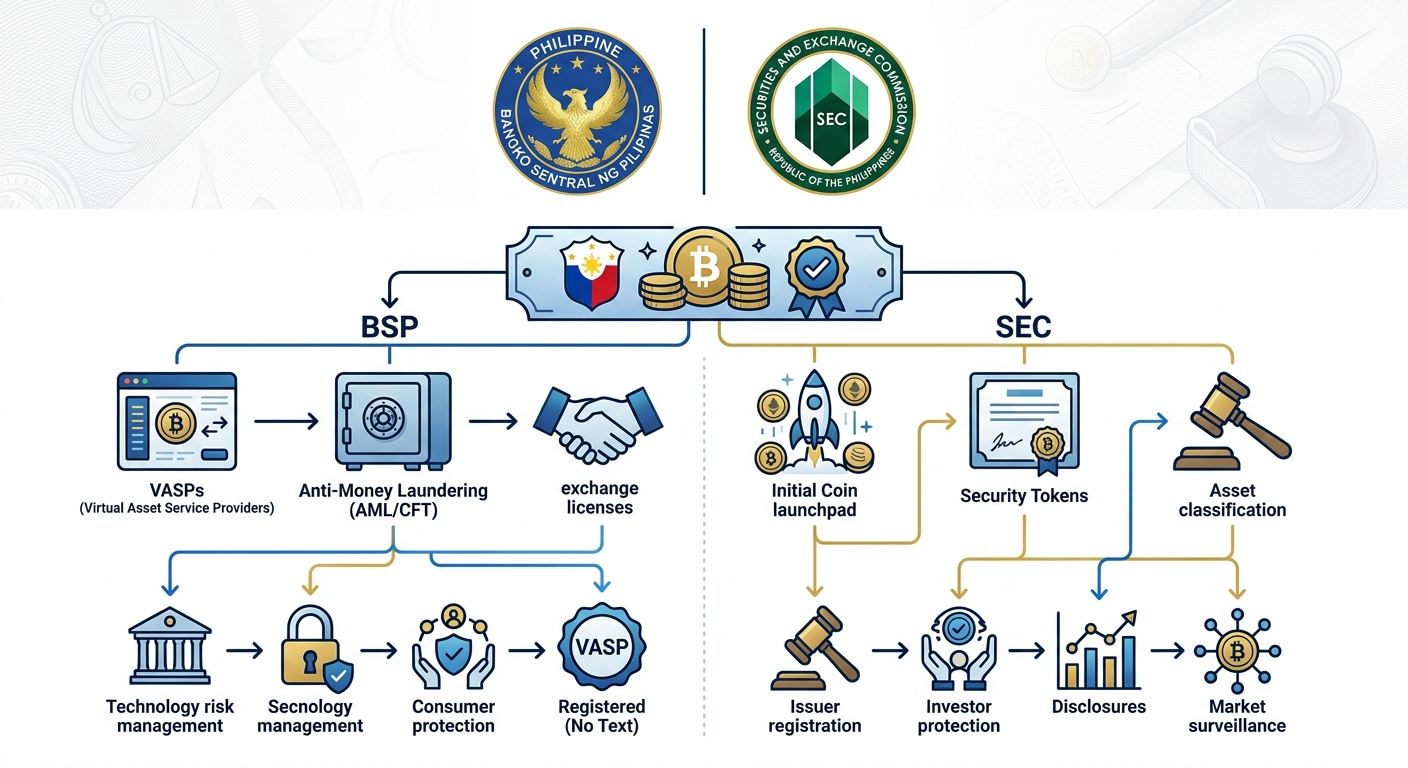
The Philippine Dual-Regulatory Framework for Cryptocurrency and Virtual Assets: A Comprehensive Guide for Foreign Investors in 2026
With the BSP's Circular No. 1108 and the SEC's CASP Rules (MC Nos. 04 and 05 of 2025) now both in force, foreign investors entering the Philippine virtual asset space face a bifurcated regulatory landscape that did not exist three years ago. This guide maps the jurisdictional boundaries between the Bangko Sentral ng Pilipinas and the Securities and Exchange Commission, explains the licensing pathways, capitalization requirements, AML/CTF obligations, the BSP's continued VASP license moratorium, and the practical steps a foreign investor must take to operate lawfully in the Philippines' digital asset market.
The Philippine E-Invoicing Mandate: A Comprehensive Compliance Guide for Foreign Companies in 2026
With the December 31, 2026 deadline for mandatory e-invoicing under BIR Revenue Regulations No. 11-2025 fast approaching, foreign companies operating in the Philippines face an urgent compliance obligation that cannot be deferred. This guide provides a complete analysis of who must comply, what constitutes a compliant electronic invoice, the step-by-step implementation process, tax deduction opportunities under the CREATE MORE Act, and the penalties for non-compliance — with every legal citation verified against primary sources.