Can a Foreigner Be a Director or Officer of a Philippine Corporation?

One of the most common questions we hear from foreign investors setting up a Philippine corporation is: "Can I actually sit on the board — or do I need to find Filipino partners for that?"
The short answer is yes, a foreigner can be a director and even serve as president. But some officer roles are off-limits, and in certain industries, your board seats must match your equity cap. Here's how it works.
The General Rule: No Citizenship Ban on Directors
The Revised Corporation Code (Republic Act No. 11232) does not impose a blanket citizenship requirement on directors. Under Section 22, the only baseline requirement is that every director must own at least one (1) share of stock registered in their name.
This means that in industries where 100% foreign ownership is permitted — such as most manufacturing, IT-BPO, export enterprises, and general services — a foreigner can hold every single board seat.
Officer Roles: Where Nationality Matters
Under Section 24 of the Revised Corporation Code, every corporation must elect at minimum a president, treasurer, secretary, and compliance officer (for corporations vested with public interest). The nationality and residency rules differ for each:
| Role | Can a Foreigner Hold It? | Key Requirement |
|---|---|---|
| President | Yes (if eligible as director) | Must be a director; must own at least one share |
| Treasurer | Yes | Must be a Philippine resident; cannot also serve as president |
| Corporate Secretary | No | Must be a Filipino citizen and a Philippine resident |
| Compliance Officer | Yes (generally) | Appointed by the board; no explicit citizenship requirement |
The critical takeaway: you will always need at least one Filipino national to serve as corporate secretary, regardless of how your equity is structured.
Restricted Industries: Board Seats Must Match Equity Caps
In industries on the Foreign Investment Negative List (FINL), foreign equity is capped — typically at 40%. In these cases, the Anti-Dummy Law (Commonwealth Act No. 108) requires that board representation and management control reflect the permitted equity ratio.
For example, if your corporation operates a public utility where the foreign equity cap is 40%, having foreigners occupy a majority of board seats could be interpreted as a violation of the Anti-Dummy Law — even if the foreign shareholders technically own only 40% of shares.
Practical rule: In a partially nationalized corporation with a 60-40 Filipino-foreign equity split, the board should generally have a Filipino majority.
What About a One-Person Corporation (OPC)?
The Revised Corporation Code introduced the One Person Corporation under Sections 116–131. A foreigner can form an OPC provided the business activity allows 100% foreign ownership. The single stockholder acts as both director and president. However, the OPC must still appoint a Filipino corporate secretary and designate a treasurer-in-trust who is a Philippine resident.
Quick Checklist for Foreign Directors and Officers
- ✅ Confirm your business activity allows foreign equity at your desired ownership level (check the FINL)
- ✅ Secure at least one qualifying share in your name to sit on the board
- ✅ Appoint a Filipino citizen as corporate secretary — this is non-negotiable
- ✅ Ensure your treasurer is a Philippine resident (citizenship not strictly required)
- ✅ In restricted sectors, keep foreign board seats proportional to your equity cap
- ✅ Obtain a valid working visa (typically a 9(g) pre-arranged employment visa or a 47(a)(2) special investor visa) if you will be performing executive functions in the Philippines
Bottom Line
Philippine corporate law is more accommodating to foreign directors and officers than many investors expect. Outside of the corporate secretary requirement and sector-specific equity caps, foreigners can hold virtually any corporate role. The key is structuring your board and officer appointments to comply with both the Revised Corporation Code and the Anti-Dummy Law from the start.
Need help structuring your Philippine corporation's board and officer lineup? Get in touch with TTFC Law — we help foreign investors get it right the first time.
Related Articles

The Philippine Privacy Impact Assessment Revolution: What the 2026 Draft Circular Means for Foreign Companies
The NPC's August 2026 draft circular would replace the blanket Privacy Impact Assessment obligation that has governed Philippine data privacy compliance since 2017 with a risk-tiered framework. For foreign companies operating in or serving the Philippine market, the shift from a one-size-fits-all requirement to a threshold-based trigger system carries significant compliance and cost implications. This guide explains the eight mandatory PIA trigger categories, the new quantitative thresholds, what the draft circular means for AI systems and cross-border transfers, and the practical steps foreign companies must take now.
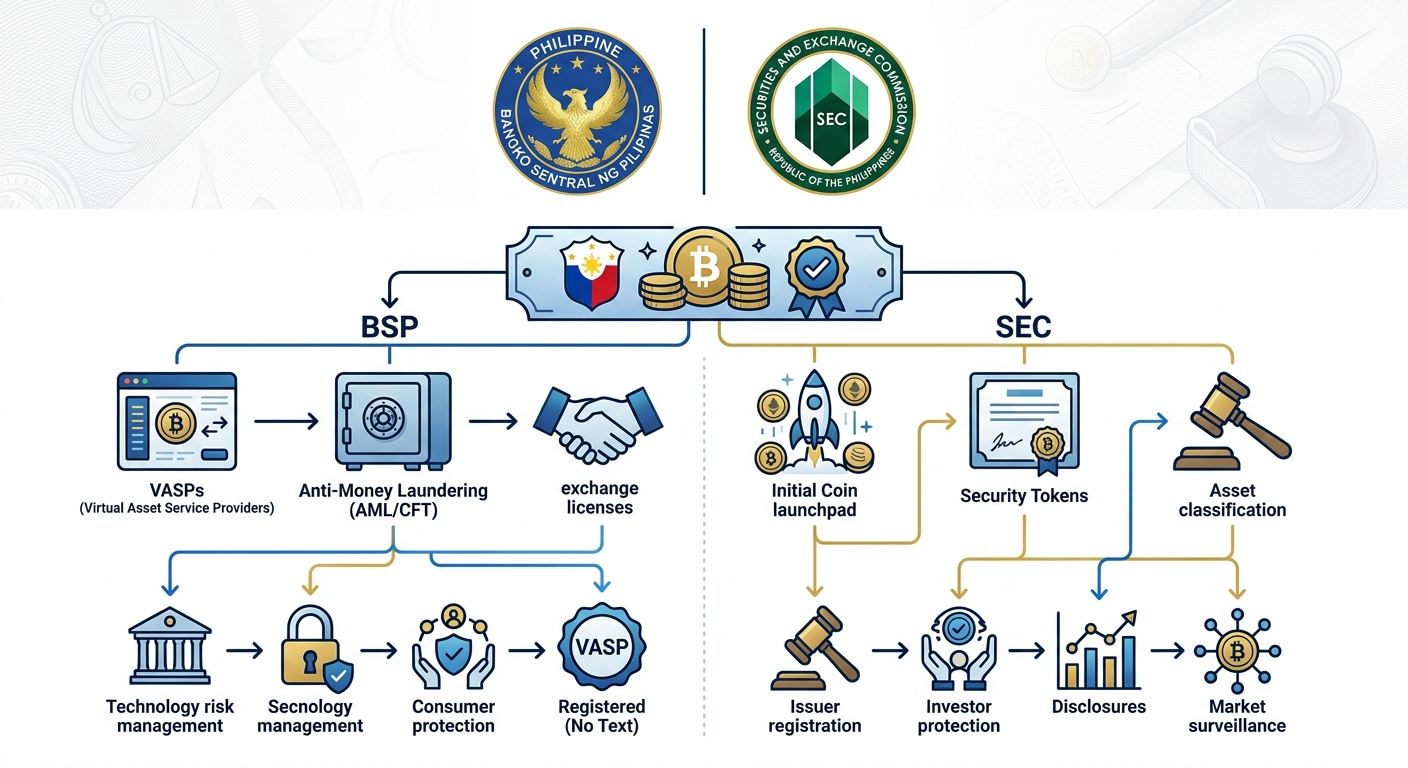
The Philippine Dual-Regulatory Framework for Cryptocurrency and Virtual Assets: A Comprehensive Guide for Foreign Investors in 2026
With the BSP's Circular No. 1108 and the SEC's CASP Rules (MC Nos. 04 and 05 of 2025) now both in force, foreign investors entering the Philippine virtual asset space face a bifurcated regulatory landscape that did not exist three years ago. This guide maps the jurisdictional boundaries between the Bangko Sentral ng Pilipinas and the Securities and Exchange Commission, explains the licensing pathways, capitalization requirements, AML/CTF obligations, the BSP's continued VASP license moratorium, and the practical steps a foreign investor must take to operate lawfully in the Philippines' digital asset market.

The Philippine E-Invoicing Mandate: A Comprehensive Compliance Guide for Foreign Companies in 2026
With the December 31, 2026 deadline for mandatory e-invoicing under BIR Revenue Regulations No. 11-2025 fast approaching, foreign companies operating in the Philippines face an urgent compliance obligation that cannot be deferred. This guide provides a complete analysis of who must comply, what constitutes a compliant electronic invoice, the step-by-step implementation process, tax deduction opportunities under the CREATE MORE Act, and the penalties for non-compliance — with every legal citation verified against primary sources.