How to Close a Foreign-Owned Company in the Philippines: A Step-by-Step Checklist

Starting a business in the Philippines gets plenty of attention. Closing one? Not so much. Yet foreign investors who skip the proper dissolution process risk ongoing tax liabilities, penalties, and even personal liability for directors — years after operations have stopped.
Whether you're winding down a subsidiary, branch office, or representative office, this checklist walks you through the legal steps to exit cleanly under Philippine law.
The Three Agencies You Must Clear
Corporate dissolution in the Philippines is governed primarily by the Revised Corporation Code (Republic Act No. 11232). But shutting down isn't just an SEC matter — you need clearance from three agencies, in this order:
- Bureau of Internal Revenue (BIR) — tax clearance
- Local Government Unit (LGU) — business permit cancellation
- Securities and Exchange Commission (SEC) — corporate dissolution
Skip one, and the others won't process your application.
Step 1: Pass a Board Resolution
Under Section 134 of the Revised Corporation Code, voluntary dissolution where no creditors are affected requires a majority vote of the board of directors and a majority vote of stockholders. If creditors will be affected, Section 135 requires approval from at least two-thirds (2/3) of the outstanding capital stock.
Your resolution should state the intent to dissolve, authorize the filing of all necessary documents, and appoint an officer to handle the winding-up process.
Step 2: Settle Employee Obligations
Before approaching any government agency, settle all employee-related obligations:
- Final pay, including prorated 13th-month pay
- Separation pay (if applicable under the Labor Code)
- SSS, PhilHealth, and Pag-IBIG contributions up to date
- Certificate of Employment for all separated employees
File the required Establishment Termination Report with the Department of Labor and Employment (DOLE) at least 30 days before closure, as required under Article 298 (formerly Article 283) of the Labor Code.
Step 3: Obtain BIR Tax Clearance
The BIR is the gatekeeper of the entire dissolution process. You'll need to:
- File a formal request for closure with your Revenue District Office (RDO)
- Submit all outstanding tax returns (income tax, VAT, withholding tax)
- File a final income tax return covering the short period up to closure
- Return all unused official receipts and invoices for cancellation
- Surrender your Certificate of Registration (BIR Form 2303)
- Pay any outstanding assessments, penalties, or deficiencies
The BIR will conduct an audit of your records. This typically takes four to eight months, sometimes longer if discrepancies are found. Once satisfied, the BIR issues a Tax Clearance Certificate — the single most important document in the dissolution process.
Step 4: Cancel Local Government Permits
Visit the LGU where your business is registered to:
- Cancel your business permit (Mayor's Permit)
- Settle any outstanding local business taxes and real property taxes
- Obtain barangay clearance confirming no local obligations remain
Requirements vary by city. In Makati, for example, you may need a zoning clearance on top of the standard permits. Budget one to two months for this step.
Step 5: Liquidate Assets and Settle Creditors
If your company has creditors, you must go through a formal liquidation process. This involves:
- Appointing a liquidator (often a board-appointed officer or external trustee)
- Publishing a notice of dissolution in a newspaper of general circulation for three consecutive weeks
- Notifying all known creditors and settling their claims
- Distributing remaining assets to stockholders
Under Section 139 of the Revised Corporation Code, a dissolved corporation continues as a body corporate for three years after dissolution solely for the purpose of winding up its affairs.
Step 6: File Articles of Dissolution with the SEC
Once you have your BIR Tax Clearance, gather these documents for the SEC:
- Articles of Dissolution (SEC prescribed form)
- Board Resolution and stockholder approval
- BIR Tax Clearance Certificate
- Latest Audited Financial Statements
- Latest General Information Sheet (GIS)
- Proof of publication (if creditors are affected)
- Affidavit of non-operation or affidavit of liquidation
File with the SEC's Company Registration and Monitoring Department (CRMD). Processing takes approximately 90 to 120 working days for straightforward cases. Once approved, the SEC issues a Certificate of Dissolution — the legal endpoint of your company's existence.
Step 7: Deregister with Other Agencies
Don't forget to close accounts with:
- SSS, PhilHealth, and Pag-IBIG — file employer closure notices
- Bangko Sentral ng Pilipinas (BSP) — if you have foreign currency loans or BSP-registered investments, you'll need to report these for foreign exchange compliance
- BOI or PEZA — if your company was registered with either investment promotion agency
Special Considerations for Foreign-Owned Entities
Branch Offices and Representative Offices
Branches and representative offices of foreign corporations don't file Articles of Dissolution the same way domestic corporations do. Instead, they file a petition to withdraw with the SEC-CRMD, accompanied by essentially the same clearances (BIR, LGU, and other agencies).
Repatriation of Capital
Until the dissolution process is complete, capital and dividends may remain trapped in Philippine bank accounts. If your original investment was registered with the BSP, coordinate early to ensure you can repatriate remaining funds at the prevailing exchange rate.
Timeline Expectations
Plan for 12 to 18 months from start to finish. The BIR audit is the biggest variable. Foreign investors who begin planning their exit well in advance — reconciling tax filings, clearing obligations, and organizing documentation — consistently close faster.
Estimated Costs
- Legal and professional fees: PHP 50,000 – PHP 200,000 (depending on complexity)
- Publication fees: PHP 20,000 – PHP 40,000
- BIR and SEC filing fees: PHP 5,000 – PHP 20,000
- Miscellaneous clearances: PHP 5,000+
The Bottom Line
Closing a foreign-owned company in the Philippines is not something you do overnight. It requires methodical coordination across multiple agencies, careful settlement of obligations, and — above all — patience with the BIR audit process.
The worst thing you can do is simply stop operating and walk away. A company that isn't formally dissolved continues to accrue tax obligations, and directors can be held personally liable for non-compliance.
Start early, document everything, and work with a Philippine law firm that understands the unique requirements for foreign-owned entities. If you're planning an exit from the Philippine market, contact TTFC Law for a consultation.
Related Articles

The Philippine Privacy Impact Assessment Revolution: What the 2026 Draft Circular Means for Foreign Companies
The NPC's August 2026 draft circular would replace the blanket Privacy Impact Assessment obligation that has governed Philippine data privacy compliance since 2017 with a risk-tiered framework. For foreign companies operating in or serving the Philippine market, the shift from a one-size-fits-all requirement to a threshold-based trigger system carries significant compliance and cost implications. This guide explains the eight mandatory PIA trigger categories, the new quantitative thresholds, what the draft circular means for AI systems and cross-border transfers, and the practical steps foreign companies must take now.
The Philippine Dual-Regulatory Framework for Cryptocurrency and Virtual Assets: A Comprehensive Guide for Foreign Investors in 2026
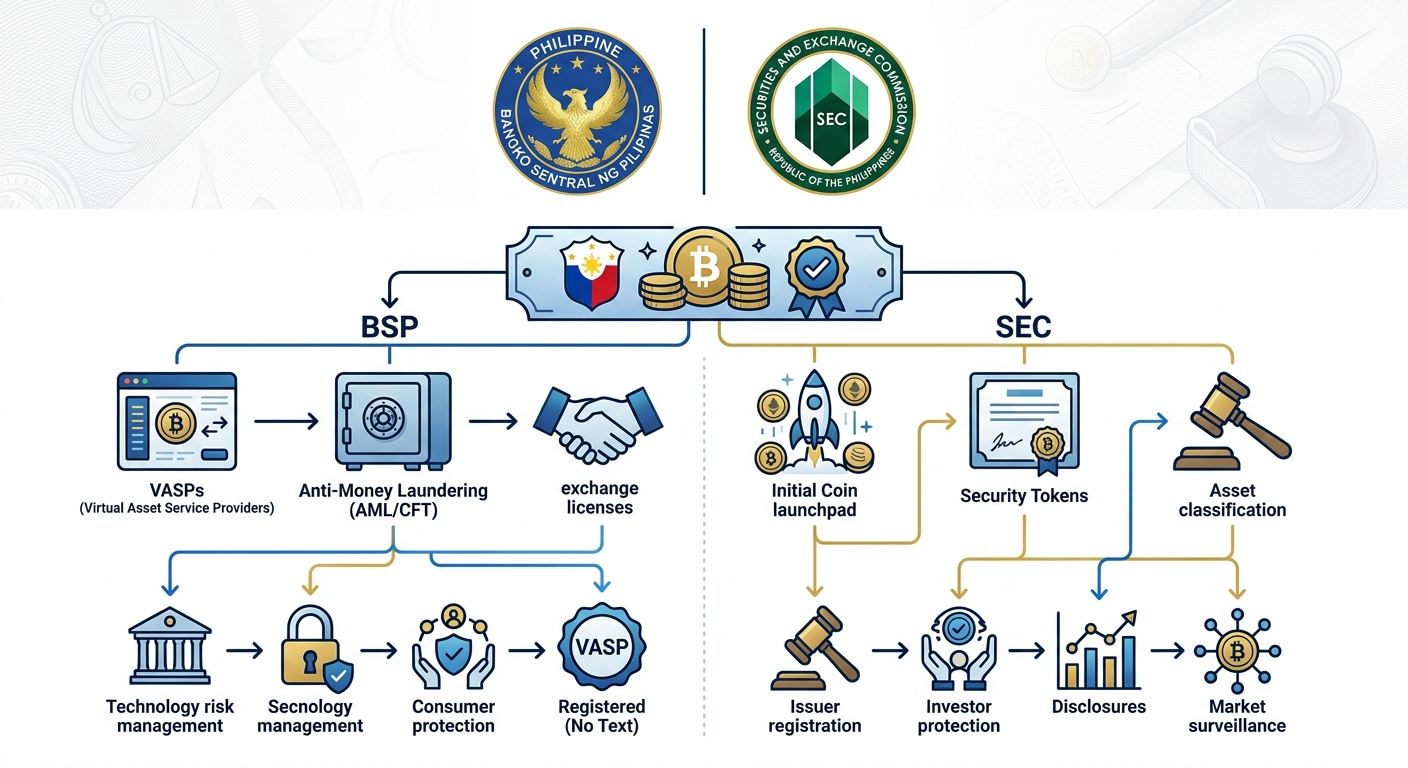
With the BSP's Circular No. 1108 and the SEC's CASP Rules (MC Nos. 04 and 05 of 2025) now both in force, foreign investors entering the Philippine virtual asset space face a bifurcated regulatory landscape that did not exist three years ago. This guide maps the jurisdictional boundaries between the Bangko Sentral ng Pilipinas and the Securities and Exchange Commission, explains the licensing pathways, capitalization requirements, AML/CTF obligations, the BSP's continued VASP license moratorium, and the practical steps a foreign investor must take to operate lawfully in the Philippines' digital asset market.
The Philippine E-Invoicing Mandate: A Comprehensive Compliance Guide for Foreign Companies in 2026
With the December 31, 2026 deadline for mandatory e-invoicing under BIR Revenue Regulations No. 11-2025 fast approaching, foreign companies operating in the Philippines face an urgent compliance obligation that cannot be deferred. This guide provides a complete analysis of who must comply, what constitutes a compliant electronic invoice, the step-by-step implementation process, tax deduction opportunities under the CREATE MORE Act, and the penalties for non-compliance — with every legal citation verified against primary sources.