SEC HARBOR Is Live: What Foreign Companies in the Philippines Must Do Now

If your foreign company is registered with the Philippine Securities and Exchange Commission (SEC) — whether as a branch office, representative office, regional headquarters (RHQ), or regional operating headquarters (ROHQ) — there's an important compliance change you need to act on now.
As of January 30, 2026, the SEC's new HARBOR platform (Hierarchical and Applicable Relations and Beneficial Ownership Registry) is the exclusive system for filing beneficial ownership (BO) disclosures. This replaces the old process of reporting BO information through the General Information Sheet (GIS).
What Changed?
Under SEC Memorandum Circular No. 15, Series of 2025 — officially titled the Beneficial Ownership Disclosure Rules of 2026 — the SEC has separated beneficial ownership reporting from the annual GIS. Here's the key shift:
- Before: BO data was part of your annual GIS filing on eFAST.
- Now: BO data must be filed separately through HARBOR. The BO section has been removed from the GIS entirely.
Your company still needs to file the annual GIS for general corporate disclosures (directors, officers, stockholders, etc.). But beneficial ownership is now a standalone obligation on a separate platform.
Who Must Comply?
The Revised Rules apply broadly. If you're a foreign entity licensed or authorized to do business in the Philippines, you're covered. Specifically:
- Branch offices
- Representative offices
- Regional headquarters (RHQ)
- Regional operating headquarters (ROHQ)
- Any other foreign corporation registered with the SEC
The rules also cover domestic stock and non-stock corporations, partnerships, and one-person corporations — but for foreign companies, the key point is that you are not exempt simply because your parent entity is incorporated abroad.
What Counts as a "Beneficial Owner"?
Under the Revised Rules, a beneficial owner must be a natural person — not another company. You must trace ownership and control all the way up to the individual level. The SEC classifies beneficial owners into Categories A through I, which include:
- Category A: A natural person who owns at least 20% of voting rights, voting shares, or capital of the reporting entity
- Individuals who exercise control or influence over corporate decisions, even without majority ownership
- Persons who direct or influence board actions
- Those who control corporate assets through nominee, trustee, or stewardship arrangements
- Senior management officers, where no other beneficial owner can be identified
For foreign companies, this typically means disclosing the individual shareholders or officers of the parent company who ultimately control the Philippine entity.
Key Deadlines and Requirements
- Newly registered companies must submit BO information upon incorporation or SEC registration.
- Existing companies must file through HARBOR with their next GIS submission cycle.
- Any change in beneficial ownership — such as a share transfer, new controlling shareholder, or change in a control agreement — must be reported within 7 calendar days.
That 7-day window is significantly shorter than the old annual reporting cycle, which means foreign companies need internal systems to track ownership changes in real time.
Penalties for Non-Compliance
The SEC isn't treating this as a soft launch. The penalties under the Revised Rules are substantial:
- Filing false or misleading BO information: Fines of up to PHP 2 million and potential corporate dissolution
- Responsible officers: Fines of up to PHP 1 million and disqualification from holding corporate office for 5 years
These penalties apply to both domestic and foreign entities. For a foreign branch or ROHQ, dissolution could mean losing your SEC license to operate in the Philippines entirely.
Why This Matters for Foreign Investors
The HARBOR rollout is part of the Philippines' alignment with Financial Action Task Force (FATF) recommendations on beneficial ownership transparency. The Philippines was previously placed on the FATF grey list and has been working to demonstrate compliance with international anti-money laundering standards.
For foreign investors, this means two things:
- Greater regulatory scrutiny. The SEC now has a dedicated platform to cross-reference ownership data across all registered entities. Discrepancies between your HARBOR filing and other regulatory submissions will be easier to detect.
- Stronger investor protections. A more transparent corporate environment reduces the risk of fraud and dummy arrangements — which ultimately benefits legitimate foreign investors.
What You Should Do Now
- Check your eFAST access. HARBOR is integrated with the SEC's eFAST system. Make sure your company's authorized filer has an active eSECURE account.
- Map your ownership structure. Trace all ownership and control relationships back to natural persons. Prepare documentation for each category of beneficial owner.
- Set up internal tracking. With the 7-day reporting window for changes, you need a process to flag ownership changes and file updates promptly.
- Coordinate with your parent company. Foreign branch offices and ROHQs should align with their head office to ensure accurate disclosure of upstream ownership.
- Consult Philippine legal counsel. The categories are broad and the penalties are serious. Don't guess at whether someone qualifies as a beneficial owner — get a proper legal assessment.
The Bottom Line
HARBOR isn't optional, and it isn't just a formality. The SEC has given foreign companies a clear framework, a functional platform, and serious consequences for non-compliance. If your company operates in the Philippines, treat this as a priority — not a box to check at the end of the year.
Need help with your HARBOR filing or beneficial ownership assessment? Contact TTFC Law — we advise foreign corporations on SEC compliance, corporate structuring, and regulatory obligations in the Philippines.
Related Articles

The Philippine Privacy Impact Assessment Revolution: What the 2026 Draft Circular Means for Foreign Companies
The NPC's August 2026 draft circular would replace the blanket Privacy Impact Assessment obligation that has governed Philippine data privacy compliance since 2017 with a risk-tiered framework. For foreign companies operating in or serving the Philippine market, the shift from a one-size-fits-all requirement to a threshold-based trigger system carries significant compliance and cost implications. This guide explains the eight mandatory PIA trigger categories, the new quantitative thresholds, what the draft circular means for AI systems and cross-border transfers, and the practical steps foreign companies must take now.
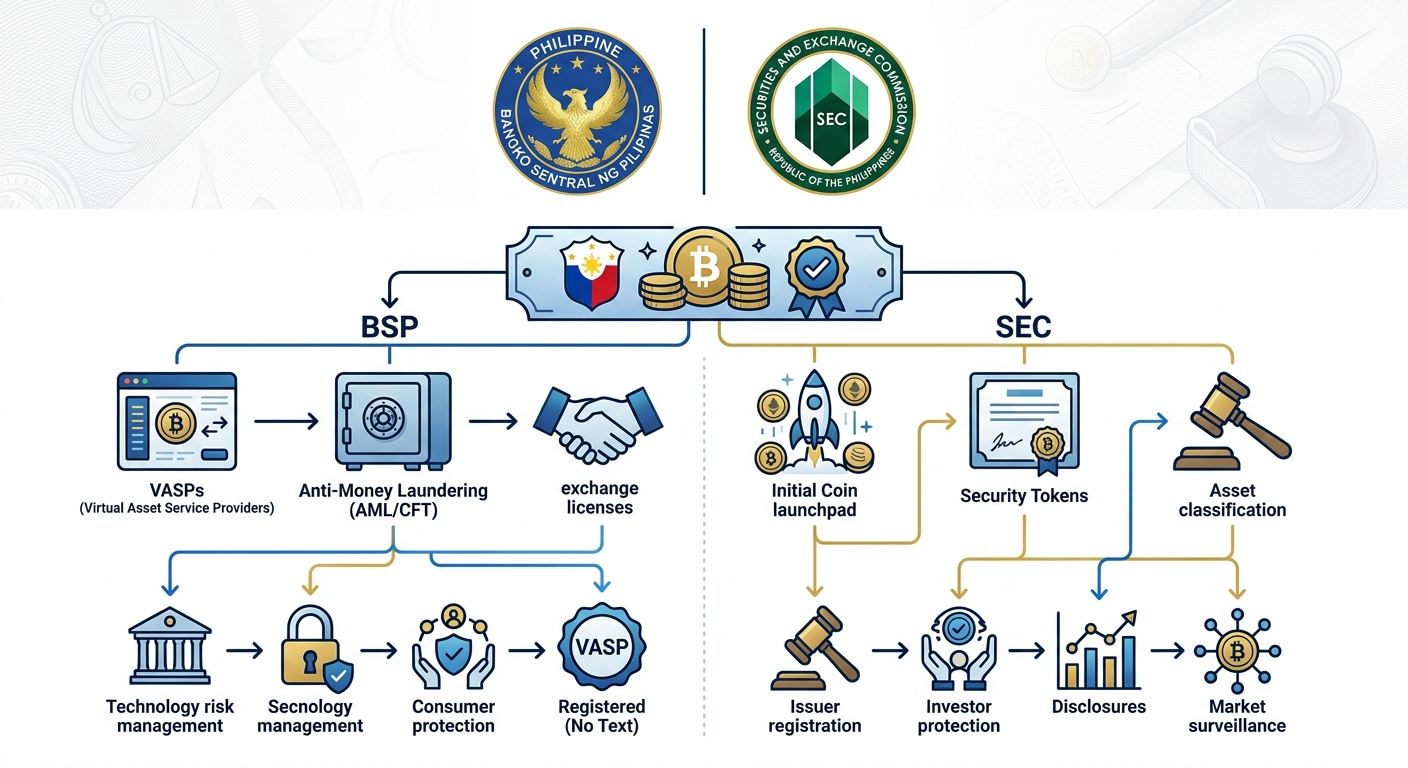
The Philippine Dual-Regulatory Framework for Cryptocurrency and Virtual Assets: A Comprehensive Guide for Foreign Investors in 2026
With the BSP's Circular No. 1108 and the SEC's CASP Rules (MC Nos. 04 and 05 of 2025) now both in force, foreign investors entering the Philippine virtual asset space face a bifurcated regulatory landscape that did not exist three years ago. This guide maps the jurisdictional boundaries between the Bangko Sentral ng Pilipinas and the Securities and Exchange Commission, explains the licensing pathways, capitalization requirements, AML/CTF obligations, the BSP's continued VASP license moratorium, and the practical steps a foreign investor must take to operate lawfully in the Philippines' digital asset market.
The Philippine E-Invoicing Mandate: A Comprehensive Compliance Guide for Foreign Companies in 2026
With the December 31, 2026 deadline for mandatory e-invoicing under BIR Revenue Regulations No. 11-2025 fast approaching, foreign companies operating in the Philippines face an urgent compliance obligation that cannot be deferred. This guide provides a complete analysis of who must comply, what constitutes a compliant electronic invoice, the step-by-step implementation process, tax deduction opportunities under the CREATE MORE Act, and the penalties for non-compliance — with every legal citation verified against primary sources.