How to Start a Business in the Philippines as a Foreigner: Complete 2025 Guide

The Philippines has become an increasingly attractive destination for foreign investors, thanks to its strategic location in Southeast Asia, English-speaking workforce, and liberalized investment climate. However, navigating Philippine business regulations requires careful planning. This guide covers everything foreign entrepreneurs need to know about establishing a business presence in the Philippines.
Investment Vehicles for Foreign Investors
Foreign investors have three primary options for establishing a business in the Philippines:
1. Branch Office of a Foreign Corporation
A branch office is an extension of your foreign parent company into the Philippines. Unlike incorporating a new company, a branch office is not a separate legal entity—it operates as part of the foreign parent company.
Key characteristics:
- Full ownership and control by the foreign parent company
- The foreign parent company is directly liable for all branch obligations
- Requires appointment of a resident agent in the Philippines
- Must secure a License to Do Business from the Securities and Exchange Commission (SEC)
Required documents include:
- Authenticated copies of the parent company's Articles of Incorporation
- Board Resolution authorizing establishment of the Philippine branch
- Statement of Assets and Liabilities
- Designation of a Resident Agent
2. Foreign-Owned Domestic Corporation
This is a corporation incorporated under Philippine law where more than 40% of the outstanding capital stock is owned by foreign individuals or entities. While considered "domestic" because it's incorporated in the Philippines, it remains subject to foreign ownership restrictions in certain industries.
Advantages:
- Separate legal personality from its owners
- Limited liability—shareholders are generally not personally liable for corporate debts
- Easier to raise capital and transfer ownership
3. Philippine-Owned Domestic Corporation
A corporation where at least 60% of the outstanding capital stock is owned by Filipino citizens. While this limits foreign ownership to 40%, it offers access to industries restricted to Filipino-owned businesses and lower capitalization requirements.
Capital Requirements
Minimum capital requirements vary based on business structure and activities:
| Business Structure | Minimum Paid-Up Capital |
|---|---|
| Foreign-Owned Corporation (General) | US$200,000 (approximately PHP 11 million) |
| Foreign Retailer | PHP 25 million |
| Philippine-Owned Corporation | No minimum capital requirement |
Note: The US$200,000 requirement may be reduced to US$100,000 if the business involves advanced technology or directly employs at least 50 Filipino workers.
Retail Trade Liberalization Act (RTLA)
If your business involves selling goods directly to consumers (retail trade), you must comply with the Retail Trade Liberalization Act. The RTLA applies to foreign entities engaged in retail trade, defined as "any act, occupation, or calling of habitually selling to the general public merchandise, commodities, or goods for consumption."
Requirements for Foreign Retailers:
- Minimum paid-up capital: PHP 25 million
- Reciprocity requirement: Your home country must allow Filipino retailers to operate
- Per-store investment: At least PHP 10 million for each additional physical store or warehouse
- Employment priority: Must prioritize hiring Filipinos before engaging foreign nationals
Important:
The RTLA expressly applies to online-only retailers. Even if you only sell through e-commerce channels, the warehouse where goods are stored is considered a "store" for capitalization purposes.
Annual Reporting Requirements:
- Maintenance and actual use of paid-up capital
- Number and location of stores, investment per store
- Stock inventory of locally manufactured products
- Other reports as prescribed by the SEC
Penalties for non-compliance: Imprisonment of 4-6 years and fines of PHP 1 million to PHP 5 million.
Alternative: Wholesale Trade Arrangement
Foreign businesses can avoid the stricter RTLA requirements by engaging in wholesale trade instead of retail. Under this arrangement, your company sells to a local partner retailer, which then sells directly to consumers.
Benefits:
- Lower capitalization requirement (US$200,000 instead of PHP 25 million)
- No per-store investment requirements
- Added protection from direct consumer complaints
Considerations:
- Loss of absolute control over retail operations
- Additional layer of taxation (income tax and VAT on transactions with the partner)
E-Commerce Requirements Under the Internet Transactions Act
If your business uses e-commerce channels, you must comply with the Internet Transactions Act (ITA), regardless of ownership structure. This includes:
- Registration with the DTI's E-Commerce Bureau Online Business Database
- Publishing on your homepage: corporate name, physical business address, and contact details (phone and email)
- Providing government identification or registration documents
Tax Implications for Foreign Businesses
Branch Office Taxation:
- Corporate Income Tax: 25% on Philippine-sourced income
- Branch Profit Remittance Tax (BPRT): 15% on profits remitted to the foreign head office
- Value-Added Tax: 12% on taxable sales (if annual gross sales exceed PHP 3 million)
Domestic Corporation Taxation:
- Corporate Income Tax: 25% (or 20% for small corporations with net taxable income not exceeding PHP 5 million and total assets not exceeding PHP 100 million)
- Withholding Tax on Dividends: 10%
- Value-Added Tax: 12%
Tax Treaties
The Philippines has tax treaties with numerous countries to avoid double taxation. Under these treaties, taxes paid in the Philippines may be credited against taxes in your home country. Check if your country has a tax treaty with the Philippines to optimize your tax position.
Post-Registration Requirements
After SEC registration, your business must complete the following:
- Community Tax Certificate: Annual tax payment at your principal office location
- Barangay Clearance: Community approval to operate
- Business Permit: Required before engaging in business, renewed annually
- BIR Registration: Tax Identification Number (TIN) and Certificate of Registration
- Authority to Print Receipts (ATP): Required for issuing official receipts
- SSS, PhilHealth, and Pag-IBIG Registration: Mandatory employer registration for employee benefits
- Import Accreditation: If engaged in importation, registration with the Bureau of Customs
Ongoing Compliance
Businesses must maintain the following periodic requirements:
- BIR Tax Payments: Monthly, quarterly, and annual tax filings and payments
- Business Permit Renewal: Annual renewal with the local government unit
- SEC Reportorial Requirements:
- Audited Financial Statements (AFS) - within 120 calendar days after fiscal year end
- General Information Sheet (GIS) - annually
Choosing the Right Structure
| Factor | Branch Office | Foreign-Owned Corp | Philippine-Owned Corp |
|---|---|---|---|
| Control | Full control | Effective control | Minority ownership |
| Liability | Parent company liable | Limited to corporation | Limited to corporation |
| Capital (General) | US$200,000 | US$200,000 | None |
| Capital (Retail) | PHP 25 million | PHP 25 million | None |
| BPRT Applicable | Yes (15%) | No | No |
Practical Recommendations
- Engage local legal counsel early: Philippine business regulations are complex and evolving. Professional guidance ensures compliance from the start.
- Plan your capital structure carefully: The minimum capital requirements significantly impact your business setup costs and ongoing obligations.
- Consider your exit strategy: Different structures have different implications for repatriation of profits and eventual exit.
- Factor in the time for registration: The full registration process typically takes 2-4 months, depending on the business structure and required permits.
- Stay updated on regulatory changes: Philippine investment laws continue to evolve, with recent amendments to the Retail Trade Liberalization Act and Foreign Investments Act expanding opportunities for foreign investors.
Setting up a business in the Philippines as a foreigner involves navigating multiple regulatory frameworks, but with proper planning and legal guidance, foreign entrepreneurs can successfully establish and grow their businesses in this dynamic market.
Related Articles

The Philippine Privacy Impact Assessment Revolution: What the 2026 Draft Circular Means for Foreign Companies
The NPC's August 2026 draft circular would replace the blanket Privacy Impact Assessment obligation that has governed Philippine data privacy compliance since 2017 with a risk-tiered framework. For foreign companies operating in or serving the Philippine market, the shift from a one-size-fits-all requirement to a threshold-based trigger system carries significant compliance and cost implications. This guide explains the eight mandatory PIA trigger categories, the new quantitative thresholds, what the draft circular means for AI systems and cross-border transfers, and the practical steps foreign companies must take now.
The Philippine Dual-Regulatory Framework for Cryptocurrency and Virtual Assets: A Comprehensive Guide for Foreign Investors in 2026
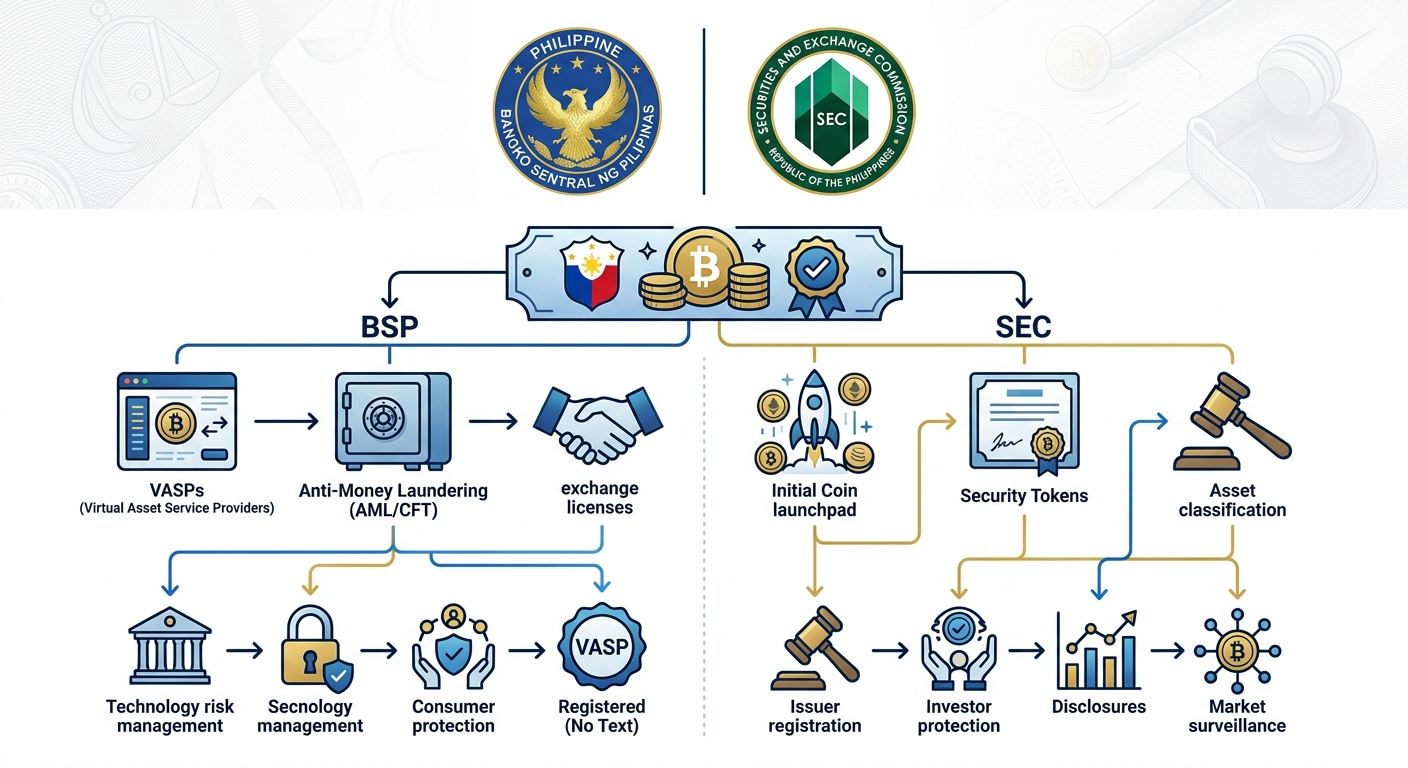
With the BSP's Circular No. 1108 and the SEC's CASP Rules (MC Nos. 04 and 05 of 2025) now both in force, foreign investors entering the Philippine virtual asset space face a bifurcated regulatory landscape that did not exist three years ago. This guide maps the jurisdictional boundaries between the Bangko Sentral ng Pilipinas and the Securities and Exchange Commission, explains the licensing pathways, capitalization requirements, AML/CTF obligations, the BSP's continued VASP license moratorium, and the practical steps a foreign investor must take to operate lawfully in the Philippines' digital asset market.
The Philippine E-Invoicing Mandate: A Comprehensive Compliance Guide for Foreign Companies in 2026
With the December 31, 2026 deadline for mandatory e-invoicing under BIR Revenue Regulations No. 11-2025 fast approaching, foreign companies operating in the Philippines face an urgent compliance obligation that cannot be deferred. This guide provides a complete analysis of who must comply, what constitutes a compliant electronic invoice, the step-by-step implementation process, tax deduction opportunities under the CREATE MORE Act, and the penalties for non-compliance — with every legal citation verified against primary sources.