How Foreigners Can Buy Property in the Philippines: A 2026 Complete Legal Guide
Introduction
The Philippines is among Southeast Asia’s most compelling real estate markets. Metro Manila’s condo sector has attracted decades of foreign capital. Provincial tourism destinations — Cebu, Palawan, Bohol, Siargao — are drawing international buyers seeking vacation homes and investment properties. Yet foreign investors routinely stumble on a single, fundamental misconception: that they cannot buy property in the Philippines at all.
That is wrong. Foreign nationals can buy Philippine property — but within a carefully defined legal framework that restricts direct land ownership, caps foreign participation in condominium developments, and requires strategic structuring when a genuine land holding is necessary for the investment. Navigating that framework correctly is the difference between a secure, appreciating asset and a transaction that gets voided, a title that gets cancelled, or an investment that becomes impossible to exit.
This guide provides a comprehensive, attorney-grade explanation of every legal pathway available to foreign buyers in the Philippines in 2026. It covers the constitutional restrictions, the statutory exceptions, the BIR tax framework, the step-by-step purchase process, and the practical structuring options that experienced practitioners use to protect foreign clients’ interests.
The Constitutional Foundation: Why Foreign Land Ownership Is Restricted
Article XII of the 1987 Constitution
The starting point for any analysis of foreign property rights in the Philippines is Article XII of the 1987 Constitution, specifically Section 7, which provides:
“Save in cases of hereditary succession, no private lands shall be transferred or conveyed except to individuals, corporations, or associations qualified to acquire or hold lands of the public domain.”
This provision is categorical. It means that a foreign national — defined as any person who is not a citizen of the Philippines — cannot directly own private land in the Philippines under any ordinary conveyance. There is no investor visa program, no special economic zone designation, and no administrative ruling that overrides this constitutional prohibition for ordinary private land.
The constitutional restriction flows from the broader nationalistic framework in Article XII, which reserves exploitation, development, and utilization of natural resources to Filipino citizens and Filipino-owned enterprises. Land is treated as a finite national resource analogous to mineral deposits and fishing grounds. The Supreme Court has consistently upheld this restriction, including in Heirs of,凌秀 Francisco v. Intermediate Appellate Court (1989) and subsequent rulings that have reaffirmed that the constitutional bar on foreign land ownership admits no administrative workaround.
The 60% Filipino Ownership Rule for Corporations
For foreign corporations seeking to hold Philippine land, Article XII, Section 16 of the Constitution adds a further constraint: corporations or associations owning land must be at least 60% beneficially owned by Filipino citizens. A foreign-incorporated entity cannot directly acquire or hold Philippine private land. Even a Philippine-registered corporation requires Filipino majority ownership to qualify as a landholder.
This is not merely a formal shareholding requirement. The Securities and Exchange Commission (SEC), through its HARBOR (HARMONIZED BENficial Ownership Reporting System) platform established under SEC Memorandum Circular No. 10, Series of 2022, requires disclosure of ultimate beneficial owners. The definition of “beneficial ownership” for HARBOR purposes aligns with international standards: any natural person who ultimately owns or controls at least 5% of the shares or voting rights, or who exercises effective control over the corporation. A foreign investor who structures a Philippine corporation nominally Filipino-majority but effectively controlled by foreigners may find the land title voidable under the Anti-Dummy Law (Commonwealth Act No. 108, as amended).
What Foreigners CAN Buy: The Three Legal Pathways
Despite the constitutional bar on direct land ownership, Philippine law provides three distinct legal pathways through which foreign nationals can acquire real property interests. Each has distinct requirements, limitations, and strategic implications.
Pathway 1: Condominium Units Under Republic Act No. 4726
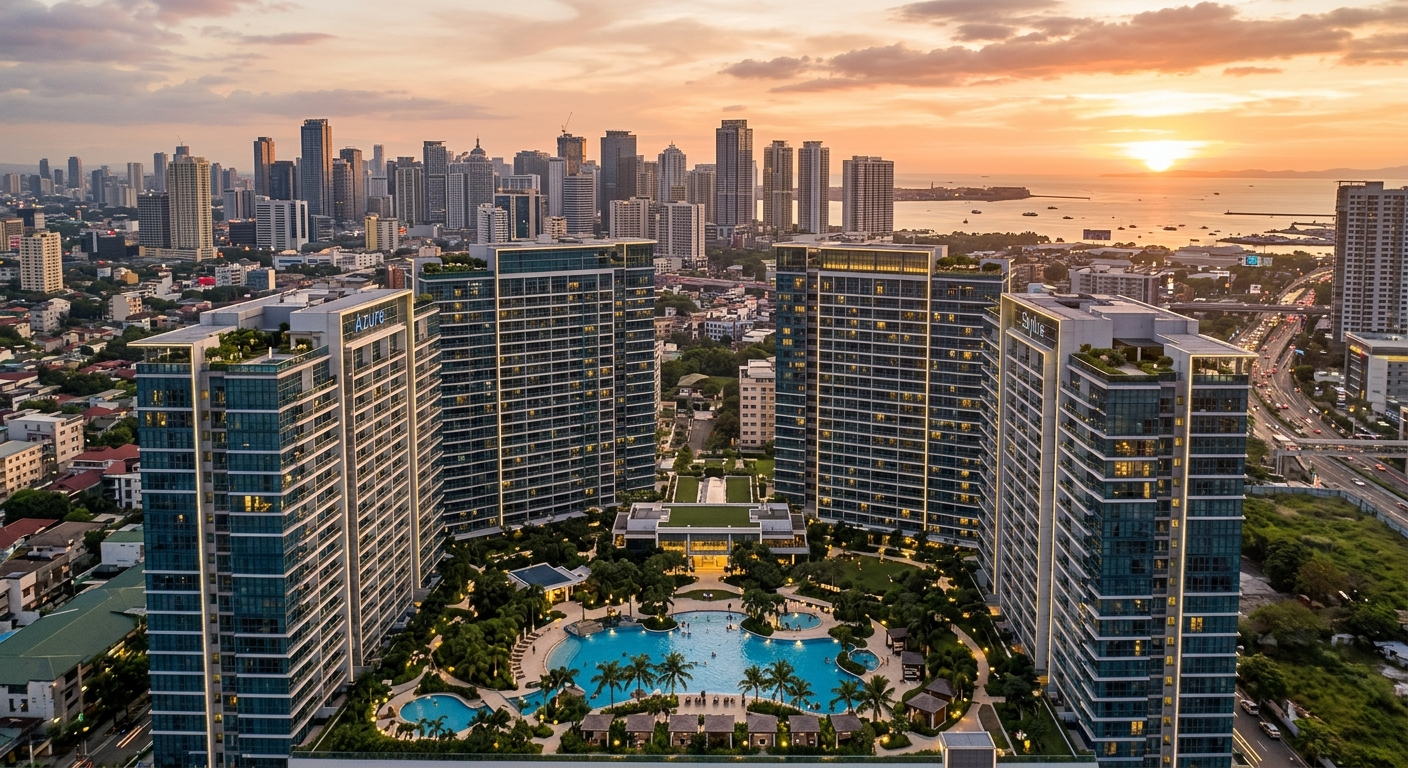
Republic Act No. 4726, enacted on June 18, 1966 and commonly known as the Condominium Act, is the statutory exception that has made Philippine condo investment viable for foreign buyers for nearly six decades. The law defines a condominium as an interest in real property consisting of (a) a separate interest in a unit, and (b) an undivided co-tenancy interest in the common areas and facilities appurtenant to the building.
The constitutional work-around is elegant: the unit is treated as personal property, separate from the land. The land and the common areas are held by the condominium corporation — which itself must be at least 60% Filipino-owned. The foreign buyer’s title is to the unit and to their proportionate share of the common areas, not to the land beneath.
The 40% Foreign Ownership Cap — Section 5 of RA 4726
The Condominium Act imposes a hard cap on foreign participation. Under Section 5 of RA 4726, no more than 40% of the total floor area or units in any condominium project may be owned by foreigners or foreign corporations. The remaining 60% must be held by Filipino citizens or entities at least 60% Filipino-owned.
This cap is calculated at the project level, not the individual unit level. If a development has 100 units, no more than 40 may be sold to foreign nationals. The calculation includes both individually owned units and shares in the condominium corporation representing foreign interests.
The consequences of exceeding the 40% cap are severe. Under Section 5, RA 4726, any transfer of a unit to a foreign buyer that would cause the project to exceed the 40% threshold is void ab initio — meaning the transaction is treated as if it never existed. The Register of Deeds is prohibited from registering such transfers without a certification from the condominium corporation confirming compliance with the cap. A foreign buyer who pays in full and takes possession of a unit sold in excess of the 40% limit has no legally enforceable right to that unit.
For foreign investors: before purchasing any condominium unit, you should obtain a written certification from the condominium corporation (or the developer’s legal department for pre-sale units) confirming that the 40% foreign cap has not been reached in the project. This is a due diligence step that experienced practitioners consider mandatory.
Developer Registration and HLURB/DHSUD Oversight
Under RA 4726 and the rules of the Department of Human Settlements and Urban Development (DHSUD), formerly the Housing and Land Use Regulatory Board (HLURB), developers of condominium projects must register the project, file the Master Deed and Declaration of Restrictions with the Register of Deeds, and submit periodic ownership composition reports. The DHSUD has authority to impose administrative sanctions — fines, license suspension, or project cessation orders — for non-compliance.
Practical implications for foreign buyers:
- Pre-sale units: Foreign buyers in pre-sale condominium projects should verify the developer’s compliance history and the current foreign take-up rate in the project before committing.
- Resale units: A resale unit should come with a certification from the condominium corporation confirming the unit’s foreign eligibility. The buyer’s lawyer should verify this against the corporation’s records.
- Townhouses and row houses: These are not condominium units under RA 4726 unless separately constituted as a condominium. Standard townhouse subdivisions where each lot is individually titled fall under the general constitutional land restriction and are generally not purchasable by foreigners directly.
Pathway 2: 99-Year Leases Under Republic Act No. 12252
Republic Act No. 12252, signed in September 2025 and effective upon publication, represents the most significant reform to foreign land tenure in the Philippines in decades. The law, titled An Act Amending Republic Act No. 7652, Otherwise Known as the Investor’s Lease Act of 1993, extends the maximum lease term for foreign investors on private land from the prior 50-year initial term + 25-year renewal (total 75 years) to a single, uninterrupted 99-year lease term.
Key provisions of RA 12252:
1. Consolidated 99-year term. The prior two-stage lease structure (50 years renewable for another 25) introduced renewal uncertainty at the end of the initial term — an approval that could be withheld, affecting project finance and exit planning. RA 12252 replaces this with a single, fixed 99-year term that provides certainty over the full lease period without requiring renewal approvals.
2. Registration as the operative act. The law clarifies that registration of the lease agreement with the Registry of Deeds is the operative act that renders the lease binding against third parties. Once registered, the lease enjoys protection against competing claims, adverse possession challenges, and unilateral termination by the landowner. This is a significant improvement over unregistered or poorly drafted leases.
3. Transferability and use as collateral. A registered leasehold interest under RA 12252 may be assigned, transferred, or used as collateral for project financing. This enhances the commercial utility of the leasehold right, making it viable as project security for bank lending and other forms of project finance.
4. Sectoral eligibility. The extended lease privilege is not unlimited. Under RA 12252, the 99-year lease is available to foreign investors with approved and registered investments under the Foreign Investments Act (RA 7042, as amended) or investment promotion agency programs. The law specifies that qualifying projects include industrial development, tourism, agriculture, agro-forestry, environmental conservation, and other priority sectors identified under the investment promotion framework.
5. Not a property ownership substitute. RA 12252 does not change the constitutional bar on foreign land ownership. A 99-year lease is a contractual right to use and occupy land for a defined period — it is not an ownership right. At the end of the 99-year term, the land reverts to the landowner. The lease cannot be extended automatically; a new lease would need to be negotiated.
Strategic value of RA 12252 for foreign investors: For capital-intensive projects with long payback horizons — industrial estates, resort developments, agribusiness operations, renewable energy facilities — the 99-year lease term under RA 12252 provides a degree of tenure certainty that was previously unavailable to foreign investors in the Philippines. Combined with the transferability of the registered leasehold right, this makes project finance significantly more achievable than under the prior 75-year framework.
Pathway 3: Setting Up a Filipino-Majority Corporation
The third pathway available to foreign investors is corporate structuring — acquiring property through a Philippine corporation that is at least 60% Filipino-owned. This approach is the most complex but also the most versatile, as it enables the acquisition of land (not just units or leaseholds) in the corporation’s name.
How the structure works: A foreign investor establishes or acquires a Philippine corporation that is at least 60% owned by Filipino citizens. The corporation acquires the land. The foreign investor holds the remaining 40% stake in the corporation. The corporation, as a Filipino entity, is qualified to hold the land.
The Anti-Dummy Law risk — Commonwealth Act No. 108: This pathway requires careful execution. Commonwealth Act No. 108, as amended, is the Philippines’ Anti-Dummy Law. It prohibits the use of nominees, dummy directors, or artificial arrangements to circumvent foreign ownership restrictions. If the Filipino shareholders of the corporation are found to be mere nominees — holding their shares on behalf of the foreign investor with no genuine economic interest — both the Filipino nominee and the foreign principal may face criminal liability under CA 108.
The practical test under Philippine jurisprudence is whether the Filipino shareholders have real, genuine economic participation in the corporation — meaning they have made real capital contributions, bear genuine economic risk, and exercise actual control over corporate decisions. A passive nominee arrangement that exists solely to satisfy the 60% Filipino ownership requirement is a violation.
The HARBOR reporting requirement: Under SEC Memorandum Circular No. 10, Series of 2022, all Philippine corporations are required to report their ultimate beneficial owners through the SEC’s HARBOR platform. For a corporation holding property, this means identifying every natural person who ultimately owns or controls 5% or more of the corporation. A foreign investor holding 40% of a corporation has a clear and reportable beneficial interest. Failure to report is an administrative violation, and the SEC has been increasing enforcement in this area.
Practical applications:
- Real estate holding companies: Foreign investors who intend to acquire multiple properties, or who need to hold land for commercial operations, often establish a property holding corporation. The foreign investor’s 40% stake is the economic interest; the Filipino partners hold 60% with genuine participation.
- Operating companies with land: Manufacturing, hospitality, and agribusiness operations that require land holdings are often structured through Philippine operating companies with Filipino majority ownership and foreign minority investment.
The BIR Tax Framework for Foreign Property Buyers
Every real property transaction in the Philippines — regardless of whether the buyer is Filipino or foreign — triggers BIR tax obligations. Foreign buyers must understand these requirements because BIR non-compliance can result in the Register of Deeds refusing to register the transfer, leaving the buyer with a property they cannot legally own.
Taxpayer Identification Number (TIN)
The Bureau of Internal Revenue (BIR) requires every property buyer to have a TIN (Taxpayer Identification Number). Foreign nationals can apply for a TIN at any BIR Revenue District Office (RDO) where the property is located, using passport, ACR I-Card (for long-term visa holders), and proof of address. This is a prerequisite to any property transaction — without a TIN, the BIR cannot process the tax returns that accompany every conveyance.
Documentary Stamp Tax (DST)
Under Sections 173-175 of the Tax Code of 1997, as amended, Documentary Stamp Tax is imposed on the execution or acknowledgment of documents that transfer real property. The DST rate for deeds of absolute sale is PHP 15.00 for every PHP 1,000.00 of the consideration (0.5% of the selling price or fair market value, whichever is higher), or PHP 10.00 for every PHP 1,000.00 (0.3%) if the consideration is less than PHP 1,000,000. DST is paid by the seller but is often passed on to the buyer through the price negotiation.
Capital Gains Tax (CGT)
For sellers who are Philippine residents or citizens, BIR Form 1706 (Capital Gains Tax Return) must be filed and the CGT paid before the Register of Deeds will act on the transfer. The CGT rate for individuals is 6% of the gross selling price or fair market value, whichever is higher. For corporations, the rate is similarly 6%. The CGT is a seller obligation, but its payment affects the seller’s willingness and ability to close the transaction.
For foreign buyers: the CGT obligation falls on the seller, not the buyer. However, a foreign buyer should confirm that the seller has paid CGT and obtained a BIR clearance, as an unresolved CGT liability creates a lien on the property that survives the transfer.
Value-Added Tax (VAT)
RA 9337 (Excise Tax Reform Act of 2005) amended the Tax Code to impose a 12% VAT on the sale of real property by developers on their first sale of residential lots exceeding PHP 1,919,500 or residential units where the zonal value or selling price exceeds PHP 2,000,000. This is a developer/seller obligation, but it is factored into the published price of new development units.
For resale transactions between individuals, the sale is generally exempt from VAT but subject to CGT.
Real Property Tax (RPT)
Under Republic Act No. 7160 (Local Government Code of 1991), Real Property Tax is assessed annually on the assessed value of the property by the local government unit (LGU) where the property is located. The RPT rate is 1% of the assessed value in cities and municipalities within Metro Manila, and 1% in other areas, with a potential additional 1% for special education funds. Foreign property owners who hold condominium units or leasehold interests should ensure RPT is paid on the assessed value of their interest.
The Step-by-Step Purchase Process
With the legal framework established, the practical purchase process for a foreign buyer follows a structured sequence. The following steps apply to a typical condominium unit purchase in the Philippines, which is the most common pathway for foreign buyers.
Step 1: TIN Registration and BIR Account Setup
Before engaging in any property transaction, the foreign buyer must register with the BIR and obtain a TIN. For foreign nationals physically present in the Philippines, this requires a visit to the BIR RDO with passport, ACR I-Card (if applicable), and proof of Philippine address (such as a utility bill or lease agreement). For foreign buyers arranging the purchase remotely through a representative, the representative can act under a Special Power of Attorney (SPA) authenticated at the Philippine Consulate in the buyer’s country of residence.
Step 2: Due Diligence on the Property and Developer
Due diligence is the stage where most costly mistakes are prevented. For a foreign buyer purchasing a condominium unit — whether from a developer (pre-sale) or an individual seller (resale) — the following due diligence items are essential:
For pre-sale units:
- Verify the developer’s DHSUD license and project registration number. Confirm the project is registered and the developer is in good standing.
- Obtain the Master Deed and Declaration of Restrictions filed with the Register of Deeds. Review the project’s foreign ownership cap status.
- Check the developer’s track record — completed projects, delivery history, any DHSUD complaints or orders.
For resale units:
- Conduct a Title Search at the Register of Deeds to verify the seller’s title (Transfer Certificate of Title or Condominium Certificate of Title). Confirm there are no liens, encumbrances, or pending cases annotated on the title.
- Obtain a Certified True Copy of the Title and verify it against the original.
- Verify that the seller has paid all Real Property Taxes on the property.
- Obtain the Tax Declaration from the city or municipal assessor’s office.
- Confirm the condominium corporation’s foreign ownership compliance — that the project has not reached its 40% cap and that the unit being sold is eligible for foreign purchase.
- For encumbered properties, obtain the bank’s consent to the sale (if the unit has an outstanding mortgage) and verify the outstanding balance.
Step 3: Negotiation and Reservation
Once due diligence confirms the property is eligible for foreign purchase, the buyer and seller execute a Reservation Agreement and pay a reservation fee (typically PHP 20,000 to PHP 100,000, depending on the property price). This secures the unit while the parties finalize the transaction.
The Reservation Agreement should specify:
- The agreed purchase price and payment terms
- The timeline for executing the Deed of Absolute Sale
- The consequences of default by either party
- Any conditions precedent to closing
Step 4: Execution of the Deed of Absolute Sale
The Deed of Absolute Sale is the core conveyance document. It must be in writing, signed by both parties before a notary public in the Philippines, and notarized. The deed should accurately reflect the purchase price, describe the property with reference to its title number and tax declaration number, and confirm the mode of payment.
For foreign buyers, the deed must be signed personally or by a representative with a valid Special Power of Attorney (SPA). If the SPA was executed abroad, it must be authenticated at the Philippine Consulate or Apostilled under the Hague Convention (the Philippines acceded in 2021), depending on whether the buyer’s country is a signatory.
Step 5: BIR Tax Payment and Clearance
Before the Register of Deeds will accept the deed for registration, the parties must file the appropriate BIR tax returns and pay the applicable taxes:
For sellers:
- File BIR Form 1706 (Capital Gains Tax Return — for individuals) or BIR Form 1707 (Capital Gains Tax Return — for corporations) and pay the 6% CGT
- File BIR Form 2000 ( Documentary Stamp Tax Return) and pay the applicable DST
- Obtain the BIR Certificate Authorizing Registration (CAR) — this is the BIR’s confirmation that taxes have been paid and the transfer is cleared for registration
For buyers (if applicable):
- If the buyer is a first-time homeowner and qualifies under RA 9505 (Home Disaster and Mortgage Relief Act of 2008), CGT exemption may apply. Confirm eligibility with a tax lawyer.
The CAR process typically takes 2 to 4 weeks after filing, depending on BIR workload and whether the submitted valuations are accepted. Disputes over BIR-issued zonal values can extend this timeline.
Step 6: Register of Deeds Registration
With the notarized Deed of Absolute Sale and the BIR CAR in hand, the parties file the transfer with the Register of Deeds in the city or municipality where the property is located. The Register of Deeds reviews the documents for compliance with property registration laws, confirms the 40% foreign cap compliance for condominium transfers (requiring a certification from the condominium corporation), and issues the new Transfer Certificate of Title (TCT) or Condominium Certificate of Title (CCT) in the buyer’s name.
Registration fees at the Register of Deeds are modest — typically a combination of a filing fee and a registration fee based on the property value — and are governed by RA 2269 (Property Registration Decree).
Step 7: Real Property Tax Transfer and Association Dues
After registration, the buyer must update the Tax Declaration with the City or Municipal Assessor’s Office to reflect the new ownership. This ensures that RPT bills are issued to the correct party going forward.
For condominium units, the buyer must also register with the Homeowners Association and ensure that monthly association dues are transitioned to the new owner’s account. Failure to do so can result in the accumulation of unpaid dues — which, under the Condominium Act and the association’s governing documents, may constitute a lien on the unit.
Common Mistakes Foreign Buyers Make
Buying Land Directly in Their Own Name
The most common and most consequential mistake. Foreign nationals cannot own Philippine land in their personal capacity. Any deed of sale transferring land to a foreign buyer is void ab initio under the Constitution. The buyer gets no title, and the seller keeps the money. This is not a technicality that can be cured — it is a fundamental legal incapacity.
Ignoring the 40% Cap in Condominium Projects
Foreign buyers who purchase a condominium unit in a project that has already reached its 40% foreign cap — whether through ignorance or on the developer’s assurance that “it will be fixed later” — have purchased a void transaction. The unit will not be registered in their name, and they have no legal recourse against the developer. Verify the cap independently.
Failing to Obtain a BIR TIN Before the Transaction
Without a TIN, the BIR cannot process the transfer documents. Foreign buyers who fail to register with the BIR before closing risk a delay in the registration process that can extend for weeks or months, during which the property is in limbo.
Not Using a Special Power of Attorney Correctly
Foreign buyers who cannot be physically present at closing sometimes execute a Special Power of Attorney authorizing a representative to sign on their behalf. An SPA executed abroad must be authenticated at the Philippine Consulate (or Apostilled, if from a Hague Convention country) to be valid in the Philippines. An unauthenticated SPA will be rejected by the Register of Deeds and the BIR.
Neglecting to Verify RPT Arrears
A seller with unpaid Real Property Taxes creates a lien on the property that transfers with it to the buyer. Before closing, obtain a Certificate of No Delinquency from the LGU assessor’s office confirming all RPT has been paid.
Structuring Options: Which Path Is Right for You?
The appropriate legal pathway depends on the nature of the investment and the buyer’s objectives.
For a simple condo purchase (personal use or rental investment): The direct condominium purchase under RA 4726 is the most straightforward option. No corporate structuring is needed. Foreign national buys the unit directly, provided the project has not reached its 40% cap. This is the recommended pathway for most individual foreign buyers.
For long-term industrial, tourism, or agribusiness operations requiring land: The 99-year lease under RA 12252 provides the most tenure certainty for projects that need land access but do not require ownership. With the ability to register the lease, assign it, and use it as collateral for financing, the leasehold right under RA 12252 is functionally close to ownership for practical project finance purposes.
For investors who need to hold land (e.g., for a holding company or long-term portfolio): A Filipino-majority corporation is the only pathway for direct land holding. This requires genuine Filipino partners with real economic stakes — not passive nominees — and proper SEC beneficial ownership reporting. This structure should be set up with legal counsel from the outset.
Conclusion
The Philippines does not make it easy for foreign nationals to acquire real property — but it does make it possible. The constitutional bar on land ownership is absolute, but it has never been the whole story. The Condominium Act (RA 4726) has provided a reliable pathway for foreign condo buyers for nearly 60 years. The 99-Year Lease Law (RA 12252), enacted in September 2025, has opened a new chapter for foreign investors who need long-term land tenure for capital-intensive projects. And for those willing to structure carefully with genuine Filipino partners, the corporate pathway remains available.
The common thread running through every legal pathway is rigorous due diligence. The 40% foreign cap in condominiums, the Anti-Dummy Law requirements for corporate structures, the BIR tax clearance process — each is a potential trap for the buyer who moves without professional guidance. A single void transaction or an unregistered lease cannot be cured after the fact.
For foreign investors considering Philippine real estate, the starting point is not a property search — it is a legal consultation. Understanding which pathway is available, which structure is appropriate, and which compliance steps are non-negotiable will determine whether the investment becomes a secure, appreciating asset or a legal liability that cannot be escaped.
This article is for general informational purposes only and does not constitute legal advice. Foreign nationals considering property acquisition in the Philippines should consult a licensed Philippine attorney to assess their specific circumstances before entering into any transaction.
Related Articles

NPC Advisory No. 2026-01: The National Privacy Commission's New Rules on Data Scraping and What Foreign Companies in the Philippines Must Do Now
On April 13, 2026, the National Privacy Commission issued Advisory No. 2026-01, titled 'Guidelines on Scraping Publicly Available Personal Data' — the most direct regulatory statement yet on one of the most contested practices in the digital economy. For foreign companies that scrape, purchase, aggregate, or commercially exploit publicly available personal data of Philippine residents, this Advisory removes any remaining ambiguity: public availability is not consent, and automated data collection is regulated processing under Republic Act No. 10173. This article explains every provision of the Advisory, the legal consequences of non-compliance, and the concrete steps foreign investors and their Philippine legal counsel must take to align their data practices with NPC expectations in 2026.
SEC Memorandum Circular No. 15, Series of 2025: The Beneficial Ownership Disclosure Rules of 2026 and What Foreign Corporations Must Do Now
The Securities and Exchange Commission's revised Beneficial Ownership Disclosure Rules — effective January 1, 2026 — represent the most significant tightening of corporate transparency obligations for foreign corporations operating in the Philippines in nearly seven years. With mandatory 7-day reporting of ownership changes, a new HARBOR registry, reduced reporting thresholds from 25% to 20%, and penalties increased up to 500% from prior levels, foreign investors can no longer treat beneficial ownership disclosure as a checkbox exercise. This comprehensive guide explains every requirement, the new categories, the expanded disclosure fields, the nominee reporting obligation, and the step-by-step compliance roadmap for foreign corporations.

How to Hire Foreign Employees in the Philippines in 2026: A Comprehensive Guide to the AEP and 9G Visa Process
The Philippines' revised Alien Employment Permit (AEP) rules under DO 248, s. 2025 introduced the Economic Needs Test, mandatory Understudy Training Programs for incentivized employers, and Certificate of Exemption requirements — changes that fundamentally alter how foreign employers must structure their Philippine hiring in 2026. This guide walks foreign investors and their counsel through every step of the AEP and 9G visa process with verified legal citations.