Foreign Ownership & Property · Setting Up & Structuring
The 13th Foreign Investment Negative List: What Foreign Investors Must Know Under Executive Order No. 113 (Effective May 2, 2026)

If you are a foreign investor considering the Philippines, the first question is not how to set up a business — it is whether you may own it in your chosen activity, and at what percentage. The answer is in the Regular Foreign Investment Negative List (RFINL, often shortened to FINL). Activities not on the Negative List are open to up to 100% foreign ownership under the Foreign Investments Act of 1991 (Republic Act No. 7042, as amended by RA 11647), unless another law restricts them. Activities that appear on it carry equity caps or are reserved entirely for Philippine nationals. In short, the list is not a list of what foreigners may do — it is a list of the exceptions.
Executive Order No. 113, Series of 2026 — promulgating the Thirteenth Regular Foreign Investment Negative List (13th RFINL) — was signed on April 13, 2026, published on April 17, 2026, and took effect on May 2, 2026. It replaces the Twelfth RFINL, promulgated under Executive Order No. 175, Series of 2022, signed on June 27, 2022. This article is written for foreign investors, whether individuals or corporate groups, who need a precise understanding of how the list works, what changed, what stayed the same, and what related obligations now apply — including the BIR's March 2026 guidance on cross-border service fees.
1. The Legal Framework: What Governs Foreign Investment Restrictions
The Foreign Investments Act of 1991 (RA 7042) and RA 11647
The foundational statute governing foreign investment in the Philippines is Republic Act No. 7042, the Foreign Investments Act of 1991, as amended by RA 8179 (1996) and RA 11647 (2022). It sets the general rule: a non-Philippine national may, upon registration with the SEC (or the DTI, for sole proprietorships), invest in a domestic enterprise up to 100% of its capital, unless foreign participation is prohibited or limited by the Constitution, existing law, or the Negative List.
Republic Act No. 11647, signed on March 2, 2022, made three changes relevant here:
- A lower capital threshold for more foreign-owned domestic market enterprises. Micro and small domestic market enterprises with paid-in equity capital below USD 200,000 remain reserved to Philippine nationals. The threshold drops to USD 100,000 if the enterprise (a) involves advanced technology as determined by the Department of Science and Technology (DOST); (b) is endorsed as a startup or startup enabler by the lead host agencies under the Innovative Startup Act (RA 11337); or (c) has a majority of Filipino direct employees, numbering no fewer than 15.
- The Inter-Agency Investment Promotion Coordination Committee (IIPCC) — chaired by the Secretary of Trade and Industry, tasked with integrating foreign investment promotion and facilitation efforts.
- Review of strategic investments — upon the President's order, the IIPCC, with the National Security Council and NEDA, may review foreign investments in military-related industries, cyber infrastructure, pipeline transportation, or other activities that may threaten territorial integrity or public safety, where the investor is a foreign government-controlled entity or state-owned enterprise, or the investment is located in an area critical to national security.
Under RA 7042, a domestic market enterprise is one that produces goods or provides services primarily for the Philippine market, or exports less than 60% of its output. An enterprise with more than 40% foreign equity that serves the domestic market must meet the applicable minimum paid-in capital. Export enterprises (exporting 60% or more of output) face no such minimum and may be 100% foreign-owned if their products and services are not on List A or List B; if an export enterprise fails its export requirement, the SEC or DTI may order it to cut domestic sales to no more than 40% of total production.
How the Negative List Is Issued and Updated
The RFINL is promulgated by the President through an Executive Order. Amendments to List B may be made on the recommendation of the Secretary of National Defense or the Secretary of Health (endorsed by NEDA), or of NEDA on its own motion. EO 113 itself recites that the President amends the list on the recommendation of the Department of Economy, Planning, and Development (DEPDev, formerly NEDA). Section 2 of EO 113 sets the pace of change: amendments to List A may be made at any time to reflect changes in specific laws, while amendments to List B may not be made more often than once every two years, under Section 8 of RA 7042 as amended and its implementing rules. This is why the list moves in editions — the 12th in 2022, the 13th in 2026 — even though List A can track new statutes in between.
The Constitutional Foundation
The ultimate source of most foreign ownership restrictions is the 1987 Constitution. The key provisions are:
- Article XII, Section 2 — Natural resources are owned by the State. Their exploration, development, and utilization may be undertaken by the State directly or through co-production, joint venture, or production-sharing agreements with Filipino citizens or corporations at least 60% Filipino-owned. The President may enter into technical or financial assistance agreements with foreign-owned corporations for large-scale exploration of minerals, petroleum, and other mineral oils. The use of marine resources in archipelagic waters, the territorial sea, and the exclusive economic zone is reserved to Filipino citizens.
- Article XII, Section 7 — Private land may be transferred only to those qualified to acquire lands of the public domain: Philippine citizens and corporations at least 60% Filipino-owned. This is the 60/40 rule and the reason a foreign-owned corporation cannot own land in the Philippines.
- Article XII, Section 11 — Franchises to operate a public utility may be granted only to citizens or to corporations at least 60% Filipino-owned. Foreign participation in the governing body is limited to the foreign investors' proportionate share in capital, and all executive and managing officers must be Filipino citizens.
- Article XII, Section 14 — The practice of all professions is limited to Filipino citizens, save in cases prescribed by law.
- Article XIV, Section 4 — Educational institutions (other than those established by religious groups and mission boards) must be at least 60% Filipino-owned.
- Article XVI, Section 11 — Mass media must be wholly owned and managed by Filipino citizens; the advertising industry must be at least 70% Filipino-owned.
The RFINL operationalizes these provisions and related statutes by cataloguing every activity where restrictions apply, sorted into two lists — List A (restrictions mandated by the Constitution and specific laws) and List B (restrictions for reasons of national security, defense, public health and morals, or protection of small and medium enterprises).
The Public Service Act (RA 11659)
Republic Act No. 11659, signed on March 21, 2022, amended the Public Service Act (Commonwealth Act No. 146) and narrowed the constitutional 40% cap by narrowing what counts as a "public utility." Only six activities are now public utilities:
- Distribution of electricity
- Transmission of electricity
- Petroleum and petroleum products pipeline transmission systems
- Water pipeline distribution systems and wastewater pipeline systems, including sewerage pipeline systems
- Seaports
- Public utility vehicles
Other public services — such as telecommunications, airlines, railways, expressways, and shipping — are no longer public utilities and are no longer subject to the constitutional 40% cap. Two safeguards remain. First, foreign nationals may not own more than 50% of an entity operating critical infrastructure (which includes telecommunications) unless their home country accords reciprocity to Philippine nationals. Second, entities controlled by or acting for a foreign government, and foreign state-owned enterprises, may not acquire capital in a public service classified as a public utility or critical infrastructure after the law took effect, although sovereign wealth funds and independent pension funds may collectively own up to 30%.
The Anti-Dummy Law: Commonwealth Act No. 108 and PD 715
Foreign investors must also contend with Commonwealth Act No. 108, as amended by Presidential Decree No. 715, known as the Anti-Dummy Law. It prohibits the use of Filipino citizens or entities as "dummies" to hold assets or operate businesses on behalf of foreign nationals in restricted sectors, and it carries criminal penalties including imprisonment of five to fifteen years, fines, forfeiture, and dissolution of the corporation.
The Anti-Dummy Law also prohibits foreign nationals from intervening in the management, operation, administration, or control of corporations in restricted sectors beyond their proportionate share in capital. This covers informal nominee arrangements, side letters, unwritten voting instructions, and any contractual mechanism that displaces genuine Filipino control. The SEC's Beneficial Ownership Disclosure Rules of 2026 (SEC Memorandum Circular No. 15, Series of 2025), effective January 1, 2026, require disclosure of the natural persons behind a corporation — through the GIS until the SEC declares its beneficial ownership registry (HARBOR) operational, and through the registry after that — which makes such arrangements harder to keep out of view. Section 5 below covers the law in practice.
2. The 13th RFINL: What Changed from the 12th Edition
Overview of the 13th RFINL Structure
The 13th RFINL keeps the dual-list structure of its predecessors:
- List A — Activities where foreign ownership is limited by the 1987 Constitution or specific statutes. These restrictions cannot be removed by executive action alone; they require a constitutional amendment or an act of Congress.
- List B — Activities where foreign ownership is limited for reasons of national security, defense, public health and morals, or protection of micro, small, and medium enterprises (MSMEs). These restrictions can be recalibrated by the President in the regular update of the list.
The 13th RFINL introduces material changes in retail trade, telecommunications, and renewable energy, lists the corporate practice of architecture as a stand-alone entry, and reintroduces a cap on defense materiel. It also codifies several liberalizations that had already occurred through the 2022 statutes discussed above.
Retail Trade: A Path for Mid-Market Entrants
The most commercially significant change concerns retail trade. Under the Retail Trade Liberalization Act, as amended by Republic Act No. 11595 (signed December 10, 2021), a foreign retailer may operate with 100% foreign ownership if it has paid-up capital of at least PHP 25,000,000 (approximately USD 430,000 at current exchange rates). For enterprises with paid-up capital below PHP 25 million, the 13th RFINL now permits foreign equity of up to 40%, where the 12th RFINL reserved such enterprises entirely for Philippine nationals.
This opens retail trade to foreign investors who want to test the Philippine market with a smaller initial commitment. A foreign investor may now hold 40% of a retail enterprise capitalized at, for example, PHP 10–20 million, alongside Filipino co-investors holding the remaining 60%. Previously, the same structure was not permitted.
For foreign retailers seeking 100% ownership, RA 11595 sets these conditions:
- Minimum paid-up capital of PHP 25 million, which must be maintained in the Philippines at all times unless the retailer has notified the SEC or DTI of its intention to repatriate capital and cease operations. For registration, the retailer submits a Bangko Sentral ng Pilipinas certification of the inward remittance of its capital, or other proof that it is deposited and maintained in a Philippine bank.
- Minimum investment of PHP 10 million per store for foreign retailers operating more than one physical store.
- Reciprocity — the foreign retailer's country of origin must not prohibit the entry of Filipino retailers.
RA 11595 also removed the older qualification requirements that had applied to foreign retailers under the 2000 law, and it directs the DTI, SEC, and NEDA to review the minimum capital every three years. For a fuller treatment, see our guide to foreign ownership in Philippine retail trade.
Telecommunications: Full Ownership With Reciprocity
The 13th RFINL formally allows up to 100% foreign ownership in telecommunications, reflecting RA 11659's removal of telecommunications from the definition of "public utility." Because telecommunications is classified as critical infrastructure, the reciprocity condition in RA 11659 applies: where the investor's home country does not accord reciprocity to Philippine nationals, foreign ownership is capped at 50%. Foreign state-owned enterprises remain barred from acquiring capital in telecommunications regardless of reciprocity.
This requires a country-by-country analysis of how the investor's home jurisdiction treats Philippine nationals. Under RA 11659, reciprocity may be satisfied by rights of similar value in other economic sectors, and NEDA issues the rules for this. Telecommunications investors should complete that analysis before asserting 100% ownership.
Renewable Energy: Codifying the 2022 Opening, With a Water-Rights Caveat
The 13th RFINL codifies that renewable energy projects are no longer subject to the 40% foreign equity limitation that applies to natural resources. The shift began with Department of Justice Opinion No. 21, Series of 2022 (September 29, 2022), which concluded that the constitutional cap on natural resources does not cover inexhaustible sources such as solar, wind, hydro, and ocean or tidal energy. The Department of Energy then amended the implementing rules of the Renewable Energy Act of 2008 (RA 9513) through Department Circular No. DC2022-11-0034, effective December 8, 2022, allowing renewable energy service and operating contracts to be granted to foreign-owned corporations.
The exception in the 13th RFINL names "solar, wind, hydro and ocean or tidal energy" as areas "where full foreign participation is allowed," so a foreign corporation may own 100% of such a project company. Hydropower still needs a separate check: the same List A entry keeps the 40% cap on "the appropriation of water direct from a natural source," citing the Water Code (Presidential Decree No. 1067), so a water permit may still require a 60% Filipino-owned holder. Hydropower developers should confirm how they will hold water rights before assuming full foreign ownership of the project.
Corporate Practice of Architecture: Expressly Reserved
The 13th RFINL expressly includes the corporate practice of architecture among the activities reserved entirely for Philippine nationals, with no foreign equity. This is not a new restriction. The 12th RFINL reserved the "practice of professions" generally and, in its Annex on Professions, already named architecture as a corporate practice with foreign equity restrictions, noting that only Filipino architects may form and register an architectural firm (Section 37 of RA 9266). The 13th RFINL drops the general professions entry and its annex and lists architecture on its own. The practical consequences for foreign investors:
- A foreign investor may not hold any equity, even a minority stake, in a domestic corporation engaged in the practice of architecture.
- Foreign nationals licensed as architects abroad cannot practice architecture in the Philippines through a Philippine corporate vehicle.
- Before acquiring a design, engineering, or construction firm that offers architectural services, review the target's actual business activities and its registered purposes.
Defense Materiel: A Reintroduced Cap
The 13th RFINL reintroduces a 40% foreign equity cap on the development, production, manufacturing, assembly, servicing, or operation of defense materiel by an in-country enterprise (List B), a restriction the 12th RFINL did not carry. The 11th RFINL (Executive Order No. 65, s. 2018) had capped products requiring Department of National Defense clearance at 40%. The change aligns with Republic Act No. 12024, the Self-Reliant Defense Posture Revitalization Act, signed in 2024, which aims to build domestic defense manufacturing capacity. Foreign defense firms seeking to operate in-country — as suppliers, co-production partners, or technology-transfer vehicles — should structure around the 40% limit, including in their technology-transfer agreements.
3. Activities That Remain Restricted: List A and List B Highlights
List A: Constitutional and Statutory Restrictions
The following activities remain on List A of the 13th RFINL with restrictions that cannot be removed by executive action:
- Mass media — reserved entirely for Philippine nationals, with the exception for recording and internet businesses maintained.
- Advertising — up to 30% foreign equity, with foreign board participation limited to the foreign share and all executive and managing officers required to be Filipino citizens.
- Corporate practice of architecture — the only profession the 13th RFINL lists, with no foreign equity. The general constitutional rule that the practice of professions is limited to Filipino citizens, save as provided by law, and each profession's own regulatory law still apply outside the list; a footnote to the entry notes a 2021 DOJ letter that foreign professionals allowed to practice on the basis of reciprocity may hold equity in a corporation authorized to practice the same profession, subject to the limits of the relevant regulatory law.
- Private security agencies — reserved entirely for Philippine nationals.
- Cooperatives — reserved entirely for Philippine nationals, except investments of former natural-born citizens of the Philippines.
- Small-scale mining — reserved for Philippine citizens.
- Use of marine resources in archipelagic waters, the territorial sea, and the exclusive economic zone — reserved for Philippine citizens.
- Natural resources exploration, development, and utilization — up to 40% foreign equity through co-production, joint venture, or production-sharing agreements with the government, subject to the renewable energy position above and the technical or financial assistance agreements the Constitution allows for large-scale minerals and petroleum.
- Public utilities — up to 40% foreign equity, now limited to the six activities listed under RA 11659 above.
- Educational institutions — up to 40% foreign equity, except institutions established by religious groups and mission boards, those for foreign diplomatic personnel and their dependents and other foreign temporary residents, and short-term high-level skills development outside the formal education system.
- Land ownership — foreign nationals and foreign-owned corporations cannot own private land. Foreign investors may instead lease private land for up to 99 years under the Investors' Lease Act as amended by RA 12252 (signed September 3, 2025); may own condominium units provided foreign ownership in the project does not exceed 40% (RA 4726, the Condominium Act); or may hold land through a corporation that is at least 60% Filipino-owned.
List B: Policy-Based Restrictions
List B restrictions are recalibrated by the 13th RFINL based on current policy priorities. Every List B entry in the 13th RFINL carries the same cap of up to 40% foreign equity. The entries are:
- Products requiring Philippine National Police clearance — the manufacture, repair, storage, and distribution of firearms and their parts and ammunition, gunpowder, dynamite, blasting supplies, listed ingredients used in making explosives, and telescopic sights and similar devices. The manufacture and repair of these items may be specifically authorized by the Chief of the PNP to non-Philippine nationals, with the extent of foreign equity specified in the PNP authority or clearance. (The manufacture and retail of firecrackers and other pyrotechnic devices is separately on List A, with no foreign equity.)
- Defense materiel — development, production, manufacturing, assembly, servicing, or operation of materiel by an in-country enterprise (RA 12024), as discussed above.
- Dangerous drugs — distribution and manufacture of dangerous drugs as authorized by law (RA 9165, the Comprehensive Dangerous Drugs Act of 2002).
- Sauna and steam bathhouses, massage clinics, and other like activities regulated by law because of risks to public health and morals.
- All forms of gambling, except those covered by investment agreements with the Philippine Amusement and Gaming Corporation (PAGCOR).
- Micro and small domestic market enterprises — enterprises with paid-in capital below USD 200,000 are capped at 40% foreign equity; the threshold drops to USD 100,000 for enterprises that meet one of the advanced technology, startup, or Filipino-employment conditions under RA 11647.
4. Activities Presumptively Open: The "Not Listed, Not Restricted" Principle
Activities not listed in either List A or List B are presumptively open to 100% foreign investment, subject to the applicable minimum capital and to any other law that governs the activity. This principle comes from RA 7042, and the 13th RFINL maintains it. In practice, many technology, business process outsourcing, software, e-commerce, logistics and warehousing, tourism and hospitality, and export manufacturing businesses are open to full foreign ownership.
This point is often misunderstood by foreign investors who assume that an industry with visible foreign competition must be restricted, or that a restriction exists without checking. Read the actual list, and read it at the level of your specific activity. The Negative List is not the only source of restrictions, however: some activities are governed by their own statutes (banking, for example, is excluded from the Foreign Investments Act and regulated under the General Banking Law and BSP rules), and sector regulators impose their own licensing conditions.
Registration with the Philippine Economic Zone Authority (PEZA) or the Board of Investments (BOI) does not exempt an enterprise from the Negative List. It does, however, give access to fiscal and non-fiscal incentives, and export enterprises are not subject to the domestic market minimum capital. See our guide to BOI and PEZA incentives for foreign investors.
5. The Anti-Dummy Law in Practice: What Foreign Investors Must Understand
The Core Prohibition
The Anti-Dummy Law (CA 108, as amended by PD 715) prohibits foreign nationals from operating businesses in restricted sectors through Filipino nominees. It is triggered not only by formal nominee arrangements but by any arrangement — written or oral — that gives a foreign national effective control over a business legally owned by a Filipino national in a restricted sector.
The key elements of an Anti-Dummy violation are:
- The enterprise operates in a restricted sector
- A foreign national is the beneficial owner or exercises effective control
- A Filipino national holds the legal title or serves as nominal owner
- The arrangement is designed to circumvent the foreign ownership restriction
The Anti-Dummy Law does not require proof of a written agreement. Circumstantial evidence — such as the foreign national making all business decisions, signing contracts on behalf of the company, controlling bank accounts, and directing Filipino nominees — can establish a violation.
Penalties and Enforcement
The penalties under CA 108, as amended by RA 134 and PD 715, are severe:
- Criminal imprisonment of five to fifteen years for both the foreign beneficiary and the Filipino nominee
- Fines of not less than the value of the right, franchise or privilege enjoyed in violation of the law, and in no case less than PHP 5,000
- Forfeiture of the right, franchise, privilege, and the property or business acquired in violation of the law
- Dissolution of the corporation used as the dummy vehicle
Disclosure obligations have tightened in 2026. Under SEC Memorandum Circular No. 15, Series of 2025, any natural person who directly or indirectly owns at least 20% of the voting rights, voting shares, or capital of a Philippine corporation, or otherwise controls it, must be disclosed, and changes must be reported within seven calendar days. Disclosures move to the SEC's HARBOR registry once the SEC declares it operational. This creates an auditable record that makes undisclosed nominee arrangements harder to maintain. For what HARBOR requires, see SEC HARBOR for foreign companies; for the Anti-Dummy Law in more depth, see 7 things every foreign investor must know about the Anti-Dummy Law.
The 60/40 Ratio Must Hold at All Times
For activities capped at 40% foreign ownership, at least 60% of the capital must be owned by Philippine nationals not only at incorporation but throughout the life of the corporation. Share transfers, new issuances, and conversions should be checked against the cap before they are made, since a transfer that breaches the ratio puts the corporation out of compliance.
Legitimate Board Representation: The Permissible Scope
Foreign investors may serve on the board of directors of Philippine corporations in restricted sectors — but only in proportion to their actual equity stake. If a foreign investor owns 40% of a corporation, it may appoint directors representing up to 40% of the board. For public utilities and advertising, the Constitution adds that all executive and managing officers must be Filipino citizens. Beyond these limits, any foreign national sitting on a board in a restricted sector — whether or not a shareholder — risks an Anti-Dummy violation.
Foreign investors who want governance rights beyond their equity proportion should consider structuring their investment to achieve a higher equity stake in an unrestricted activity, or alternative vehicles (such as a foreign-incorporated entity providing services under an agreement in an unrestricted activity) that do not implicate the Anti-Dummy Law.
6. The 13th RFINL and the DOLE AEP Rules: Parallel Compliance Requirements
Foreign investors who establish a Philippine entity and wish to employ foreign nationals in the Philippines must also comply with the Alien Employment Permit (AEP) requirements under DOLE Department Order No. 248, Series of 2025. An AEP is required for foreign nationals who will work in the Philippines, with limited exemptions and exclusions. See our guide to the new AEP rules under DO 248.
The 13th RFINL does not modify AEP requirements — it governs foreign ownership of Philippine enterprises, not the employment of foreign nationals within them. Treat the AEP process as a parallel compliance track, not a substitute for the Negative List analysis.
7. Taxing Cross-Border Service Fees: BIR RMC No. 24-2026
Ownership is only half of the structuring question; the other half is how income flows are taxed. A common example is a foreign parent that charges its Philippine subsidiary a management, technical support, or similar service fee. On March 30, 2026, the Bureau of Internal Revenue issued Revenue Memorandum Circular (RMC) No. 24-2026 to clarify how RMC Nos. 5-2024 and 38-2024 apply to cross-border services. Those earlier circulars implemented the Supreme Court's ruling in ACeS Philippines Cellular Satellite Corporation v. Commissioner of Internal Revenue (G.R. No. 226680, August 30, 2022) on the source of service income, and had led to uncertainty over whether any service paid for by a Philippine entity was taxable in the Philippines.
No Automatic Taxability
RMC 24-2026's core point is that classifying a payment as a cross-border service does not, by itself, make it subject to Philippine income tax or final withholding tax. Taxability requires a fact-based examination of the service agreement. The circular identifies these elements, all of which must be present:
- Parties — a Philippine payor and a non-resident service provider.
- Integral activity and benefit — the activity is integral to completing the non-resident's service obligation and results in payment or accrual that benefits the non-resident provider.
- Situs in the Philippines — the income-producing activity takes place within the Philippines.
- No exemption — no exemption applies under a tax treaty or the National Internal Revenue Code.
The baseline rule is reaffirmed: income from services is sourced where the service is performed. The circular adds that the ACeS ruling expanded this rule to include the place where the benefit is received or where the service is completed. Revenue officers must look at the service agreement as a whole rather than isolate a single activity as the income-producing act, and an assessment must state its factual and legal bases.
Burden of Proof and Documents
The burden is on the taxpayer to show that payments to a non-resident are sourced outside the Philippines. Documents that may support that position during an audit include:
- A sworn statement by the payor (or the company's authorized representative) describing the parties, their circumstances, and the services rendered
- Service contracts, master service agreements, statements of work, purchase orders, billing statements, invoices, or relevant emails
- A tax residency certificate from the provider's home jurisdiction
- An SEC certification that the non-resident foreign corporation is not registered in the Philippines
- Proof of the provider's organization or registration in its home jurisdiction
- Proof of outward remittance of payment
- A BIR ruling confirming the income is foreign-sourced, if one was obtained
- A BIR Certificate of Entitlement to Treaty Benefit, where a treaty applies
Under Revenue Memorandum Order No. 1-2026, certified photocopies may be accepted (foreign documents authenticated or apostilled), though the BIR may ask to see originals. A prior confirmatory BIR ruling is not required before applying the correct tax treatment, and its absence does not by itself prejudice the taxpayer. Taxpayers who want advance certainty may still request one.
What the Circular Does Not Cover
RMC 24-2026 excludes passive income, income from the sale of goods, and pass-through payments to another non-resident for services rendered outside the Philippines. Related-party service fees also remain subject to the transfer pricing rules, which apply independently of the circular.
Practical Steps for Intercompany Service Fees
- Review service agreements between the foreign parent and the Philippine entity to confirm where the services are actually performed and completed.
- Document the analysis of each element at the time the fee is paid, not when an audit begins.
- Keep tax residency certificates and any treaty documentation current.
- Align transfer pricing documentation with the service agreements.
8. Practical Compliance Roadmap for Foreign Investors in 2026
Step 1: Conduct a Negative List Analysis
Identify your business activity precisely — the list classifies restrictions by activity, not by broad industry. Check List A (Constitution and statutes), then List B (security, defense, health and morals, and MSME protection). If the activity is not listed, it is presumptively open to 100% foreign ownership; if it is listed, identify the applicable cap and structure the investment accordingly. Then check whether a sector statute (such as RA 11659 for public services or RA 11595 for retail) adds its own conditions.
Step 2: Verify the Applicable Minimum Capital
For domestic market enterprises with more than 40% foreign equity, the minimum paid-in capital is USD 200,000, or USD 100,000 if the enterprise meets one of the RA 11647 conditions (advanced technology, endorsed startup or startup enabler, or a majority of Filipino direct employees numbering at least 15). Export enterprises have no minimum. For retail, RA 11595 requires PHP 25 million (plus PHP 10 million per store for multi-store operators) for 100% foreign ownership; below that, the 13th RFINL's 40% cap applies.
Step 3: Conduct Anti-Dummy Due Diligence
Foreign investors acquiring interests in existing Philippine corporations should confirm that the target's ownership structure genuinely reflects Filipino control where required. This includes reviewing the general information sheet (GIS), the articles of incorporation, the by-laws, the stock and transfer book, and the actual governance practices of the corporation.
Step 4: File HARBOR Beneficial Ownership Declarations
Philippine corporations — including foreign-owned ones — must file beneficial ownership declarations with the SEC — through the GIS until the SEC declares its HARBOR registry operational, and through HARBOR after that. Ensure that beneficial ownership interests are accurately and completely disclosed. An inaccurate or incomplete filing exposes the corporation to administrative fines under MC 15-2025 — up to PHP 2 million and possible dissolution for a false declaration — and its directors and officers to fines and disqualification. A nominee arrangement that the filing reveals can also carry criminal liability under the Anti-Dummy Law (CA 108).
Step 5: Obtain Required Licenses and Permits
Depending on the activity, foreign-owned enterprises may require licenses or registrations from the SEC, DTI, PEZA, BOI, or sector regulators (for example, the National Telecommunications Commission for telecommunications, or the Department of Energy and the Energy Regulatory Commission for energy projects). The 13th RFINL governs ownership; operating licenses are separate requirements. For the registration sequence, see How to Start a Business in the Philippines as a Foreigner.
Step 6: Plan for AEPs if Employing Foreign Nationals
If foreign nationals will work for the Philippine entity, apply for AEPs through the DOLE regional office with jurisdiction over the place of employment. Processing times vary; file well before the intended start date.
Step 7: Document Cross-Border Service Payments
If the Philippine entity will pay service fees to a foreign parent or affiliate, assess each payment against the RMC 24-2026 elements and keep the supporting documents on file from the start.
9. Key Takeaways for Foreign Investors
- Retail trade is more accessible — foreign investors can now hold 40% of retail enterprises with paid-up capital below PHP 25 million, and 100% at or above that threshold (with PHP 10 million per store for multi-store operators).
- Telecommunications is conditionally open — 100% foreign ownership where the home country grants reciprocity to Philippine nationals; 50% where it does not.
- Renewable energy is open — solar, wind, and ocean projects may be 100% foreign-owned; hydropower developers should confirm how water rights will be held.
- Architecture and defense materiel — the corporate practice of architecture stays closed to foreign equity, now as its own entry, and defense materiel is again capped at 40%.
- Most activities are open — activities not on the list are presumptively open to 100% foreign investment, subject to minimum capital and sector laws.
- Beneficial ownership is visible — MC 15-2025's 20% disclosure threshold, together with its required disclosure of nominators by nominee shareholders and directors, makes informal nominee arrangements harder to keep undisclosed. Do not assume informal arrangements are safe.
- Board representation must be proportional — foreign directors may hold only seats proportionate to their equity in restricted sectors.
- Land ownership remains closed to foreigners — long-term leases of up to 99 years under RA 12252 are the standard mechanism for securing land.
- Cross-border service fees need documentation — under RMC 24-2026 they are not automatically taxable, but the burden of proof is on the taxpayer.
For foreign investors considering the Philippines in 2026, the regulatory environment is broadly more open than it was before the 2022 reforms, but the restrictions that remain are specific and enforced. A careful activity-level analysis, accurate beneficial ownership disclosure, and deliberate structuring are the baseline for any investment where the line between a permitted structure and a violation is drawn at the ownership structure itself.
This article is for informational purposes only and does not constitute legal advice. Foreign investors should consult qualified Philippine legal counsel before making investment decisions.
Keep reading

Foreign Ownership in Philippine Retail Trade: A Legal Guide to RA 11595 and the Retail Trade Liberalization Act
A legal guide to foreign ownership in Philippine retail trade — covering Republic Act No. 11595, the amended Retail Trade Liberalization Act, minimum paid-up capital requirements, reciprocity conditions, DTI and SEC registration, the IRR, penalties for non-compliance, and practical strategies for foreign retailers entering the Philippine market.

Neunzig v. Court of Appeals and the Void-Ab-Initio Doctrine: What Foreign Investors Must Learn from the Philippines' Hardest Line on Foreign Land Ownership
The Supreme Court's February 2025 ruling in G.R. No. 260983 (Klaus Peter Neunzig v. Hon. Court of Appeals and Rossana Balcom-Doring) declared simulated land contracts void ab initio, applied the in pari delicto doctrine to deny both parties any legal recourse, referred the case to the Solicitor General for possible escheat or forfeiture of the land, and referred the foreign investor, his Filipino nominee, and the notary to the Department of Justice for possible prosecution. This article analyzes the decision, the constitutional framework it applied, and the legitimate legal structures available to foreign nationals seeking Philippine real property in 2026.
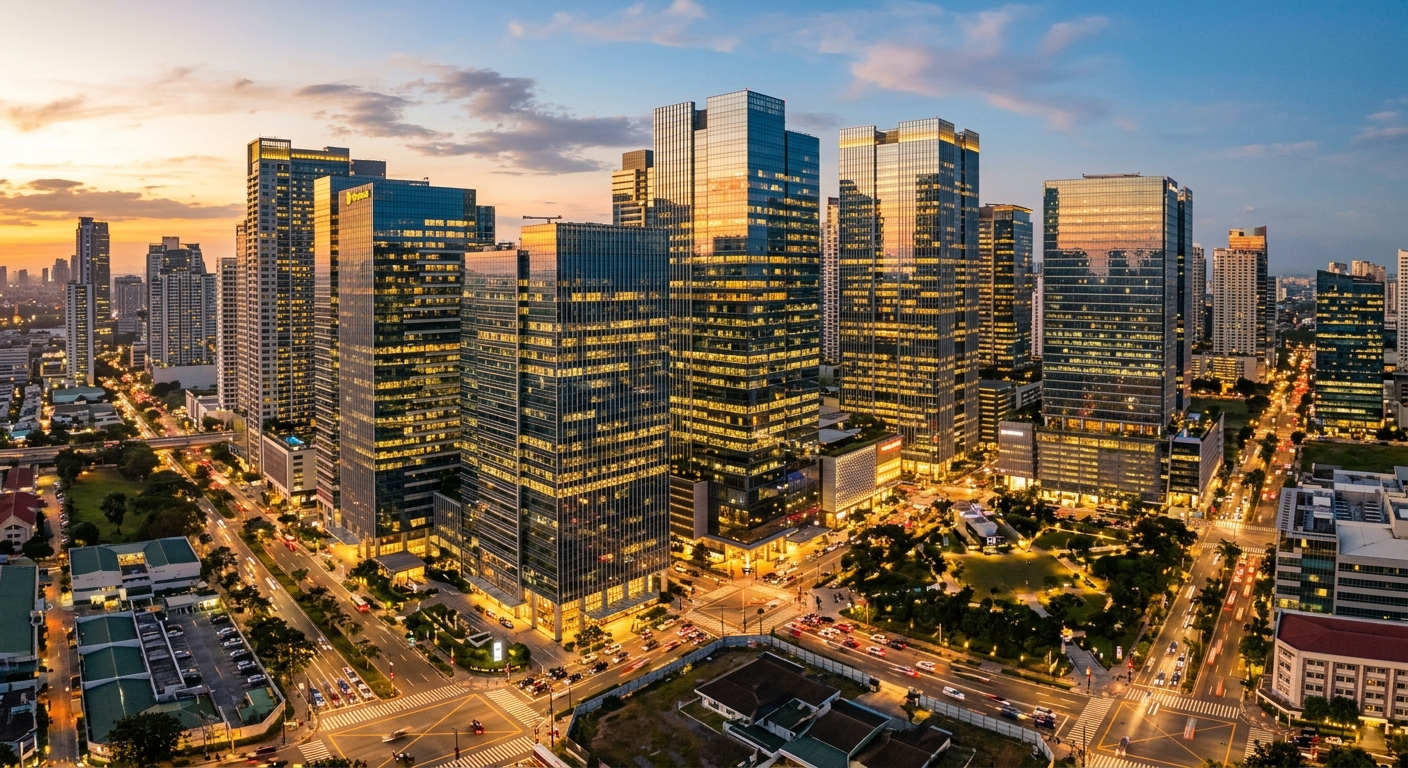
Philippine REITs for Foreign Investors in 2026: A Guide to SEC Memorandum Circular No. 1 and Strategic Property Investment
The SEC's January 2026 revisions to the REIT Rules — SEC Memorandum Circular No. 1, Series of 2026 — are the latest revision of the Philippine REIT rules. For foreign investors seeking exposure to Philippine income-generating real estate, the new rules expressly list infrastructure and logistics assets as sources of REIT income, let REITs hold assets through unlisted special purpose vehicles and joint ventures, and give sponsors two years to reinvest. This article explains how foreign nationals and foreign-incorporated entities can legally invest in, sponsor, or structure a Philippine REIT in 2026 — covering the expanded qualifying assets, the 60/40 Filipino ownership rule and leasehold-only structures under RA 9856, beneficial ownership reporting under the separate HARBOR registry, tax treatment of REIT dividends and gains, the PSE brokerage account opening process, and a compliance checklist.