Foreign Ownership Rights in the Philippines: A 2026 Legal Guide to What Foreign Investors Can and Cannot Own

One of the first questions any foreign investor asks when considering the Philippines is deceptively simple: what can I own? The answer, as with most things in Philippine law, is nuanced — layered across constitutional provisions, statutes, executive orders, and sector-specific regulations that do not always speak to each other cleanly.
The good news is that the Philippines has progressively liberalized its foreign investment framework over the past decade. The enactment of Republic Act No. 11647 in March 2022, which amended the Foreign Investments Act of 1991 (RA 7042), significantly expanded the space for foreign ownership in micro and small enterprises. Republic Act No. 11595, which amended the Retail Trade Liberalization Act in December 2021, dramatically lowered the capital thresholds for foreign retail enterprises. And Republic Act No. 11659 (the Public Service Act of 2022) narrowed the definition of "public utilities" — the sector most encumbered by foreign ownership restrictions — to just six categories.
But significant restrictions remain. The 1987 Constitution still reserves land ownership, mass media, and the practice of licensed professions for Filipinos. The Foreign Investment Negative List (FINL), now in its Thirteenth iteration under Executive Order No. 113 (effective May 2, 2026), carves out specific sectors where foreign equity is capped. And the Anti-Dummy Law — Commonwealth Act No. 108, as amended — carries criminal penalties for foreigners who use Filipino nominees to circumvent these restrictions.
This guide provides foreign investors with a comprehensive, organized analysis of Philippine foreign ownership law as it stands in 2026 — what is fully open, what is restricted, what remains prohibited, and the practical strategies for structuring investments within these constraints.
I. The Constitutional Foundation: Article XII of the 1987 Constitution
All foreign ownership restrictions in the Philippines trace back to Article XII of the 1987 Constitution. This is the starting point — and the ceiling — for any analysis of foreign participation in Philippine commerce.
Sections 2 and 7: The Filipino-First Rule on Resources and Land
Section 2, Article XII of the Constitution is the foundational provision on natural resources. It states in part:
"All lands of the public domain, waters, minerals, coal, petroleum, and other mineral oils, all forces of potential energy, fisheries, forests or timber, wildlife, flora and fauna, and other natural resources are owned by the State.... The State may directly undertake such activities, or it may enter into co-production, joint venture, or production-sharing agreements with Filipino citizens, or corporations or associations at least sixty per centum of whose capital is owned by such citizens."
As a rule, foreign investors cannot directly hold exploration, development, or utilization rights over natural resources — these are reserved for Philippine nationals (citizens or corporations at least 60% Filipino-owned). The 13th Foreign Investment Negative List recognizes two exceptions where full foreign participation is allowed: technical or financial assistance agreements with the President for large-scale exploration of minerals, petroleum, and other mineral oils, and renewable energy such as solar, wind, hydro, and ocean or tidal energy.
More practically significant is the constitutional restriction on private land ownership. Section 7 further provides that only Filipino citizens or corporations at least 60% Filipino-owned may acquire or hold private lands. This is a hard constitutional ceiling. No statute can authorize foreign land ownership beyond this — only a constitutional amendment could change it. (We address the workarounds in Section VI below.)
Article XVI, Section 11: Mass Media Reserved for Filipinos
Section 11(1), Article XVI of the Constitution reserves the ownership and operation of mass media to Philippine nationals. This provision has been read broadly by the SEC to prohibit any foreign equity in enterprises engaged in mass communication — including newspapers, magazines, broadcast television, radio, and, increasingly, digital media platforms with significant content operations.
The Negative List excepts recording and internet business from the mass media reservation, but the internet exception is narrow. The 13th Foreign Investment Negative List explains that DOJ Opinion No. 40 (s. 1998) uses "Internet Business" to refer to internet access providers that merely serve as carriers for transmitting messages, not creators of messages or information. A foreign-owned recording label falls within the exception; a platform that creates or publishes its own content should be checked against the mass media reservation before assuming full foreign ownership.
Section 11, Article XII: Public Utilities
Section 11, Article XII of the Constitution requires that public utilities be at least 60% Filipino-owned. The scope of what constitutes a "public utility" — and therefore subject to this 60% Filipino ownership requirement — was significantly narrowed by the 2022 Public Service Act, discussed in Section IV below.
II. The General Rule: 100% Foreign Ownership Is Now the Norm
Outside the areas expressly reserved or restricted by the Constitution, existing laws, or the FINL, foreign investors may own 100% of an enterprise in the Philippines. This principle is now firmly established in law, though it was a contentious development when the Foreign Investments Act was first enacted in 1991.
Under RA 11647 (the 2022 amendments to RA 7042), the Foreign Investments Act now expressly provides:
"A non-Philippine national... may... upon registration with the Securities and Exchange Commission (SEC)... do business as defined in this Act or invest in a domestic enterprise up to one hundred percent (100%) of its capital, unless participation of non-Philippine nationals in the enterprise is prohibited or limited to a smaller percentage by existing law and/or under the provisions of this Act."
This is the governing rule: 100% foreign ownership is permitted by default, subject only to (a) constitutional restrictions, (b) statutory restrictions, and (c) the sector-specific limitations in the FINL.
Export Enterprises: Always 100% Foreign-Owned
Export enterprises — under the Foreign Investments Act, enterprises that export at least 60% of their output (or, for traders, at least 60% of their domestic purchases) — are categorically exempt from foreign equity restrictions (unless their products fall within the FINL's Lists A or B). Under RA 11647 and its implementing rules and regulations, foreign investments in export enterprises shall be allowed up to 100%, provided their products and services do not fall within restricted sectors.
The practical implication is significant for foreign investors setting up manufacturing, business process outsourcing (BPO), or services operations primarily serving foreign clients. These enterprises can be 100% foreign-owned without requiring a Filipino partner or nominee.
Domestic Market Enterprises: 100%, Unless on the Negative List
For enterprises selling to the Philippine domestic market, the default rule is also 100% foreign ownership — except where the FINL imposes a specific limitation. This means a foreign investor can own a hotel, a logistics company, or a software firm selling to Philippine clients entirely in their own name, provided the sector is not on the restricted list and the enterprise meets the minimum paid-in capital discussed in Section VII. Businesses that sell goods directly to the public (including many restaurants and online stores) are retail trade, which has its own capital rules (Section V).
III. The Foreign Investment Negative List (FINL): The Core Restrictions
The FINL is the primary administrative instrument that operationalizes foreign ownership restrictions. Issued by the President under the Foreign Investments Act, the FINL divides restricted sectors into two lists:
- List A: Sectors where foreign ownership is limited by mandate of the Constitution and specific laws (these change only when the underlying law changes; amendments to List A may be made at any time to reflect changes in specific laws)
- List B: Sectors where foreign ownership is limited for reasons of security, defense, risk to health and morals, or protection of small- and medium-scale enterprises (these may be amended by the President, but not more often than once every two years)
The current version is the Thirteenth Regular Foreign Investment Negative List, promulgated under Executive Order No. 113 (EO 113), signed on April 13, 2026 and effective May 2, 2026. It replaced the Twelfth list issued under Executive Order No. 175 in 2022.
List A: Zero Foreign Equity
The following sectors are entirely closed to foreign equity participation:
- Mass media (except recording and internet business)
- Corporate practice of architecture — the only profession named in the 13th list. Other professions remain governed by the Constitution and their own regulatory laws (see Section VIII below).
- Cooperatives (except investments by former natural-born Filipino citizens)
- Private security agencies
- Small-scale mining of local resources
- Utilization of marine resources in archipelagic waters, territorial sea, and exclusive economic zone
- Ownership, operation, and management of cockpits
- Manufacture, repair, stockpiling, and/or distribution of nuclear weapons
- Manufacture, repair, stockpiling, and/or distribution of biological, chemical, and radiological weapons and anti-personnel mines
- Manufacture and retail of firecrackers and other pyrotechnic devices
List A: 25% Foreign Equity Cap
The following sectors are limited to a maximum of 25% foreign equity:
- Private recruitment, whether for local or overseas employment
- Contracts for the construction of defense-related structures
List A: 30% Foreign Equity Cap
The following sectors are limited to a maximum of 30% foreign equity:
- Advertising
List A: 40% Foreign Equity Cap
The following sectors are capped at 40% foreign equity (meaning at least 60% must be Filipino-owned):
- Retail trade enterprises with paid-up capital of less than PHP 25,000,000 (Section V below)
- Exploration, development, and utilization of natural resources, including the appropriation of water directly from a natural source — except technical or financial assistance agreements with the President for large-scale minerals and petroleum, and renewable energy (solar, wind, hydro, and ocean or tidal), where full foreign participation is allowed
- Ownership of private lands (subject to constitutional limitations discussed in Section VI)
- Operation of public utilities (discussed separately in Section IV)
- Educational institutions — except those established by religious groups and mission boards, institutions for foreign diplomatic personnel and dependents and other foreign temporary residents, or short-term high-level skills development programs
- Culture, production, milling, processing, and trading of rice and corn (except retailing), subject to a divestment period
- Government procurement of goods, infrastructure projects, and consulting services (for infrastructure requiring techniques not adequately possessed by Filipino entities, foreign ownership of up to 75% is allowed)
- Operation of commercial fishing vessels
- Ownership of condominium units
The 13th list also places telecommunications in a separate category: up to 100% foreign equity where the investor's country accords reciprocity to Philippine nationals, and up to 50% where it does not.
The 40% ceiling is the most commonly encountered structural restriction for foreign investors who do not fall within the export enterprise exception. A foreign investor seeking to participate in any of these sectors must do so through a Philippine corporation with at least 60% Filipino ownership, or through a joint venture with a Filipino partner — a structuring decision with significant governance, profit distribution, and exit implications.
IV. The Public Utilities Question: RA 11659 and the Narrowed Definition
One of the most significant developments in Philippine foreign investment law in recent years was the enactment of Republic Act No. 11659, otherwise known as the Public Service Act of 2022, signed by President Rodrigo Duterte on March 21, 2022. This statute fundamentally changed the foreign ownership calculus for companies operating in sectors that had historically been classified as public utilities.
The Old Definition: Overbroad and Restrictive
Prior to RA 11659, the term "public utility" was not statutorily defined. The BIR, the SEC, and the courts had developed a functional definition that captured a wide range of services — including telecommunications, airlines, shipping, railways, expressways, water distribution, and electricity distribution. Because Article XII, Section 11 of the Constitution requires public utilities to be at least 60% Filipino-owned, foreign investors in these sectors were constrained to a 40% equity stake.
This overbreadth had a chilling effect on foreign investment in critical infrastructure. Foreign infrastructure investors consistently cited the broad public utility definition as a barrier to entry. It also created structural complications: foreign-owned airlines, shipping lines, and telecommunications providers operated under arrangements that required complex nominee structures to comply with the 60% Filipino ownership requirement.
RA 11659: The New Definition
Section 4 of RA 11659 now expressly defines "public utility" to include only the following six categories:
- Distribution of electricity
- Transmission of electricity
- Petroleum and petroleum products pipeline transmission systems
- Water pipeline distribution systems and wastewater pipeline systems (including sewerage)
- Seaports
- Public utility vehicles
That is an exhaustive list. RA 11659 also provides a critically important savings clause:
"A public service which is not classified as a public utility under this Act shall be considered a business affected with public interest for purposes of Section 17 and 18 of Article XII of the Constitution. Notwithstanding any law to the contrary, nationality requirements shall not be imposed by the relevant Administrative Agencies on any public service not classified as public utility."
This savings clause — that non-public-utility public services cannot have nationality requirements imposed by administrative agencies — is a significant opening. Sectors like telecommunications, airlines, railway operations, expressway operations, and shipping (outside seaport operations) are no longer subject to the 60% Filipino ownership rule as public utilities. They may now be 100% foreign-owned, unless they independently fall within another restricted category (such as the natural resource sectors in List A of the FINL, or sector-specific statutes).
Practical Impact: Sectors Now Open to 100% Foreign Ownership
The following sectors, previously constrained by the 40% foreign equity cap as public utilities, are now fully open to foreign investment:
- Telecommunications — foreign investors can own 100% of a Philippine telecommunications company where their country accords reciprocity to Philippine nationals, and up to 50% where it does not (13th Foreign Investment Negative List, citing Section 25 of RA 11659), subject to licensing by the National Telecommunications Commission (NTC)
- Airlines — RA 11659 amended the foreign-ownership limits in the aviation laws (RA 776 and RA 9497), so foreign investors can own up to 100% of an airline, subject to the 50% cap without reciprocity if air transport is classed as critical infrastructure (Section 25). The airline needs economic authority (a certificate of public convenience and necessity) from the Civil Aeronautics Board under RA 776 and an air operator certificate from the Civil Aviation Authority of the Philippines (CAAP) under RA 9497; commercial route authorities remain subject to bilateral air services agreements
- Shipping and maritime transport — including domestic shipping, roll-on/roll-off vessels, and ferry services
- Railway operations — including light rail, metro rail, and commuter rail
- Expressway and toll road operations — foreign investors can now hold majority or 100% equity in toll road concessions
Water pipeline distribution systems and wastewater pipeline systems are not on this list: they remain one of the six public utilities and stay capped at 40% foreign equity.
This liberalization was a direct response to foreign investor feedback that the broad public utility definition was incompatible with the Philippines' stated goal of attracting infrastructure investment under the Build, Build, Build program. Sectors like railways and expressways had historically been constrained to 40% foreign equity — limiting the pool of qualified foreign infrastructure investors who could participate in government concessions.
V. Retail Trade: RA 11595 and the New Capital Thresholds
For foreign investors in the retail sector, RA 11595 (the Retail Trade Liberalization Act amendments, signed December 10, 2021) was a landmark reform. It dramatically lowered the barriers to foreign retail participation in the Philippines.
The Old Framework: A Barrier to Entry
Before RA 11595, the Retail Trade Liberalization Act of 2000 (RA 8762) had established a tiered system of prequalification requirements for foreign retailers:
- Category B corporations (engaged in retail trade) required a paid-up capital of at least USD 2.5 million
- Category D enterprises (selling high-end or luxury goods) required a paid-up capital of at least USD 250,000 per store
- Foreign retailers were also required to be pre-qualified by the Department of Trade and Industry (DTI), demonstrating a parent-company net worth of at least USD 200 million (USD 50 million for luxury retailers), at least five retail branches or franchises globally, a five-year track record in retailing, and reciprocity for Filipino retailers in the investor's home country
These requirements effectively barred most mid-sized foreign retail brands from the Philippine market. The minimum capital requirements were far beyond what small-to-mid-sized foreign retailers could justify for a single-market entry.
RA 11595: The New Framework
RA 11595, which took effect on January 21, 2022, dramatically liberalized the retail trade framework:
- Minimum paid-up capital for all foreign-owned retail enterprises: PHP 25 million (approximately USD 500,000 at prevailing exchange rates) — a single uniform threshold replacing the tiered categories
- Minimum investment per store: PHP 10 million (approximately USD 200,000) for retailers operating more than one physical store — lowered from the previous USD 830,000 per store
- Elimination of DTI prequalification: The net-worth, branch-count, and track-record prequalification requirements were deleted
- Reciprocity requirement maintained: The foreign retailer's country of origin must not prohibit the entry of Filipino retailers
- Elimination of the 30% public offering rule: Retail enterprises with more than 80% foreign ownership are no longer required to publicly offer 30% of their shares in the Philippines
The practical impact: foreign retailers — from global brands to regional mid-market operators — can now establish Philippine operations with a significantly lower capital commitment. The PHP 25 million paid-up capital and PHP 10 million per store investment thresholds are substantial, but far more accessible than the previous USD 2.5 million base requirement and USD 830,000 per store threshold.
The reciprocity condition remains important. Foreign investors should confirm, before structuring their entry, whether their home jurisdiction provides equivalent market access for Filipino retailers. Countries like the United States, Japan, Singapore, and most EU member states generally provide such access, but investors from more restricted markets should verify.
VI. Land Ownership: The Hard Constitutional Ceiling and Its Workarounds
No discussion of foreign ownership in the Philippines is complete without addressing the land question. The constitutional restriction is clear: only Filipino citizens or corporations at least 60% Filipino-owned may acquire or hold private lands (Article XII, Section 7). This restriction is absolute at the constitutional level — no statute can override it.
However, there are several legally sound mechanisms that foreign investors use to gain functional access to Philippine real property:
1. Long-Term Lease
The most common and practical mechanism is a long-term lease agreement. Under the Investors' Lease Act (RA 7652), a foreign investor with an SEC-registered investment in the Philippines may lease private land for up to 50 years, renewable once for up to 25 years; other foreign lessees remain limited by Presidential Decree No. 471 to 25 years, renewable for another 25. The foreign investor does not acquire ownership — but gains exclusive possession and use of the property for the lease term.
Long-term leases are routinely used for office spaces, manufacturing facilities, commercial developments, and in some cases residential use. The lease agreement should be properly notarized and registered with the Register of Deeds, since an unrecorded lease does not bind third persons (Civil Code, Art. 1648).
2. Corporations with 60% Filipino Ownership
A foreign investor can hold up to 40% equity in a Philippine corporation that holds land. The 60% Filipino ownership requirement for land-holding corporations is often met through a Filipino partner, an equity co-investor, or in some cases a nominee arrangement — though nominee arrangements carry anti-dummy law risks discussed below.
This structure is common in real estate development, where foreign investors partner with Filipino real estate companies to develop condominium projects, commercial buildings, and mixed-use developments. Notably, condominium units can be individually owned by foreigners under RA 4726 (the Condominium Act) where the land and common areas are held by a condominium corporation: Section 5 allows a unit to pass to a foreigner so long as the resulting foreign interest in that corporation stays within the limit set by law. Where the unit owners instead co-own the common areas directly, Section 5 allows units to be transferred only to Filipino citizens or 60% Filipino-owned corporations, except by hereditary succession. The 13th Foreign Investment Negative List places ownership of condominium units in its 40% category (citing Section 5 of RA 4726), so foreign ownership in a project is capped at 40%.
3. Natural-Born Citizens Who Lost Philippine Citizenship
The Constitution (Article XII, Section 8) provides an exception for natural-born citizens of the Philippines who have lost their Philippine citizenship. Such persons may be transferees of private lands, subject to limitations provided by law. Two statutes implement it: Batas Pambansa Blg. 185, which allows former natural-born Filipino citizens to acquire up to 1,000 square meters of urban land or one hectare of rural land for residential purposes, and RA 8179, which allows up to 5,000 square meters of urban land or three hectares of rural land for business or other purposes.
For foreign investors who are former natural-born Filipino citizens (e.g., Filipino-Americans, Filipino-Europeans), this provision offers a path to direct land ownership, within the area limits above for residential use (BP 185) and for business or other purposes (RA 8179).
4. Anti-Dummy Law Considerations
Foreign investors considering nominee arrangements to hold land through a nominally Filipino-owned corporation must be acutely aware of the anti-dummy laws: Commonwealth Act No. 108 (the Anti-Dummy Law), as amended. It makes it a criminal offense for a Filipino to act as a dummy or nominee for a foreigner to evade the foreign equity restrictions in restricted sectors.
The law penalizes foreigners who use Filipino nominees to own land or participate in restricted sectors in their name, with imprisonment of five to 15 years and a fine of not less than the value of the right, franchise, or privilege acquired (and never less than PHP 5,000), plus forfeiture of that right or property. The BIR, the SEC, and the DOJ have the authority to investigate and prosecute violations.
The practical risk here is real. A foreign investor who structures a nominee arrangement to acquire land — or to own more than 40% of a land-holding corporation — faces not just civil consequences but criminal exposure. The Supreme Court has voided nominee arrangements designed to evade the land-ownership ban (Neunzig v. Court of Appeals, G.R. No. 260983, February 10, 2025), and has held that a partially nationalized corporation may not employ aliens in management or control positions (Luzon Stevedoring Corp. v. Anti-Dummy Board, G.R. No. L-26094, August 1972).
VII. MSME Investment Thresholds: The RA 11647 Innovation
One of the most practically significant changes introduced by RA 11647 was the lowering of the minimum investment threshold for foreign investment in micro and small domestic market enterprises (MSMEs).
The Default Rule: US$200,000 Minimum
Under the Foreign Investments Act (RA 7042, as amended by RA 8179 in 1996), small and medium-sized domestic market enterprises with paid-in equity capital below the equivalent of USD 200,000 were reserved for Philippine nationals (the original 1991 threshold was USD 500,000). This threshold was designed to ensure that foreign investment in small enterprises brought substantial capital.
RA 11647: US$100,000 for Qualified MSMEs
Since 1996, a lower USD 100,000 threshold applied to enterprises involving advanced technology or employing at least 50 direct employees. RA 11647 kept the USD 100,000 threshold for micro and small domestic market enterprises and redefined who qualifies — any of the following:
- Advanced technology enterprises — those certified as such by the Department of Science and Technology (DOST)
- Startups or startup enablers — endorsed as such by lead host agencies under RA 11337 (the Innovative Startup Act)
- Enterprises with majority Filipino employees — those where at least a majority of direct employees are Filipinos, with a minimum of 15 Filipino employees
This change opened a significant pathway for foreign entrepreneurs and early-stage investors to establish or invest in Philippine MSMEs with substantially lower capital requirements than previously mandated. Foreign founders whose enterprise is endorsed as a startup under RA 11337, or that employs at least 15 Filipinos as a majority of its direct workforce, can now invest in a domestic market enterprise with USD 100,000 in paid-in capital instead of USD 200,000.
VIII. The Practice of Professions: Reciprocity-Based Access
The Constitution reserves the practice of licensed professions to Filipino citizens — but it provides a statutory exception for foreign nationals where reciprocity exists between the Philippines and their country of domicile. Several professions have enacted reciprocity provisions in their licensing laws:
- Medicine: Foreign medical doctors may practice in the Philippines if their country of domicile allows Filipino doctors to practice under substantially the same conditions (subject to the reciprocity rules of the Medical Act and related professional regulation laws)
- Engineering and Architecture: Reciprocal licensing for foreign engineers and architects is governed by each profession's regulatory law and PRC rules (the CPD Act, RA 10912, deals with continuing professional development, not foreign licensing). Corporate practice is a separate matter: the 13th Foreign Investment Negative List allows no foreign equity in the corporate practice of architecture, noting that only Filipino citizens registered and licensed as architects may form a firm, partnership, or corporation for its practice (Section 37 of RA 9266)
- Accountancy: The Accountancy Law (RA 9298) provides for reciprocity-based entry for foreign CPAs subject to conditions
- Law: Admission to the Philippine Bar requires Philippine citizenship (Rule 138, Section 2 of the Rules of Court), and the Code of Professional Responsibility and Accountability (Canon III, Section 33) provides that foreign lawyers "cannot, directly or indirectly, practice law in the Philippines." The Supreme Court has held that a treaty does not dispense with the Bar requirements (In re: Garcia, 1961).
Foreign investors employing licensed professionals in the Philippines should ensure that their foreign national employees hold valid PRC (Professional Regulation Commission) licenses or that their home country provides equivalent access for Filipino professionals, as required for reciprocity-based licensing.
IX. The Anti-Dummy Law Framework
Foreign investors must treat the anti-dummy laws not as peripheral concerns but as core compliance obligations. The interplay between foreign ownership restrictions and criminal liability for circumvention is one of the highest-risk areas for foreign investors in the Philippines.
CA 108: The Anti-Dummy Law
Commonwealth Act No. 108 (the Anti-Dummy Law), as amended, prohibits:
- Any foreigner who, in any capacity whatsoever, manages, operates, takes part in the management, operation, or administration of a business that is restricted to Philippine nationals
- Any foreigner who, in any manner or capacity, intervenes in the management, operation, administration, or control of such restricted businesses — including signing contracts, negotiating, or otherwise participating in decision-making
- Any Filipino who acts as a dummy for a foreigner in any restricted business
Penalties include imprisonment of not less than five years but not more than 15 years and a fine of not less than the value of the right, franchise, or privilege enjoyed or acquired in violation of the law, but in no case less than PHP 5,000. The right, property, or business is also forfeited, and an offending corporation may be dissolved (CA 108, as amended by RA 134 and PD 715, Sections 1, 2-A and 3).
Compliance Strategy
The anti-dummy law framework requires foreign investors to take a structural approach to compliance rather than an ad hoc one. Key principles:
- Do not manage or operate restricted businesses directly. In sectors reserved to or capped for Philippine nationals (e.g., mass media, or retail enterprises below PHP 25 million in paid-up capital, which the 13th list caps at 40% foreign equity), the foreign investor must not assume any managerial role. The Filipino partner or nominee must exercise genuine operational control.
- Obtain a legal opinion before entering any sector with foreign equity limitations. The classification of a business as "restricted" is not always self-evident — a legal opinion from qualified Philippine counsel should confirm the applicable restrictions before entry.
- Document the Filipino partner's genuine participation. The Filipino partner in a restricted sector should demonstrate genuine participation in the business — board participation, operational involvement, equity contribution — to avoid anti-dummy characterization as a mere nominee.
- Consider sector-specific structures. Some sectors have specialized regulatory frameworks that provide clearer pathways for foreign participation (e.g., PEZA registration, BOI registration for preferred activities) without the risks of nominee arrangements.
X. Sector-by-Sector Summary Table
The following table summarizes the foreign ownership rules across the key sectors most relevant to investors:
| Sector | Maximum Foreign Equity | Authority |
|---|---|---|
| Export enterprises (products/services not on FINL) | 100% | RA 11647 / RA 7042 |
| Domestic market enterprises (general, not on FINL) | 100% | RA 11647 / RA 7042 |
| Mass media (internet business and recording excepted) | 0% | Constitution, Art. XVI, §11(1); FINL List A |
| Practice of professions (reciprocity-proscribed) | Varies | Respective licensing statutes |
| Retail trade (paid-up capital ≥ PHP 25M; per store ≥ PHP 10M if more than one store) | 100% | RA 11595 / RA 8762 |
| Retail trade (paid-up capital < PHP 25M) | 40% | RA 11595; 13th FINL List A |
| Public utilities (distribution electricity, transmission, seaports, water pipeline, PUVs, petroleum pipelines) | 40% | Constitution, Art. XII, §11; RA 11659 |
| Telecommunications | 100% with reciprocity; 50% without | RA 11659, §25; 13th FINL List A |
| Airlines, shipping, railway, expressways | 100% | RA 11659 (not classified as public utilities) |
| Natural resource exploration/development/utilization | 40% | Constitution; FINL List A |
| Private land ownership | 0% (direct); 40% via Filipino-controlled corp | Constitution, Art. XII, §7 |
| Condominium units | 40% of the project (individual units permitted) | RA 4726, §5; 13th FINL List A |
| Micro and small enterprises with advanced technology, startup endorsement, or a majority-Filipino workforce (min. 15) | 100% (min USD 100K paid-in capital) | RA 11647 |
| MSMEs general (paid-in capital < USD 200K) | 40% | RA 7042; 13th FINL List B |
| Advertising | 30% (70% Filipino minimum) | Constitution, Art. XVI, §11(2); FINL List A |
| Security agencies | 0% | FINL List A |
| Cooperatives | 0% (except former natural-born Filipino citizens) | FINL List A |
XI. Practical Entry Strategy for Foreign Investors
Given the layered framework described above, foreign investors entering the Philippines should follow a structured approach to determining their permissible ownership structure:
Step 1: Sector Classification
Before anything else, determine the sector in which the investment will operate. Is the business an export enterprise or a domestic market enterprise? Does it fall within any of the restricted categories in List A or List B of the FINL? Is it a licensed profession with reciprocity requirements? Is it a public utility as defined by RA 11659? These threshold questions determine the maximum permissible foreign equity.
Step 2: Corporate Vehicle Selection
Once the sector is confirmed, select the appropriate corporate vehicle. Options include:
- Wholly foreign-owned corporation (SEC registration) — available for export enterprises and domestic market enterprises not on the FINL
- Joint venture corporation (60% Filipino / 40% foreign) — necessary for sectors limited to 40% foreign equity (public utilities, land ownership, natural resources, educational institutions)
- Branch office (an SEC-licensed extension of the foreign company, subject to the same foreign equity and capital rules) or representative office (which cannot earn income in the Philippines and so is not suited to domestic market operations)
- Regional Operating Headquarters (ROHQ) — for multinationals establishing a regional hub in the Philippines; its former 10% preferential tax rate ended on January 1, 2022 under the CREATE Act (RA 11534), and it cannot engage in domestic business
Step 3: Regulatory Licensing
Corporate registration with the SEC or DTI is only the beginning. Most sectors require additional regulatory licensing — from the NTC (telecommunications), the CAB and CAAP (aviation), the MARINA (maritime), the ERC (energy), the LWUA or MWSS (water), or sector-specific agencies. Foreign ownership limitations in the corporate charter do not override sector-specific licensing requirements for the activity itself.
Step 4: Anti-Dummy Compliance Review
Before executing any joint venture or nominee arrangement in a restricted sector, obtain a formal legal opinion on the anti-dummy law implications. Document the Filipino partner's genuine participation, equity contribution, and operational role. This documentation is the primary defense against anti-dummy characterization.
Step 5: BOI or PEZA Registration (If Applicable)
For investors in preferred investment activities — including exporters, technology companies, and enterprises in designated economic zones — registration with the Board of Investments (BOI) or the Philippine Economic Zone Authority (PEZA) may provide significant tax incentives (income tax holiday, reduced corporate income tax rates, VAT exemptions). These registrations do not override foreign equity restrictions — a 100% foreign-owned BOI-registered entity is still 100% foreign-owned — but they do affect the tax cost of operating in the Philippines.
XII. Conclusion
The Philippine foreign ownership framework has evolved considerably from its historically restrictive posture. The 2022 legislative reforms — RA 11647, RA 11659, and RA 11595 — have collectively opened significant space for foreign investment across sectors including retail trade, infrastructure, telecommunications, transport, and MSMEs with advanced technology. Outside the restricted sectors, 100% foreign ownership has been the default rule since the Foreign Investments Act of 1991, and these reforms widened the space where it applies.
But the residual restrictions are real and consequential. Mass media remains closed to foreign equity, while private land, natural resource extraction, and the six public utilities remain capped at 40% foreign equity. The practice of licensed professions is subject to reciprocity conditions that vary by profession. And the anti-dummy laws impose criminal liability on foreigners who use nominee structures to circumvent these restrictions.
Foreign investors who approach the Philippine market with a clear-eyed understanding of these rules — and who structure their investments accordingly — will find a market of over 110 million consumers with growing middle-class purchasing power, a strategically located geography, and a government that has repeatedly demonstrated a willingness to liberalize its investment framework. Those who do not risk finding out that the gap between permissible and criminal foreign participation can be surprisingly narrow.
The prescription for foreign investors is straightforward: classify the sector first, confirm the permissible equity structure, select the correct corporate vehicle, and obtain qualified Philippine legal counsel before executing any transaction in a restricted sector. The cost of proper legal advice at the outset is invariably lower than the cost of correcting a non-compliant structure after the investment is made.
This article is for general informational purposes only and does not constitute legal advice. Foreign investors should consult qualified Philippine legal counsel for advice specific to their circumstances, sector, and proposed investment structure.
Keep reading

Neunzig v. Court of Appeals and the Void-Ab-Initio Doctrine: What Foreign Investors Must Learn from the Philippines' Hardest Line on Foreign Land Ownership
The Supreme Court's February 2025 ruling in G.R. No. 260983 (Klaus Peter Neunzig v. Hon. Court of Appeals and Rossana Balcom-Doring) declared simulated land contracts void ab initio, applied the in pari delicto doctrine to deny both parties any legal recourse, referred the case to the Solicitor General for possible escheat or forfeiture of the land, and referred the foreign investor, his Filipino nominee, and the notary to the Department of Justice for possible prosecution. This article analyzes the decision, the constitutional framework it applied, and the legitimate legal structures available to foreign nationals seeking Philippine real property in 2026.

The 13th Foreign Investment Negative List: What Foreign Investors Must Know Under Executive Order No. 113 (Effective May 2, 2026)
Executive Order No. 113, Series of 2026, promulgates the Thirteenth Regular Foreign Investment Negative List. Signed on April 13, 2026, published on April 17, and effective May 2, 2026, it replaces the 12th list issued in 2022 and changes the rules for retail trade, telecommunications, renewable energy and defense materiel. This guide explains how the Negative List works, what changed, what stays restricted, how the Anti-Dummy Law and the SEC's HARBOR beneficial ownership registry apply alongside it, how BIR RMC No. 24-2026 treats cross-border service fees, and the practical steps for structuring an investment under the new rules.
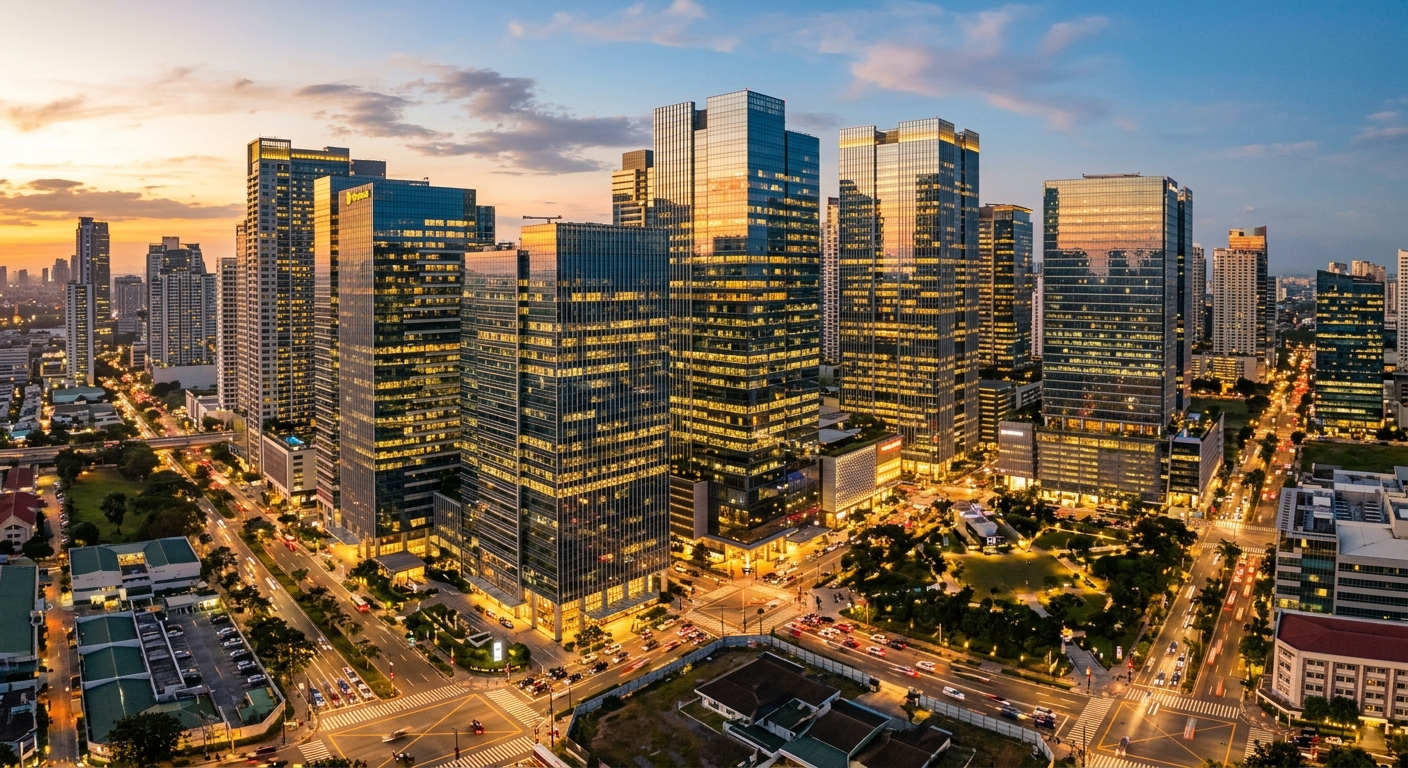
Philippine REITs for Foreign Investors in 2026: A Guide to SEC Memorandum Circular No. 1 and Strategic Property Investment
The SEC's January 2026 revisions to the REIT Rules — SEC Memorandum Circular No. 1, Series of 2026 — are the latest revision of the Philippine REIT rules. For foreign investors seeking exposure to Philippine income-generating real estate, the new rules expressly list infrastructure and logistics assets as sources of REIT income, let REITs hold assets through unlisted special purpose vehicles and joint ventures, and give sponsors two years to reinvest. This article explains how foreign nationals and foreign-incorporated entities can legally invest in, sponsor, or structure a Philippine REIT in 2026 — covering the expanded qualifying assets, the 60/40 Filipino ownership rule and leasehold-only structures under RA 9856, beneficial ownership reporting under the separate HARBOR registry, tax treatment of REIT dividends and gains, the PSE brokerage account opening process, and a compliance checklist.