New AEP Rules in 2025: What Foreign Workers in the Philippines Must Know

If you are a foreign national planning to work in the Philippines — or an employer looking to hire one — the rules changed significantly in 2025. The Department of Labor and Employment (DOLE) issued Department Order No. 248, Series of 2025, overhauling the Alien Employment Permit (AEP) process with tougher requirements and new compliance obligations.
Here is a plain-language breakdown of the key changes and what they mean for you.
What Is an AEP and Who Needs One?
Under Article 40 of the Philippine Labor Code, any foreign national seeking employment in the Philippines must obtain an Alien Employment Permit from DOLE. This applies whether you are hired locally or deployed by a foreign company to its Philippine office.
Certain categories of foreign workers are exempt from the AEP — including diplomats, officers of multinational companies under presidential proclamations, and foreign nationals whose employment is covered by special laws. However, under DO 248, even exempt workers must now secure a Certificate of Exemption from DOLE.
Key Changes Under DO 248
1. Expanded Labor Market Test (LMT)
The Labor Market Test — which determines whether a qualified Filipino worker is available for the position — now requires broader publication:
- A job vacancy ad in a newspaper of general circulation (same as before)
- A posting on PhilJobNet, DOLE's official job-matching platform
- A posting at the local Public Employment Service Office (PESO) or Job Placement Office with jurisdiction over the jobsite
The ad itself must now include detailed information: the employer's business name and address, specific job description, the foreign national's name and city of residence, the intended employment period, and the DOLE Regional Office where the AEP application will be filed.
The AEP application can only be filed 15 calendar days after publication, and the ad is only valid for 45 days — miss the window and you must republish.
2. New Economic Needs Test (ENT)
This is entirely new. DOLE Regional Offices must now conduct an Economic Needs Test to assess whether hiring a foreign worker is economically justified. Factors include:
- Whether there is an actual shortage of Filipino workers in that sector or occupation
- Whether the required skills are unavailable locally and cannot be developed through short-term training
- Whether the foreign hire serves the national economic interest — particularly in industries registered with PEZA, BOI, or those operating public utilities
Critically, DOLE can deny the AEP application if it determines the ENT is not satisfied. This gives regional offices significant discretion to reject applications.
3. Mandatory Understudy Training Program (UTP)
Employers in certain categories — including those registered with BOI, PEZA, or those operating public utilities — must now submit an Understudy Training Program (UTP) or Skills Development Program (SDP) with the AEP application.
The UTP requires the foreign worker to train at least two Filipino regular employees who are next-in-rank. The SDP similarly requires at least two rank-and-file employees to undergo structured training. Employers must submit progress evaluation reports to DOLE upon completion of each training period.
DOLE later issued DO 248-A, Series of 2025 (effective June 2025) to clarify these requirements, including allowing AEP renewal applications with an affidavit of undertaking to fulfill training plan requirements within 60 days.
4. Tighter Filing Deadlines
Under the new rules, the AEP application must be filed within 15 calendar days from the execution of the employment contract or the issuance of the foreign national's appointment — a deadline that did not exist before.
Who Is Exempt from the UTP/SDP?
Not everyone must submit a training program. DO 248-A clarifies that the following are exempt from UTP/SDP:
- Foreign nationals excluded or exempted from the AEP requirement entirely
- Equity holders, shareholders, or investors with ownership stakes reflected in SEC filings
- Foreign nationals in positions determined by a DOLE Technical Working Group to qualify for exemption
What This Means for Foreign Professionals and Employers
The message from DOLE is clear: the Philippines wants to prioritize Filipino workers and ensure that foreign hires bring genuine value that cannot be sourced locally. For foreign professionals, this means:
- Plan earlier. The expanded publication and 15-day waiting period add weeks to the timeline.
- Document your unique skills. The ENT requires evidence that your expertise is unavailable in the local labor market.
- Budget for compliance. Employers must plan UTP/SDP programs, track progress, and file reports — this requires administrative resources.
- Watch the 45-day window. Job ads expire, and missing the filing deadline means starting over.
Need Help Navigating the New AEP Process?
The updated AEP rules affect every foreign worker and employer in the Philippines. Whether you need help preparing an AEP application, structuring a compliant Understudy Training Program, or understanding whether your position qualifies for an exemption, TTFC Law can guide you through the process.
Contact us for a consultation.
Related Articles

The Philippine Privacy Impact Assessment Revolution: What the 2026 Draft Circular Means for Foreign Companies
The NPC's August 2026 draft circular would replace the blanket Privacy Impact Assessment obligation that has governed Philippine data privacy compliance since 2017 with a risk-tiered framework. For foreign companies operating in or serving the Philippine market, the shift from a one-size-fits-all requirement to a threshold-based trigger system carries significant compliance and cost implications. This guide explains the eight mandatory PIA trigger categories, the new quantitative thresholds, what the draft circular means for AI systems and cross-border transfers, and the practical steps foreign companies must take now.
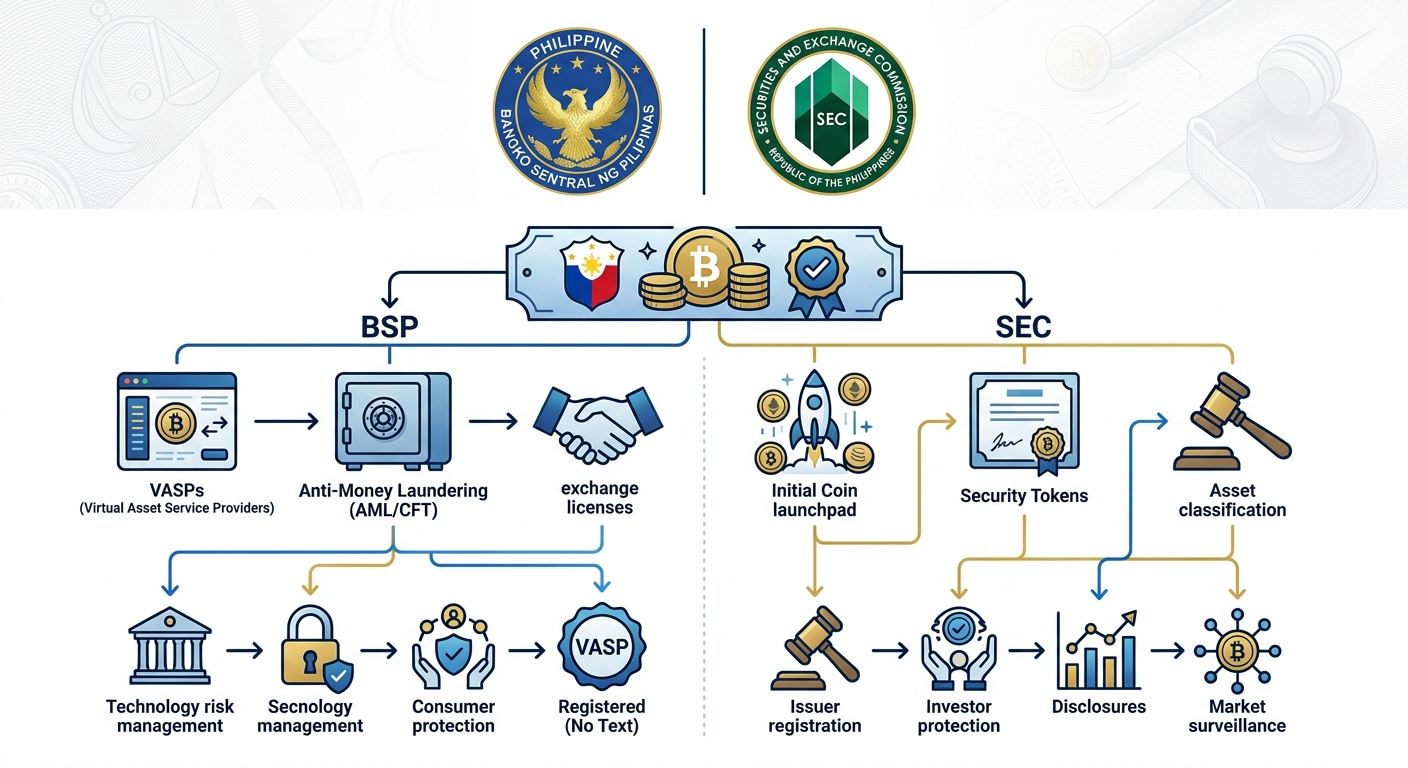
The Philippine Dual-Regulatory Framework for Cryptocurrency and Virtual Assets: A Comprehensive Guide for Foreign Investors in 2026
With the BSP's Circular No. 1108 and the SEC's CASP Rules (MC Nos. 04 and 05 of 2025) now both in force, foreign investors entering the Philippine virtual asset space face a bifurcated regulatory landscape that did not exist three years ago. This guide maps the jurisdictional boundaries between the Bangko Sentral ng Pilipinas and the Securities and Exchange Commission, explains the licensing pathways, capitalization requirements, AML/CTF obligations, the BSP's continued VASP license moratorium, and the practical steps a foreign investor must take to operate lawfully in the Philippines' digital asset market.
The Philippine E-Invoicing Mandate: A Comprehensive Compliance Guide for Foreign Companies in 2026
With the December 31, 2026 deadline for mandatory e-invoicing under BIR Revenue Regulations No. 11-2025 fast approaching, foreign companies operating in the Philippines face an urgent compliance obligation that cannot be deferred. This guide provides a complete analysis of who must comply, what constitutes a compliant electronic invoice, the step-by-step implementation process, tax deduction opportunities under the CREATE MORE Act, and the penalties for non-compliance — with every legal citation verified against primary sources.