Can I Bring My Family? Dependent Visa Rules for Foreign Workers and Investors in the Philippines
One of the first questions foreign workers and investors ask after securing a Philippine visa is: Can my family come with me? The short answer is yes — but the process, requirements, and scope of coverage depend on which visa you hold. Here are the five questions we hear most often.
1. Who Qualifies as a "Dependent" Under Philippine Immigration Law?
Under the Philippine Immigration Act of 1940 (Commonwealth Act No. 613, as amended), the term "dependent" generally covers:
- Your legal spouse
- Your unmarried children under 21 years old
This definition applies consistently across most visa categories — the 9(g) pre-arranged employment visa, the Special Investor's Resident Visa (SIRV), the 47(a)(2) special non-immigrant visa, and the Special Resident Retiree's Visa (SRRV). Adult children, parents, siblings, and domestic helpers generally do not qualify as dependents and must secure their own independent visas.
2. Can My Family Join Me on a 9(g) Work Visa?
Yes. If you hold a 9(g) pre-arranged employment visa, your spouse and unmarried children under 21 may apply for dependent visas through the Bureau of Immigration (BI). Key points:
- Timing: Dependents can apply simultaneously with your principal visa application or after your 9(g) has been approved.
- Duration: Dependent visas are tied to the principal holder's visa validity. If your 9(g) expires or is cancelled, dependent visas become invalid automatically.
- Work rights: Dependents on a 9(g)-dependent visa are not automatically authorized to work. If your spouse wishes to work in the Philippines, they must obtain their own Alien Employment Permit (AEP) from the Department of Labor and Employment (DOLE) and, typically, their own work visa.
- School enrollment: Children of 9(g) holders may enroll in accredited Philippine schools. Some schools may require a Special Study Permit (SSP) for children on tourist visas, but children on dependent visas are generally exempt.
Required documents typically include authenticated marriage and birth certificates, the principal holder's approved visa, and an affidavit of support.
3. What About SIRV and SRRV Holders?
Both the SIRV (administered by the Board of Investments under Executive Order No. 226, the Omnibus Investments Code of 1987) and the SRRV (administered by the Philippine Retirement Authority under RA 7656 and Executive Order No. 1037) allow inclusion of dependents.
SIRV Dependents
- Requires a minimum investment of US$75,000 in BOI-eligible areas.
- Spouse and unmarried children under 21 may be included in the application.
- Each dependent receives their own SIRV ID card (fee: approximately ₱2,000 per person).
- Once a child turns 21, their SIRV coverage ends and they must secure a separate visa.
SRRV Dependents
- Under the SRRV program, up to two dependents (spouse and one child) may be included in the principal application at no additional deposit.
- Each additional dependent beyond two requires an additional deposit of US$15,000.
- There is an annual processing fee per dependent (currently US$360).
4. How Does the 47(a)(2) Visa Handle Dependents?
The Section 47(a)(2) visa — commonly called the PEZA visa when issued to employees of PEZA-registered enterprises — also allows dependent inclusion. Under Department of Justice (DOJ) guidelines:
- The principal visa holder's spouse and unmarried children under 21 may be included as dependents.
- Dependent visas are valid for the duration of the principal holder's visa, which generally aligns with the employment contract or a maximum of two years (renewable).
- Children born in the Philippines during the principal holder's authorized stay may also be applied for as dependents.
- An affidavit of support and guaranty of return fare is required for each dependent included.
The 47(a)(2) dependent application is filed through the DOJ, not the Bureau of Immigration, which can mean slightly different processing timelines.
5. What Are the Common Pitfalls to Watch Out For?
Based on our experience advising foreign clients, here are the mistakes we see most frequently:
- Assuming automatic coverage. No Philippine visa automatically extends to family members. A separate application — with its own set of documents and fees — is always required for each dependent.
- Document authentication gaps. Marriage certificates and birth certificates must be authenticated by the Philippine Embassy or Consulate in your home country (or apostilled under the Apostille Convention, to which the Philippines acceded in 2019). Unverified documents will be rejected.
- Ignoring the age-out rule. When a dependent child turns 21, their coverage under the parent's visa ends. Plan ahead — whether that means the child applies for their own visa (such as a student visa under Section 9(f) of CA 613) or departs the country.
- Forgetting ACR I-Cards. All foreign nationals staying in the Philippines beyond 59 days must obtain an Alien Certificate of Registration Identity Card (ACR I-Card) from the Bureau of Immigration. This applies to dependents as well. Failure to secure one can result in fines and complications during departure.
- Not planning for work authorization. If your spouse intends to work, start the AEP and work visa process early. Operating without proper authorization exposes both the employee and the employer to penalties under Philippine labor and immigration law.
Plan Ahead — Not After Arrival
The best time to plan your family's immigration status is before you arrive in the Philippines, not after. Dependent visa applications are significantly smoother when filed alongside — or shortly after — the principal visa. Delays in documentation, particularly authentication of foreign documents, can add weeks or months to processing.
If you are a foreign worker, investor, or retiree considering bringing your family to the Philippines, our team at TTFC Law can help you navigate the requirements specific to your visa type and family situation. Contact us to discuss your options.
Related Articles

The Philippine Privacy Impact Assessment Revolution: What the 2026 Draft Circular Means for Foreign Companies
The NPC's August 2026 draft circular would replace the blanket Privacy Impact Assessment obligation that has governed Philippine data privacy compliance since 2017 with a risk-tiered framework. For foreign companies operating in or serving the Philippine market, the shift from a one-size-fits-all requirement to a threshold-based trigger system carries significant compliance and cost implications. This guide explains the eight mandatory PIA trigger categories, the new quantitative thresholds, what the draft circular means for AI systems and cross-border transfers, and the practical steps foreign companies must take now.
The Philippine Dual-Regulatory Framework for Cryptocurrency and Virtual Assets: A Comprehensive Guide for Foreign Investors in 2026
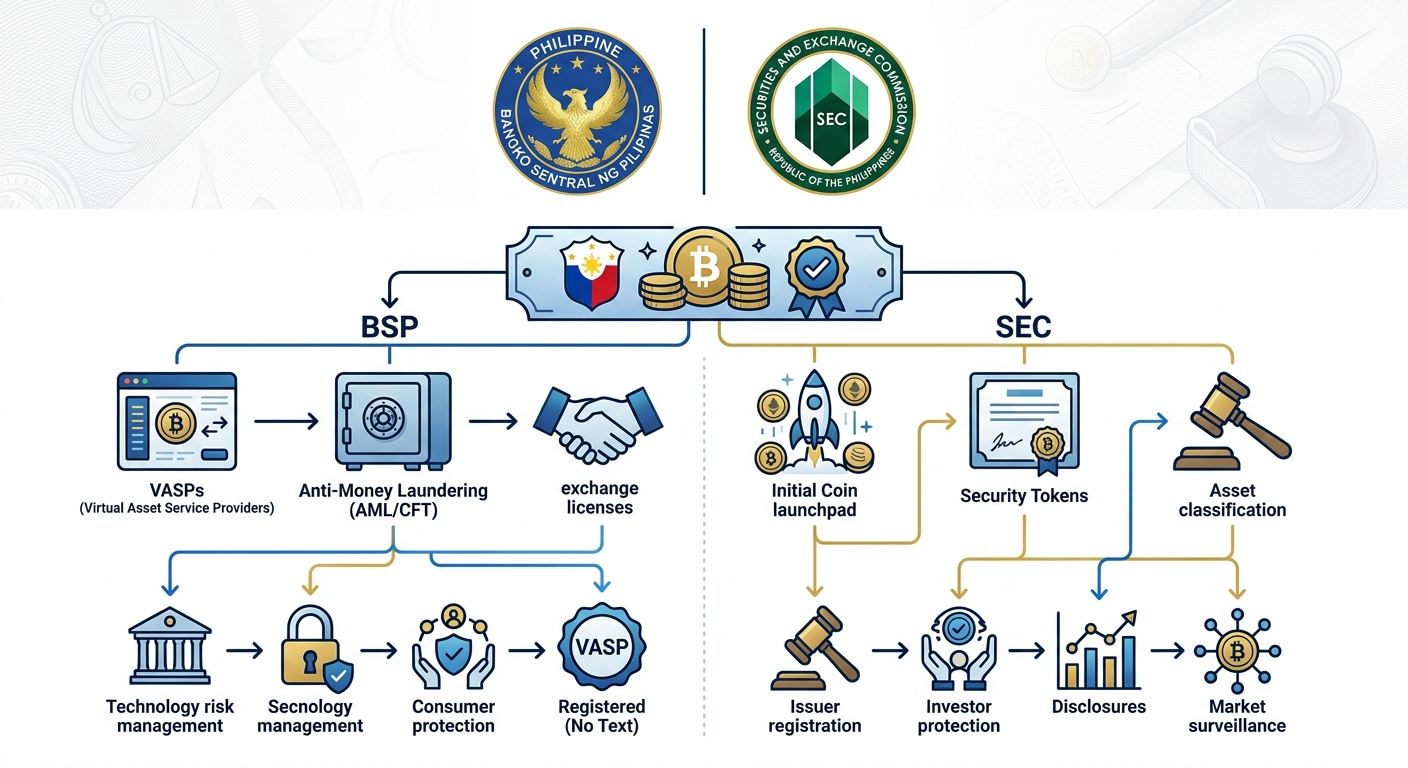
With the BSP's Circular No. 1108 and the SEC's CASP Rules (MC Nos. 04 and 05 of 2025) now both in force, foreign investors entering the Philippine virtual asset space face a bifurcated regulatory landscape that did not exist three years ago. This guide maps the jurisdictional boundaries between the Bangko Sentral ng Pilipinas and the Securities and Exchange Commission, explains the licensing pathways, capitalization requirements, AML/CTF obligations, the BSP's continued VASP license moratorium, and the practical steps a foreign investor must take to operate lawfully in the Philippines' digital asset market.
The Philippine E-Invoicing Mandate: A Comprehensive Compliance Guide for Foreign Companies in 2026
With the December 31, 2026 deadline for mandatory e-invoicing under BIR Revenue Regulations No. 11-2025 fast approaching, foreign companies operating in the Philippines face an urgent compliance obligation that cannot be deferred. This guide provides a complete analysis of who must comply, what constitutes a compliant electronic invoice, the step-by-step implementation process, tax deduction opportunities under the CREATE MORE Act, and the penalties for non-compliance — with every legal citation verified against primary sources.