Can a Foreigner Open a Restaurant in the Philippines?
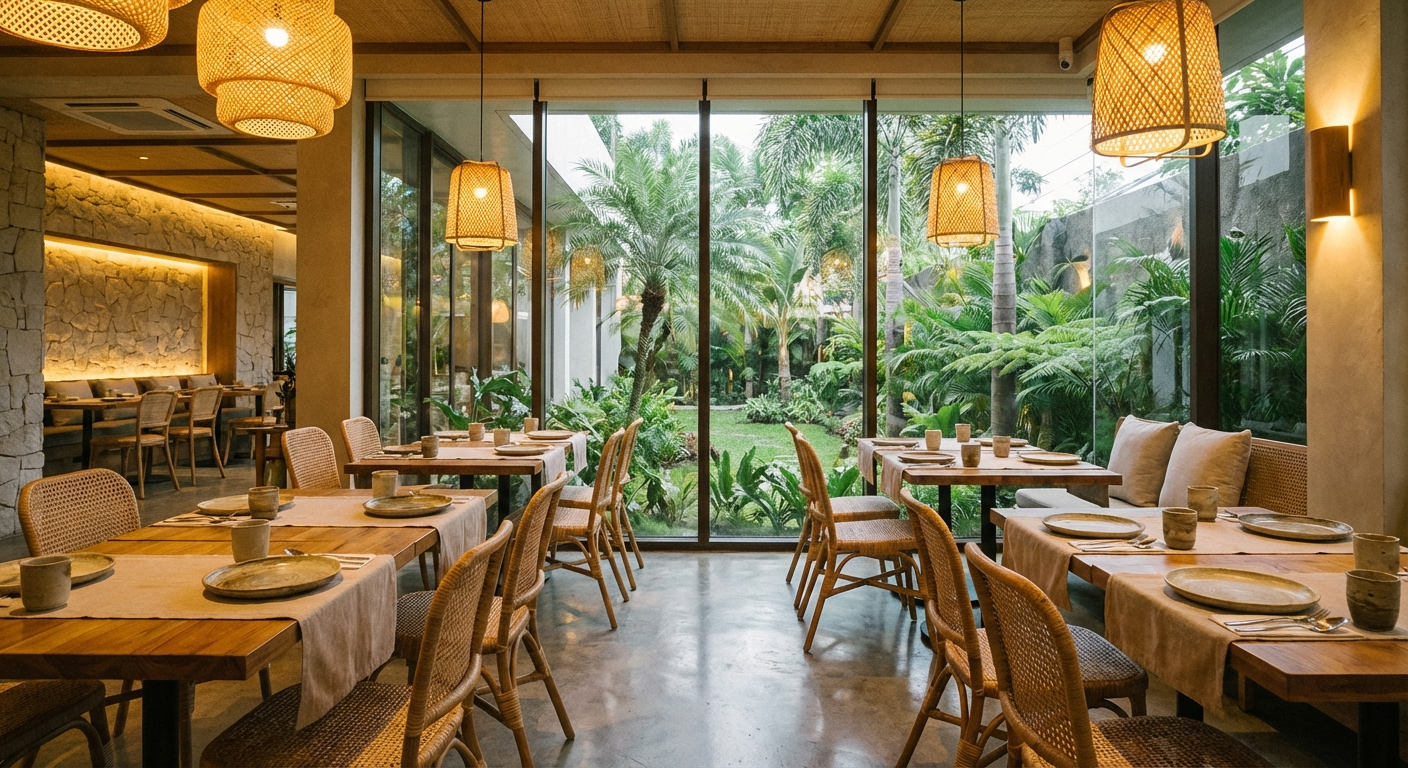
Opening a restaurant is one of the most popular business ideas among foreigners moving to the Philippines. The good news is that Philippine law does allow 100% foreign ownership of a restaurant — but only if you meet certain capital thresholds. Here's what you need to know before you sign a lease.
Is a Restaurant Considered "Retail Trade"?
This is the critical threshold question. Under the original Retail Trade Liberalization Act (Republic Act No. 8762), restaurants were explicitly listed alongside sari-sari stores and rolling carts as examples of retail activities. However, the legal landscape has evolved.
In practice, restaurants are classified primarily as food service establishments — not pure retail enterprises. This distinction matters because it determines which capital requirements apply to you as a foreign owner.
Two Paths to 100% Foreign Ownership
Path 1: Under the Foreign Investments Act (USD 200,000)
The Foreign Investments Act (RA 7042, as amended by RA 11647) allows 100% foreign ownership of any domestic market enterprise — including restaurants — provided you invest a minimum paid-in capital of USD 200,000.
This threshold drops to USD 100,000 if your enterprise either:
- Involves advanced technology as certified by the Department of Science and Technology (DOST), or
- Directly employs at least 50 Filipino workers.
For most foreign restaurateurs planning a single establishment, the USD 200,000 route under the FIA is the most straightforward.
Path 2: Under the Retail Trade Liberalization Act (PHP 25 Million)
If your restaurant is classified as a retail trade enterprise — for example, if you operate a chain or sell significant packaged goods alongside dine-in service — the amended Retail Trade Liberalization Act (RA 11595) sets the minimum paid-up capital at PHP 25 million (roughly USD 440,000), with at least PHP 10 million invested per store.
For a single restaurant, the FIA route is almost always more practical and cost-effective.
What If You Have Less Than USD 200,000?
Under List B of the Foreign Investment Negative List (FINL), domestic market enterprises with paid-in capital below USD 200,000 are reserved for Filipino nationals. If your budget falls below this threshold, you have two options:
- 60-40 Joint Venture: Form a corporation where at least 60% of equity is owned by a Filipino partner. You retain up to 40% foreign ownership.
- Filipino Spouse Exception: If you are married to a Filipino citizen, certain small-scale business restrictions may be relaxed, though this does not automatically exempt you from the FINL capital requirements.
Registration Steps for a Foreign-Owned Restaurant
- SEC Registration — Register your corporation (or partnership) with the Securities and Exchange Commission. Include "food service" or "restaurant operations" in your primary purpose.
- BSP Inward Remittance — Remit your capital investment through the Philippine banking system and obtain a Certificate of Inward Remittance from the Bangko Sentral ng Pilipinas.
- Barangay Clearance — Secure clearance from the barangay where your restaurant will operate.
- Mayor's Permit / Business Permit — Apply at the city or municipal hall for a business permit and pay the corresponding local taxes.
- BIR Registration — Register with the Bureau of Internal Revenue for your TIN, official receipts, and books of accounts.
- FDA License to Operate — All food service establishments must secure a License to Operate (LTO) from the Food and Drug Administration.
- Fire Safety Inspection Certificate — Obtain clearance from the Bureau of Fire Protection.
- Sanitary Permit — Issued by the local health office after inspection of your kitchen and premises.
The Bottom Line
A foreigner can own a restaurant in the Philippines outright — the law is clear on that. The real question is whether your investment meets the minimum capital requirements. If you can put up USD 200,000, the path is straightforward. If not, a joint venture with a trusted Filipino partner is the standard workaround.
Either way, getting the corporate structure right from the start saves you from costly restructuring down the line. If you're planning to open a restaurant in the Philippines, talk to us before you commit capital.
Related Articles

Philippines Digital Nomad Visa: 5 Questions Every Remote Worker Should Ask
Executive Order No. 86 created the Philippines' first Digital Nomad Visa. Here are answers to the five most common questions foreign remote workers ask before applying.

Can I Bring My Family? Dependent Visa Rules for Foreign Workers and Investors in the Philippines
Answers to the five most common questions foreign nationals ask about bringing their spouse and children to the Philippines under work, investor, and special resident visas.

5 Tax Incentives Foreign Investors Can Claim Under the CREATE MORE Act
The CREATE MORE Act (RA 12066) overhauled the Philippines' tax incentive framework in late 2024. Here are five key benefits every foreign investor should know before registering with BOI or PEZA.