Annual Compliance Checklist for Foreign Companies in the Philippines
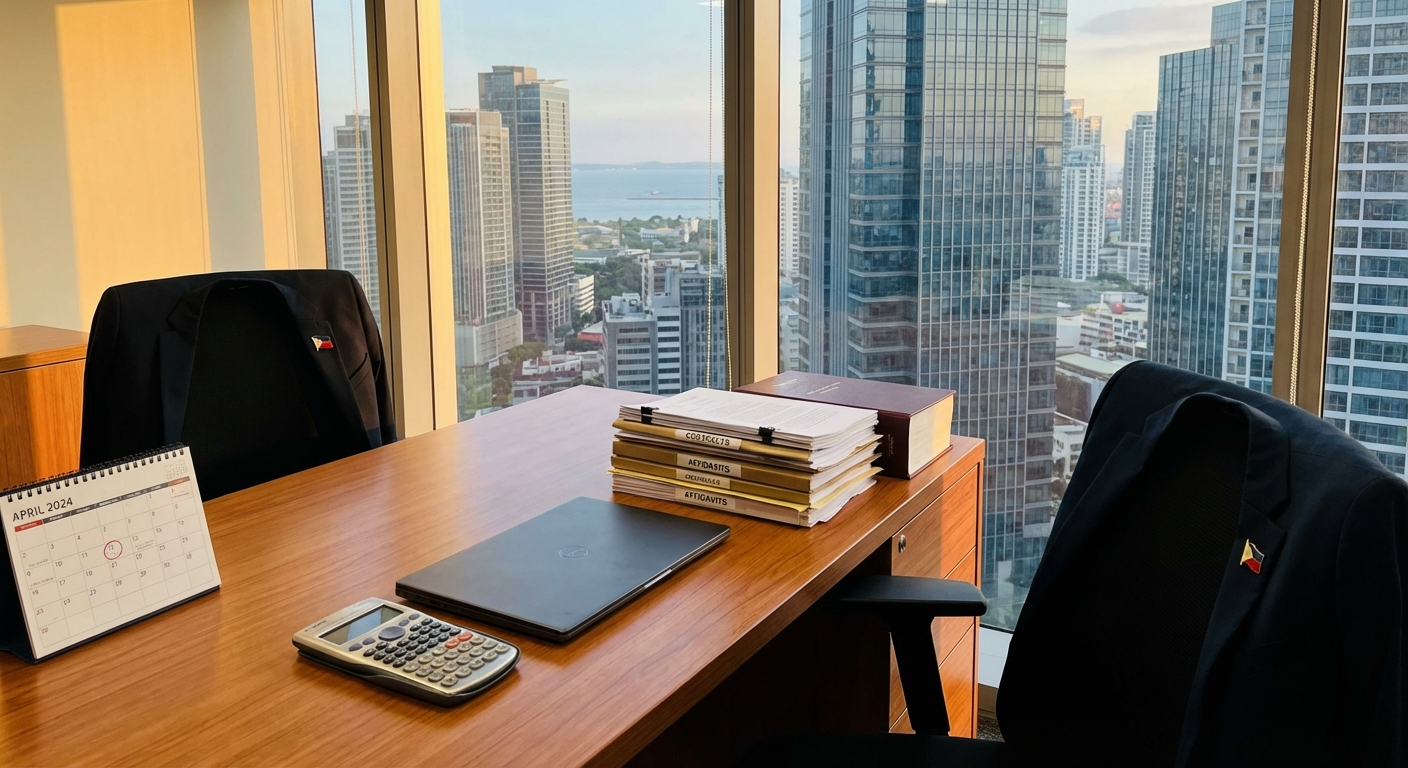
Setting up a foreign corporation in the Philippines is only half the battle. Staying compliant year after year is where many foreign investors stumble — and where penalties pile up fast. Whether you operate a branch office, a representative office, a regional headquarters (RHQ/ROHQ), or a domestic corporation with foreign shareholders, you need to meet the same annual requirements every Philippine company faces, plus a few extras.
Here is your annual compliance checklist — organized by agency and deadline — so you never miss a filing.
Securities and Exchange Commission (SEC)
1. General Information Sheet (GIS)
Every corporation must file a General Information Sheet with the SEC. Under the Revised Corporation Code (RA 11232), the GIS must be submitted within 30 days of the annual stockholders' meeting. For foreign corporations (branch offices, representative offices, RHQs, and ROHQs), the deadline is 30 days from the anniversary date of the issuance of your SEC license.
The GIS discloses your directors, officers, stockholders, and beneficial ownership structure. Getting this wrong — or filing late — can trigger fines starting at ₱10,000 and escalating with continued non-compliance.
2. Audited Financial Statements (AFS)
All corporations, including foreign branches and representative offices, must file their Audited Financial Statements through the SEC's Electronic Filing and Submission Tool (eFAST). Per SEC Memorandum Circular No. 9, Series of 2026, the deadline for entities with a fiscal year ending December 31 is May 29, 2026.
Key requirements for the AFS filing:
- The AFS must be stamped "received" by the BIR, or accompanied by the system-generated Confirmation Receipt from the BIR e-AFS system
- Financial statements must comply with the Revised SRC Rule 68 prescribed components
- Corporations with total assets or liabilities of ₱600,000 or more must have their AFS audited by an independent CPA accredited with the SEC and the Board of Accountancy
Foreign corporation tip: Branch offices must include both the Philippine branch financial statements and a copy of the head office's audited financials, if required by the SEC.
Bureau of Internal Revenue (BIR)
3. Annual Income Tax Return (BIR Form 1702)
Foreign corporations doing business in the Philippines — whether through a branch, subsidiary, or domestic corporation — must file their Annual Income Tax Return using BIR Form 1702. The deadline is on or before the 15th day of the fourth month following the close of the taxable year (April 15 for calendar-year taxpayers).
Resident foreign corporations are taxed at the regular corporate income tax rate of 25% (or 20% for domestic corporations with net taxable income not exceeding ₱5 million and total assets not exceeding ₱100 million). Non-resident foreign corporations are taxed at 25% on gross Philippine-sourced income, as provided under the National Internal Revenue Code (RA 8424, as amended by the TRAIN Law and CREATE MORE Act).
4. Quarterly Income Tax Returns (BIR Form 1702Q)
Don't forget the quarterly returns filed within 60 days after the close of each of the first three quarters. These are separate from the annual return and must reconcile with your year-end filing.
5. Withholding Tax Returns
If you have employees or make payments subject to withholding tax, you must file:
- BIR Form 1601-C — Monthly Remittance of Creditable Income Taxes Withheld on Compensation
- BIR Form 1601-EQ — Quarterly Remittance of Creditable Income Taxes Withheld (Expanded)
- BIR Form 1604-C — Annual Information Return of Income Taxes Withheld on Compensation (due January 31)
- BIR Form 1604-E — Annual Information Return of Creditable Income Taxes Withheld (due March 1)
6. Books of Accounts Registration
Registered books of accounts must be stamped by the BIR at the start of each taxable year, typically in January. If you use computerized accounting systems, ensure your system is registered with the BIR under a Permit to Use (PTU).
Local Government Unit (LGU)
7. Business Permit Renewal
Your Mayor's Permit (business permit) must be renewed every January. This typically requires:
- Barangay clearance
- Updated Community Tax Certificate (cedula)
- Fire safety inspection certificate
- Sanitary permit (for applicable businesses)
- Proof of BIR registration
Late renewal triggers surcharges of 25% on the unpaid fees, plus potential closure orders from the LGU.
8. Local Business Tax
Local business taxes are due under the schedule set by your city or municipality — typically in January, with some LGUs allowing quarterly installments. Rates vary by location and business type, generally ranging from 0.5% to 2% of gross sales or receipts from the preceding year.
Other Agency-Specific Requirements
9. SSS, PhilHealth, and Pag-IBIG Contributions
If you employ Filipino workers, you must remit monthly contributions to the Social Security System (SSS), Philippine Health Insurance Corporation (PhilHealth), and Home Development Mutual Fund (Pag-IBIG/HDMF). These are due monthly, but failing to reconcile annually can result in penalties and employee complaints.
10. Alien Employment Permit (AEP) Renewal
Foreign employees working in the Philippines need an Alien Employment Permit from the Department of Labor and Employment (DOLE). AEPs are valid for up to five years under DOLE Department Order No. 248 but must be renewed before expiry. Ensure your foreign employees' AEPs and work visas remain current — expired permits can lead to deportation proceedings.
Quick-Reference Calendar
| Deadline | Requirement | Agency |
|---|---|---|
| January | Business permit renewal; BIR books registration; local business tax | LGU / BIR |
| January 31 | BIR Form 1604-C (annual withholding on compensation) | BIR |
| March 1 | BIR Form 1604-E (annual creditable withholding) | BIR |
| April 15 | Annual Income Tax Return (BIR Form 1702) | BIR |
| May 29, 2026 | Audited Financial Statements via eFAST | SEC |
| Within 30 days of anniversary/meeting | General Information Sheet | SEC |
| Monthly | SSS, PhilHealth, Pag-IBIG contributions | SSS / PhilHealth / HDMF |
The Cost of Non-Compliance
Missing these deadlines isn't just an administrative inconvenience. The SEC can revoke your certificate of registration for failure to file the GIS or AFS for three consecutive years. The BIR imposes surcharges (25%), interest (12% per annum), and compromise penalties. Your LGU can issue closure orders. And if your foreign employees' permits lapse, you're looking at immigration violations that affect both the company and the individual.
For foreign investors, non-compliance also risks triggering scrutiny under the Anti-Dummy Law (Commonwealth Act No. 108) — regulators may investigate whether the company is still operating within its declared business scope and ownership structure.
How TTFC Can Help
At Tungol Tan Fordan & Campos, we help foreign-owned companies stay on top of every filing deadline. From SEC annual reports to BIR tax compliance and local permit renewals, our team ensures you never miss a requirement — so you can focus on running your business instead of chasing paperwork.
Contact us today for a compliance review of your Philippine operations.
Related Articles

Can a Foreigner Run an E-Commerce Business in the Philippines? FAQ
From ownership rules to the new DTI Trustmark, here are the most common questions foreigners ask about launching an online business in the Philippines.

5 Common Mistakes Foreigners Make When Starting a Business in the Philippines
From ignoring capital requirements to using dummy arrangements, here are the top legal pitfalls foreign entrepreneurs fall into — and how to avoid them.

How to Claim Tax Treaty Benefits in the Philippines as a Foreign Company
The Philippines has double taxation agreements with over 40 countries — but treaty relief isn't automatic. Here's a step-by-step guide to claiming reduced withholding tax rates on dividends, royalties, and interest.