7 Local Permits Foreign-Owned Businesses Need After SEC Registration in the Philippines
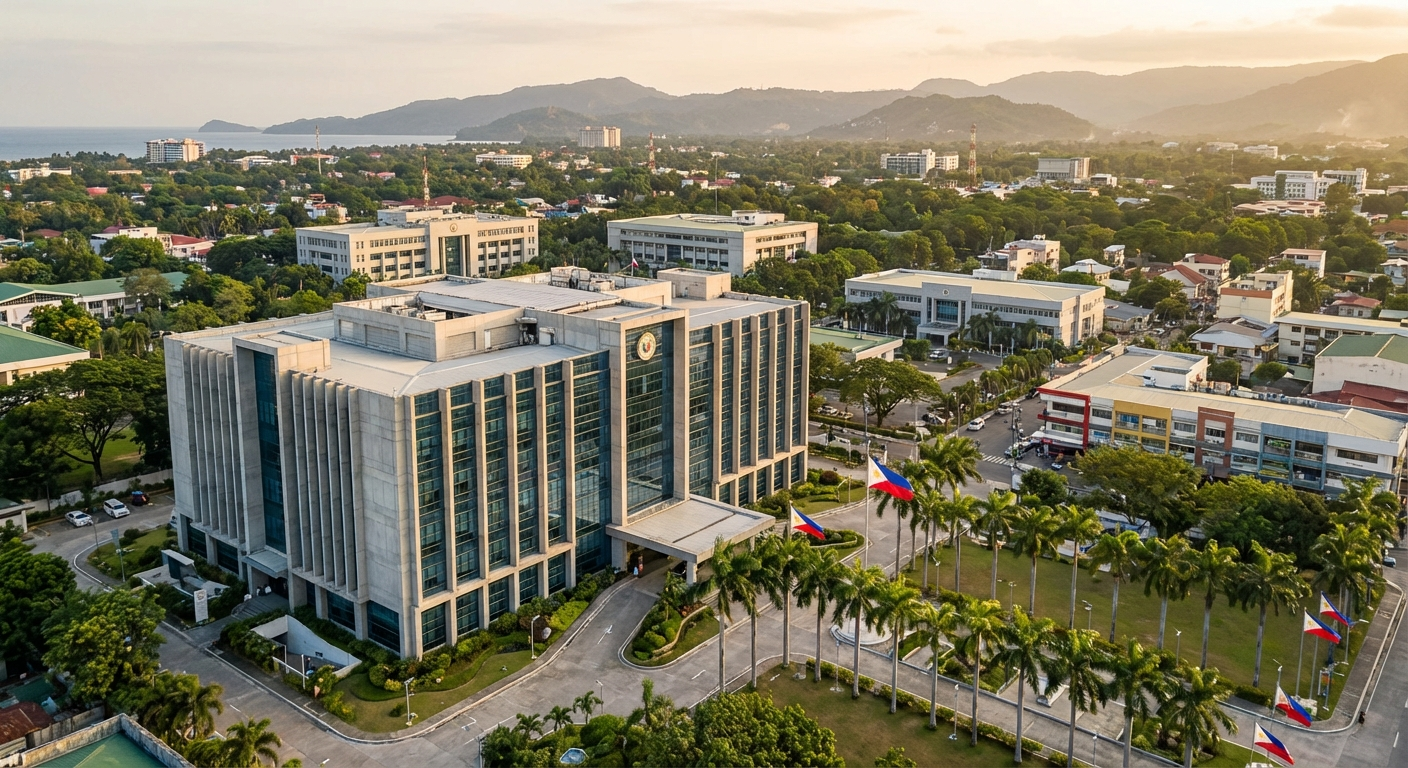
Congratulations — your foreign-owned corporation is now SEC-registered. But if you think you can start operating immediately, think again.
SEC registration gives your company legal personality, but it doesn't authorize you to do business in a specific city or municipality. For that, you need a series of local permits and government registrations. Miss any of these, and you risk fines, closure orders, or — worst case — the inability to enforce contracts.
Here are the seven permits and registrations every foreign-owned business must secure after SEC registration, in the order you should tackle them.
1. Barangay Business Clearance
Your first stop is the barangay (village-level local government) where your business is physically located. The barangay clearance confirms that your business is not a nuisance to the community and complies with local ordinances.
What you need:
- SEC Certificate of Incorporation (or License to Do Business for branch offices)
- Lease contract or proof of business address
- Valid IDs of the authorized representative
- Community Tax Certificate (cedula)
Good to know: Under Republic Act No. 11032 (Ease of Doing Business Act of 2018), many LGUs have integrated the barangay clearance into their unified Business One-Stop Shop (BOSS). In these cities, you won't need to visit the barangay separately — the clearance is processed internally as part of your Mayor's Permit application.
2. Mayor's Permit (Business Permit)
This is the big one. The Mayor's Permit — formally called a Business Permit or Permit to Engage in Business — is issued by the city or municipality where you operate. Without it, your business is illegal.
The legal basis is Republic Act No. 7160 (Local Government Code of 1991), specifically Sections 143 to 152, which grant LGUs the power to impose business taxes and require permits.
Typical requirements:
- SEC registration documents
- Barangay business clearance
- Lease contract or land title
- Locational clearance or zoning certificate
- Occupancy permit (if new building or renovation)
- Fire Safety Inspection Certificate (see #3 below)
- Sanitary permit (from the city health office)
Cost: Varies by city, capitalization, and business type. Expect PHP 5,000 to PHP 50,000+ for a foreign-owned corporation with substantial paid-up capital. Metro Manila LGUs like Makati, Taguig (BGC), and Pasig tend to charge higher fees.
Renewal: Business permits must be renewed every January. The deadline is typically January 20, with many LGUs granting extensions until mid-February.
3. Fire Safety Inspection Certificate (FSIC)
The Bureau of Fire Protection (BFP) must inspect your business premises and issue an FSIC before the LGU can release your Mayor's Permit. This is mandated by Republic Act No. 9514 (Fire Code of the Philippines of 2008).
Section 5(g) of RA 9514 is explicit: "No occupancy permit, business or permit to operate shall be issued without securing a Fire Safety Inspection Certificate."
What the BFP checks:
- Fire exits and emergency lighting
- Fire extinguishers and suppression systems
- Electrical wiring compliance
- Proper signage and evacuation plans
Tip for foreign business owners: If you're leasing a unit in a commercial building or co-working space, the building FSIC usually covers your unit. Confirm with your landlord — this can save time.
4. BIR Registration (Certificate of Registration — BIR Form 2303)
You must register with the Bureau of Internal Revenue within 30 days of SEC registration. The BIR will issue your Certificate of Registration (COR, also known as BIR Form 2303), which lists your tax types, filing obligations, and the Revenue District Office (RDO) with jurisdiction over your business address.
What happens during BIR registration:
- Your company's Tax Identification Number (TIN) — assigned by the SEC — is formally recorded
- You register your books of accounts (manual or computerized)
- You apply for Authority to Print (ATP) receipts and invoices, or register a Computerized Accounting System (CAS)
- You pay the annual registration fee of PHP 500
The BIR COR must be displayed at your principal place of business at all times. This is a common compliance point that catches foreign companies off guard during BIR audits.
5. SSS Employer Registration
If your company will hire employees — and virtually all operating businesses do — you must register as an employer with the Social Security System. This is required under Republic Act No. 11199 (Social Security Act of 2018).
Registration can be done online through the SSS website. You'll need your SEC registration, employer details, and a list of employees with their SSS numbers.
Employer obligations: You must deduct and remit both the employer and employee SSS contributions monthly. Failure to remit carries a 3% per month penalty.
6. PhilHealth Employer Registration
Similarly, all employers must register with PhilHealth (Philippine Health Insurance Corporation) under Republic Act No. 11223 (Universal Health Care Act of 2019). This applies to foreign-owned companies operating in the Philippines — no exceptions.
PhilHealth registration can also be processed online. Contributions are shared between employer and employee.
7. Pag-IBIG Fund (HDMF) Employer Registration
The last mandatory registration is with the Home Development Mutual Fund (Pag-IBIG), governed by Republic Act No. 9679 (Home Development Mutual Fund Law of 2009).
Like SSS and PhilHealth, Pag-IBIG registration is mandatory for all employers with at least one employee. You remit both employer and employee contributions monthly.
The Typical Timeline
Here's a realistic timeline for completing all seven permits and registrations after receiving your SEC Certificate:
| Permit/Registration | Estimated Processing Time |
|---|---|
| Barangay Clearance | 1–3 business days |
| FSIC | 3–7 business days (inspection scheduling) |
| Mayor's Permit | 5–15 business days |
| BIR Registration | 3–10 business days |
| SSS Registration | 1–3 business days (online) |
| PhilHealth Registration | 1–3 business days (online) |
| Pag-IBIG Registration | 1–3 business days (online) |
Total: Plan for 3 to 6 weeks from SEC registration to full operational compliance. In Metro Manila, the Mayor's Permit is usually the bottleneck.
Common Mistakes Foreign Businesses Make
- Operating before getting the Mayor's Permit. Some foreign companies start transacting immediately after SEC registration. This exposes you to closure orders and fines from the LGU.
- Not displaying the BIR COR. It sounds trivial, but the PHP 1,000 daily penalty for non-display adds up — and it's often the first thing BIR examiners check.
- Ignoring the renewal deadline. All business permits expire on December 31 each year. If you miss the January renewal window, surcharges of 25% on unpaid taxes kick in.
- Assuming the SEC is enough. The SEC registers your entity. The LGU permits your operation. They are separate legal requirements.
How TTFC Can Help
Navigating seven different government agencies is exactly the kind of process that trips up foreign business owners unfamiliar with Philippine bureaucracy. At TTFC Law, we handle the entire post-SEC registration process for our foreign clients — from barangay clearance to Pag-IBIG enrollment — so you can focus on actually running your business.
Need help with your permits? Contact our team for a consultation.
Related Articles

5 Tax Incentives Foreign Investors Can Claim Under the CREATE MORE Act
The CREATE MORE Act (RA 12066) overhauled the Philippines' tax incentive framework in late 2024. Here are five key benefits every foreign investor should know before registering with BOI or PEZA.

Can a Foreign Company Hire Filipino Remote Workers Without a Local Entity?
Many foreign startups and businesses hire Filipino talent remotely — but doing it legally requires understanding the line between independent contractors and employees under Philippine law.

SRRV Retirement Visa Philippines: 7 Questions Foreigners Always Ask
Thinking about retiring in the Philippines? Here are seven frequently asked questions about the Special Resident Retiree's Visa — including the 2025 rule changes that lowered the minimum age to 40.