The New 99-Year Lease Law: What RA 12252 Means for Foreign Investors in the Philippines
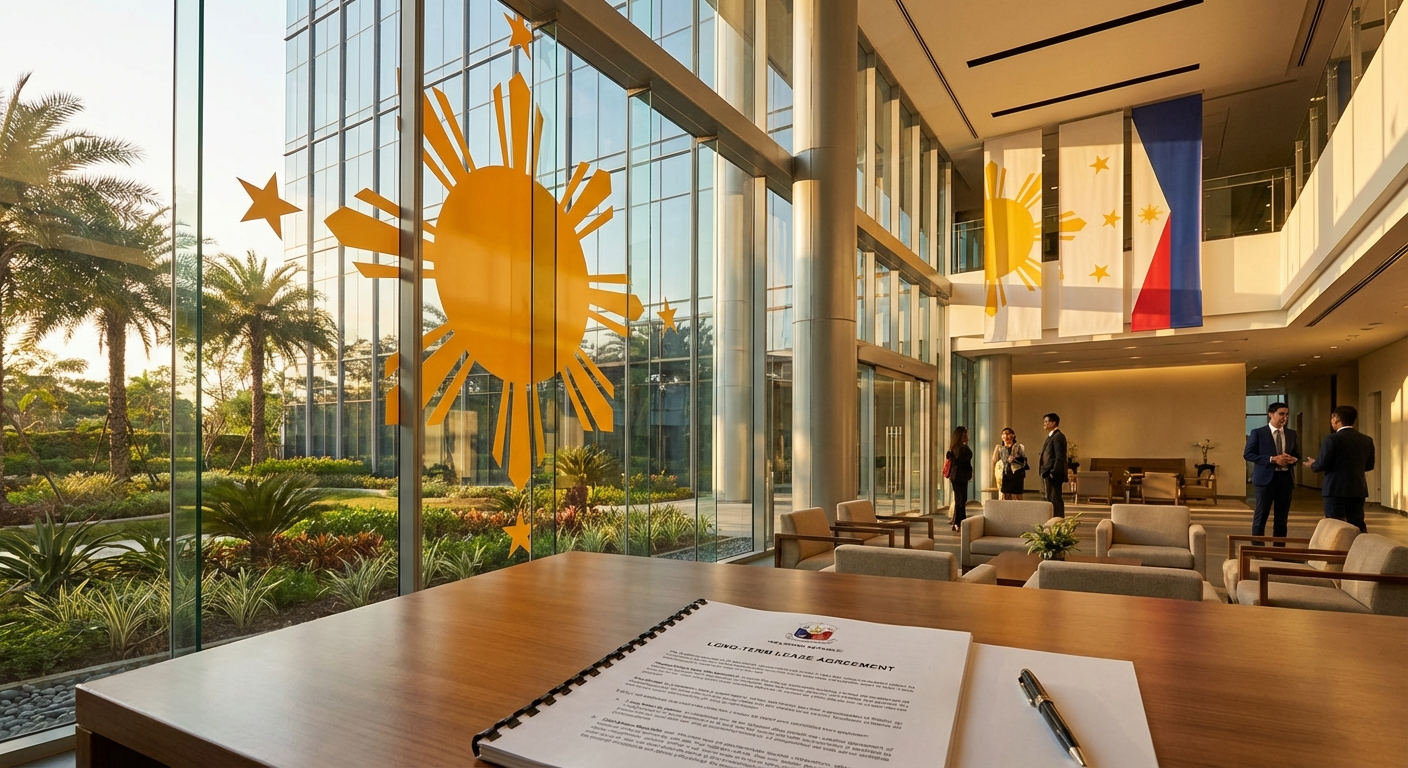
If you're a foreign investor eyeing the Philippines, one of the biggest legal barriers you've probably heard about is the constitutional ban on foreign land ownership. That hasn't changed — foreigners still cannot own land here. But what has changed is how long you can lease it.
Signed into law by President Ferdinand Marcos Jr. on September 3, 2025, Republic Act No. 12252 amends the old Investors' Lease Act (RA 7652) and allows qualified foreign investors to lease private land for up to 99 years — nearly double the previous maximum. For capital-intensive projects with long payback periods, this is a significant shift.
What Changed: Old Law vs. New Law
Under the original Investors' Lease Act (RA 7652), enacted in 1993, foreign investors could lease private land for an initial period of up to 50 years, with a possible renewal of 25 years — for a maximum of 75 years total. The renewal was not automatic; it required a formal process, which introduced uncertainty at exactly the wrong time in a project's lifecycle.
RA 12252 replaces this two-stage structure with a single, consolidated lease term of up to 99 years. No more waiting decades to find out whether your renewal will be approved. The lease term is set from the start.
| Feature | Old Law (RA 7652) | New Law (RA 12252) |
|---|---|---|
| Maximum lease term | 50 + 25 years (75 total) | Up to 99 years |
| Renewal required? | Yes, at year 50 | No — single consolidated term |
| Leasehold transferable? | Limited provisions | May be sold, transferred, or used as collateral |
| Registration requirement | Basic | Mandatory registration with Registry of Deeds |
| Subleasing | Not explicitly covered | Permitted with lessor consent and registration |
Who Qualifies?
This isn't a blanket rule for all foreigners. To take advantage of RA 12252, you must be a foreign investor with an approved and registered investment under one of the following:
- Republic Act No. 7042 — the Foreign Investments Act of 1991, as amended
- Republic Act No. 11534 — the CREATE Act, as further amended by RA 12066 (CREATE MORE Act)
- Any applicable law, or compliance with investment requirements prescribed by the appropriate Investment Promotion Agency (IPA) such as the Board of Investments (BOI) or the Philippine Economic Zone Authority (PEZA)
In other words, you can't simply be a foreigner who wants to lease land for personal use. Your investment must be registered and aligned with productive economic purposes — specifically in sectors like industrial development, manufacturing, tourism, agriculture, agro-forestry, or ecological conservation.
Important: Foreign individuals or companies not investing in the Philippines as defined under the law remain subject to the old lease limitations under Presidential Decree No. 471 and other existing laws.
Key Protections for Foreign Lessees
RA 12252 doesn't just extend the lease term. It also strengthens the legal standing of the lease itself:
Registration as the Operative Act
Under the new Section 4-A, the registration of the lease contract with the Registry of Deeds is the operative act that makes the lease binding against third parties. Once registered, the lease cannot be subject to collateral attack — it can only be altered, modified, or cancelled through a direct proceeding in accordance with law. This gives foreign lessees much stronger legal protection than before.
Transferability and Collateral
Leasehold rights acquired under RA 12252 may be sold, transferred, assigned, or used as security for a loan. This is a game-changer for project finance. If you need to refinance, bring in a new partner, or exit the project, your leasehold interest is now a tradeable asset. The caveat: if the buyer or assignee is also a foreigner, the same conditions and limitations continue to apply.
Subleasing Allowed
Unless expressly prohibited in the lease contract, the lessee may sublease the property with the lessor's consent. Sublease contracts must also be registered with the Registry of Deeds and annotated on the certificate of title.
What Can Get Your Lease Terminated?
The law includes clear safeguards to prevent abuse:
- Withdrawal of the approved investment during the lease period triggers ipso facto termination — meaning the lease ends automatically, and the lessor may claim damages
- Using the leased land for unauthorized purposes also triggers automatic termination
- Failure to commence the investment project within three years of signing the lease contract may lead to revocation of all entitlements, after the FIRB, BOI, or relevant IPA issues a notice and conducts a hearing
Special Rule for Tourism Projects
For tourism developments, the law imposes an additional minimum investment threshold: USD 5,000,000, with 70% of that amount to be infused within three years of signing the lease contract. This is designed to ensure that tourism leases involve serious, substantial projects — not speculative land banking.
Penalties for Violations
RA 12252 does not take violations lightly. Contracts made in violation of the law are void ab initio (void from the beginning), and both parties face:
- Fines ranging from PHP 1 million to PHP 10 million
- Imprisonment of six months to six years
For corporations, partnerships, or associations, criminal liability falls on the president, manager, director, trustee, or officers responsible for the violation.
What This Means in Practice
For foreign investors considering the Philippines, RA 12252 addresses one of the most commonly cited barriers to long-term investment. While you still cannot own Philippine land, a 99-year lease is functionally close to ownership for most business purposes. The key practical takeaways:
- Better bankability — longer lease terms mean lenders are more willing to finance projects secured by leasehold interests
- Competitive positioning — the Philippines is now more aligned with neighboring jurisdictions like Singapore, Malaysia, and Indonesia that already offer long-term land tenure arrangements
- Reduced risk at renewal — the elimination of the 50-year renewal requirement removes a major source of uncertainty for large-scale projects
- Exit flexibility — the ability to sell, transfer, or collateralize your leasehold interest gives foreign investors more options over the life of their investment
Next Steps for Foreign Investors
If you're considering leasing private land in the Philippines under RA 12252, here's what you should prepare:
- Register your investment — ensure your investment is approved and registered under the Foreign Investments Act, CREATE/CREATE MORE, or with the relevant IPA (BOI, PEZA, etc.)
- Conduct due diligence on the land — verify the title, check for encumbrances, and confirm the land is not covered by the Comprehensive Agrarian Reform Program
- Negotiate the lease terms carefully — the law sets the maximum at 99 years, but the actual term is subject to negotiation between the parties
- Register the lease contract — registration with the Registry of Deeds is mandatory and serves as the operative act for enforceability
- Engage Philippine legal counsel — the interplay between RA 12252, the Foreign Investments Act, the CREATE Act, and local government requirements makes professional guidance essential
The implementing rules and regulations (IRR) are to be issued by the Department of Trade and Industry through the BOI, together with the Land Registration Authority, within 90 days from the law's effectivity. Foreign investors should monitor the release of these IRRs for additional procedural details.
The information provided in this article is for general informational purposes only and does not constitute legal advice. For guidance on your specific situation, contact Tungol Tan Fordan Campos at info@ttfc.law.
Related Articles

5 Tax Incentives Foreign Investors Can Claim Under the CREATE MORE Act
The CREATE MORE Act (RA 12066) overhauled the Philippines' tax incentive framework in late 2024. Here are five key benefits every foreign investor should know before registering with BOI or PEZA.

Can a Foreign Company Hire Filipino Remote Workers Without a Local Entity?
Many foreign startups and businesses hire Filipino talent remotely — but doing it legally requires understanding the line between independent contractors and employees under Philippine law.

SRRV Retirement Visa Philippines: 7 Questions Foreigners Always Ask
Thinking about retiring in the Philippines? Here are seven frequently asked questions about the Special Resident Retiree's Visa — including the 2025 rule changes that lowered the minimum age to 40.