7 Things Foreigners Must Know About Divorce Recognition in the Philippines
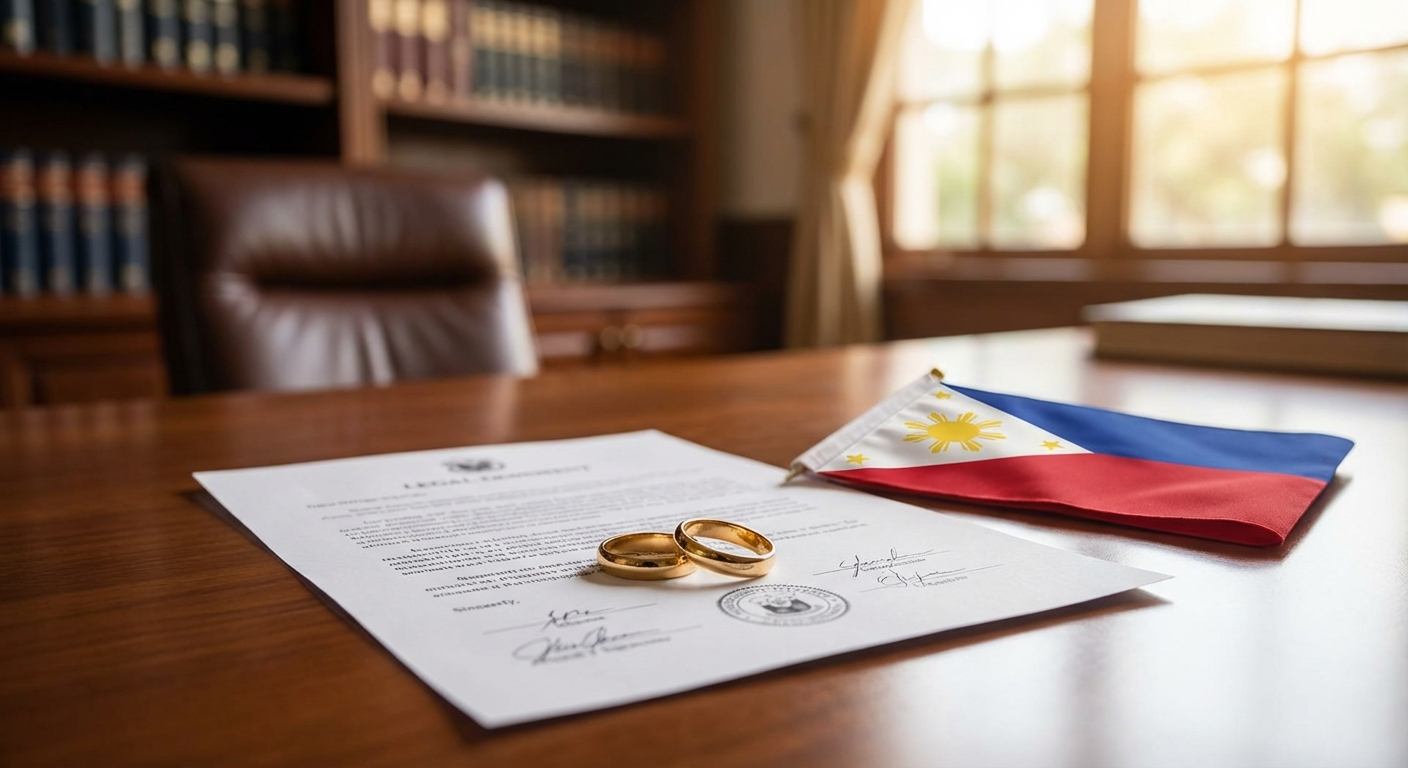
The Philippines remains one of the few countries in the world where absolute divorce is not yet available to Filipino citizens. But if you're a foreigner who obtained a divorce in your home country — or a Filipino married to a foreigner who divorced abroad — Philippine law does provide a path to have that divorce recognized locally. Here are seven key things you need to know.
1. The Philippines Does Not Grant Divorce — But It Recognizes Foreign Ones
Under Philippine law, marriage is governed by the Family Code of the Philippines (Executive Order No. 209, as amended). Filipino citizens generally cannot obtain a divorce domestically. However, Article 26, paragraph 2 of the Family Code provides an important exception:
"Where a marriage between a Filipino citizen and a foreigner is validly celebrated and a divorce is thereafter validly obtained abroad by the alien spouse capacitating him or her to remarry, the Filipino spouse shall likewise have capacity to remarry under Philippine law."
This means if you are a foreigner who divorced your Filipino spouse abroad, that divorce can be recognized in the Philippines — freeing both parties to remarry.
2. It's Not Automatic — You Must File a Court Petition
A foreign divorce does not take effect in the Philippines by itself. To have it recognized, someone must file a Petition for Judicial Recognition of Foreign Divorce with the Regional Trial Court (RTC). This is a special proceeding under the Rules of Court, not an ordinary civil action.
The petition is typically filed in the RTC where the Filipino spouse resides. Both the foreign spouse and the Filipino spouse can file — you don't need to wait for the other party to initiate it.
3. You Must Prove Two Things: The Divorce and the Foreign Law
Philippine courts treat foreign judgments as questions of fact, not law. Under Sections 24 and 25 of Rule 132 of the Rules of Court, you must prove:
- The fact of divorce — by presenting the authenticated divorce decree, certificate, or judgment from the foreign court or authority
- The relevant foreign law — by submitting a certified copy of the national law of the foreign spouse that allows or governs the divorce
Simply presenting the divorce certificate is not enough. If you fail to prove that the foreign spouse's national law permits divorce, the petition will be denied. Authentication must comply with the rules on proof of official records — typically through the Philippine embassy or consulate in the foreign country, or through apostille under the Apostille Convention (which the Philippines joined in 2019).
4. Even Divorces by Mutual Agreement Are Now Recognized
In a landmark 2024 decision, the Supreme Court En Banc ruled in Racho v. Tanaka (G.R. No. 199515, February 27, 2024) that foreign divorce recognition is not limited to divorces decreed by foreign courts. The Court held that divorces obtained through administrative processes or by mutual agreement — such as Japan's kyogi rikon (divorce by agreement) — can also be recognized in the Philippines.
This is significant for foreigners from countries like Japan, South Korea, and certain European nations where divorce does not always require a court proceeding. As long as the divorce is valid under the foreign spouse's national law, Philippine courts can recognize it.
5. Filipino Spouses Who Initiated the Divorce Can Also Seek Recognition
Before 2018, there was uncertainty about whether Article 26(2) applied only when the foreign spouse initiated the divorce. The Supreme Court resolved this in the landmark case of Republic v. Manalo (G.R. No. 221029, April 24, 2018).
In Manalo, a Filipino woman married to a Japanese national initiated divorce proceedings in Japan and obtained a favorable decree. The Supreme Court ruled that Article 26(2) covers divorces initiated by the Filipino spouse, not just by the foreign spouse. The Court reasoned that an interpretation limiting the provision to foreign-initiated divorces would lead to an absurd situation where the foreign spouse is free to remarry while the Filipino remains bound.
This ruling is particularly relevant for foreigners whose Filipino ex-spouses need to have the divorce recognized for purposes of remarriage, property settlement, or updating civil registry records.
6. What Happens After Recognition?
Once the RTC grants the petition, the court will issue an order directing the Philippine Statistics Authority (PSA) and the Local Civil Registrar to annotate the recognition of the foreign divorce on the marriage certificate. This effectively updates Philippine civil records to reflect that the marriage has been dissolved.
After annotation, both the Filipino and foreign spouse are legally considered unmarried under Philippine law. This means:
- Both parties are free to remarry in the Philippines
- Property relations are settled according to the applicable regime (usually conjugal or absolute community)
- The Filipino spouse can revert to their maiden name if desired
- Immigration records can be updated accordingly
7. Common Mistakes That Delay or Derail the Process
Based on court records and practice, these are the most frequent pitfalls foreigners and their Filipino spouses encounter:
- Submitting unauthenticated documents — all foreign documents must be authenticated via the Philippine embassy/consulate or apostilled. Uncertified photocopies or unofficial translations will be rejected.
- Failing to prove the foreign law — presenting the divorce decree without a certified copy of the relevant foreign statute is the single most common reason petitions are denied.
- Filing in the wrong court — the petition should be filed in the RTC where the Filipino spouse resides, or where the petitioner resides if the petitioner is the foreign spouse based in the Philippines.
- Not impleading the proper parties — the Republic of the Philippines (through the Office of the Solicitor General) must be impleaded as a respondent, along with the Local Civil Registrar.
- Assuming it applies to two-Filipino marriages — Article 26(2) only applies to marriages between a Filipino and a foreigner. If both spouses are Filipino, foreign divorce recognition is generally not available under current law.
How TTFC Can Help
Navigating foreign divorce recognition in the Philippines requires careful documentation, proper authentication, and familiarity with evolving Supreme Court jurisprudence. At Tungol Tan Fordan & Campos (TTFC Law), we regularly assist foreign nationals and their Filipino spouses with:
- Preparing and filing Petitions for Judicial Recognition of Foreign Divorce
- Authenticating and apostilling foreign divorce documents
- Coordinating with the PSA and Local Civil Registrar for annotation
- Advising on property settlement and custody matters arising from the divorce
If you've obtained a divorce abroad and need it recognized in the Philippines, contact us for a consultation.
Related Articles

5 Tax Incentives Foreign Investors Can Claim Under the CREATE MORE Act
The CREATE MORE Act (RA 12066) overhauled the Philippines' tax incentive framework in late 2024. Here are five key benefits every foreign investor should know before registering with BOI or PEZA.

Can a Foreign Company Hire Filipino Remote Workers Without a Local Entity?
Many foreign startups and businesses hire Filipino talent remotely — but doing it legally requires understanding the line between independent contractors and employees under Philippine law.

SRRV Retirement Visa Philippines: 7 Questions Foreigners Always Ask
Thinking about retiring in the Philippines? Here are seven frequently asked questions about the Special Resident Retiree's Visa — including the 2025 rule changes that lowered the minimum age to 40.