Foreign Ownership in Philippine Retail Trade: A Complete Legal Guide to RA 11595 and the Retail Trade Liberalization Act
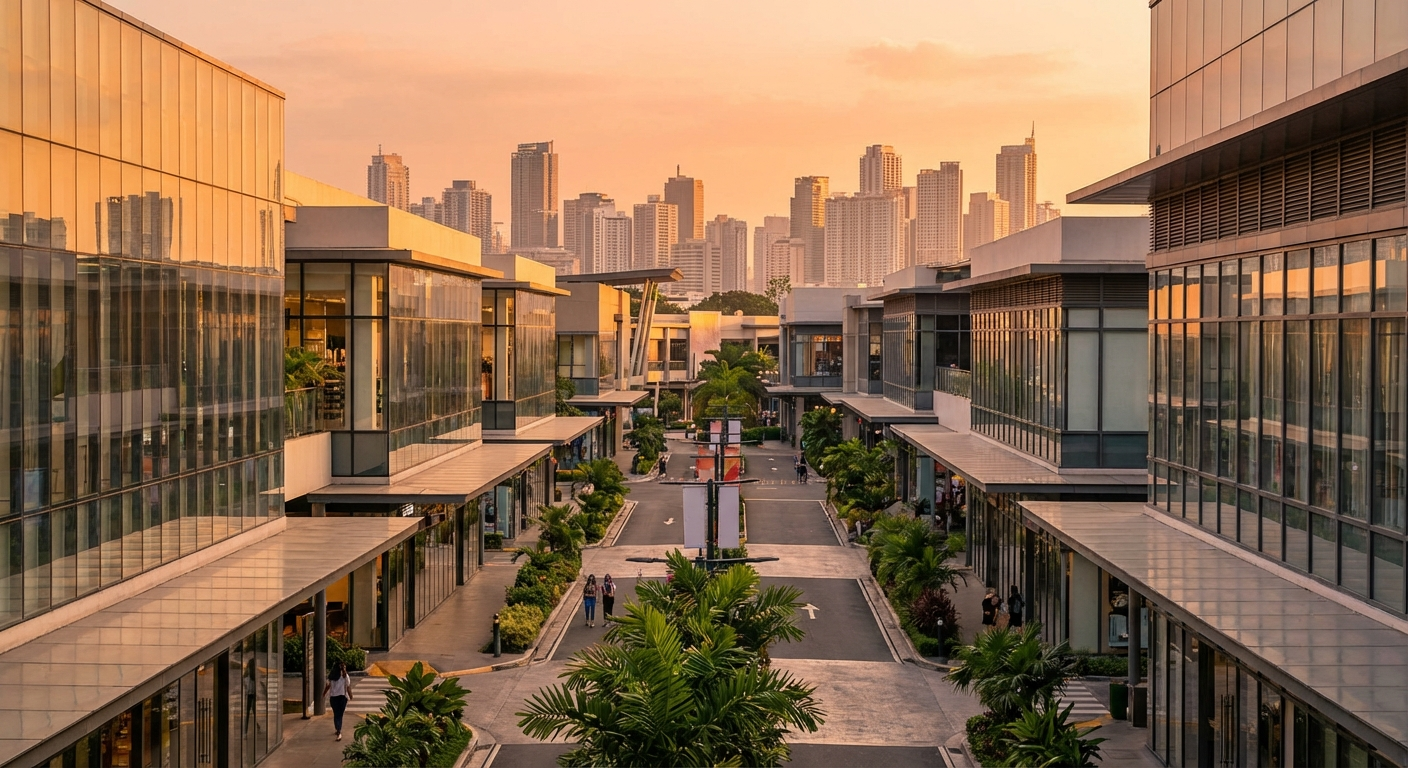
The Philippine retail industry — valued at over USD 80 billion and serving a consumer market of more than 110 million people — has long been a target for foreign investment. Yet for decades, the country maintained some of the most restrictive foreign ownership rules in the retail sector anywhere in Southeast Asia. The enactment of Republic Act No. 11595 on December 10, 2021, which amended the Retail Trade Liberalization Act of 2000 (Republic Act No. 8762), marked a watershed moment in Philippine trade policy by substantially lowering barriers to entry for foreign retailers.
This guide provides a comprehensive overview of the legal framework governing foreign ownership in Philippine retail trade, with detailed analysis of the current requirements, registration procedures, and compliance obligations that foreign investors must navigate.
Historical Context: From Nationalization to Liberalization
Understanding the current regulatory landscape requires appreciation of the historical arc of Philippine retail trade policy, which has undergone three distinct phases over seven decades.
The Nationalization Era: Republic Act No. 1180 (1954)
In 1954, the Philippine Congress enacted Republic Act No. 1180, the Retail Trade Nationalization Act. Born from the economic nationalism of the post-war period, this law effectively barred all foreigners from engaging in retail trade in the Philippines. Only Filipino citizens and corporations wholly owned by Filipinos were permitted to operate retail businesses. The law was upheld as constitutional by the Supreme Court in Ichong v. Hernandez (G.R. No. L-7995, May 31, 1957), which recognized the legislature's power to reserve certain economic activities to Filipino nationals in the interest of national security and economic self-determination.
RA 1180 remained in effect for nearly half a century, during which time the Philippine retail landscape was shaped almost entirely by domestic enterprises.
The First Liberalization: Republic Act No. 8762 (2000)
As globalization accelerated and the Philippines sought greater integration into the world economy, the Eleventh Congress enacted Republic Act No. 8762, the Retail Trade Liberalization Act of 2000, which repealed RA 1180 and opened the retail sector to foreign participation for the first time in nearly 50 years.
However, RA 8762 imposed a tiered system of capitalization requirements that effectively limited foreign retail participation to large-scale enterprises. The law classified foreign retailers into four categories:
- Category A — Enterprises with paid-up capital of USD 2,500,000 or more, which could engage in retail trade with no restrictions on product type
- Category B — Enterprises with paid-up capital of USD 2,500,000 or more, specializing in high-end or luxury goods
- Category C — Enterprises with paid-up capital of USD 250,000 or more but less than USD 2,500,000, specializing in certain product categories
- Category D — Enterprises with paid-up capital of less than USD 250,000, restricted to nationals of countries that allowed reciprocal retail trade by Filipino nationals
Additionally, Sections 8 and 9 of RA 8762 imposed a requirement that, within eight years of the law's effectivity, at least 30% of the aggregate cost of stock inventory must consist of products manufactured in the Philippines, and that foreign retailers must offer their shares to the public through the Philippine Stock Exchange within eight years of operations.
While RA 8762 was a significant step forward, the high capital thresholds and complex categorization effectively limited foreign retail entry to multinational corporations and large franchise operations.
The Current Framework: Republic Act No. 11595 (2021)
Signed into law on December 10, 2021, and effective on January 21, 2022, Republic Act No. 11595 substantially amended RA 8762 to further liberalize foreign participation in Philippine retail trade. The key reforms are discussed in detail below.
Key Provisions of Republic Act No. 11595
Elimination of Tiered Categories
RA 11595 abolished the four-category system entirely. Under the amended law, all foreign retailers are subject to a single, uniform set of requirements regardless of their size or product specialization. This simplification was designed to reduce bureaucratic complexity and make the Philippines more competitive as a retail investment destination.
Reduced Minimum Paid-Up Capital
The most significant reform under RA 11595 is the reduction of the minimum paid-up capital requirement. Under the amended Section 5 of RA 8762, a foreign retailer must maintain a minimum paid-up capital of Twenty-five million pesos (PHP 25,000,000.00) — approximately USD 500,000 at prevailing exchange rates. This represents a dramatic reduction from the previous Category A threshold of USD 2,500,000.
The law further requires that this paid-up capital must be maintained in the Philippines at all times, unless the foreign retailer has notified the Securities and Exchange Commission (SEC) or the Department of Trade and Industry (DTI) of its intention to repatriate capital and cease operations. The actual use of the minimum paid-up capital in Philippine operations is monitored by the SEC or DTI, as applicable.
For purposes of registration, the foreign retailer must submit a certification from the Bangko Sentral ng Pilipinas (BSP) confirming the inward remittance of its capital investment, or alternatively, proof that the capital investment is deposited and maintained in a Philippine bank.
Minimum Investment Per Store
For foreign retailers operating more than one physical store, RA 11595 requires a minimum investment per store of Ten million pesos (PHP 10,000,000.00). The term "minimum investment per store" is defined in the amended Section 3(2) of the law to include the value of gross assets — tangible or intangible — including buildings, leaseholds, furniture, equipment, inventory, and common use investments and facilities such as administrative offices, warehouses, and storage facilities. These values are pro-rated among the number of stores being served, and the paid-up capital may be used to purchase assets for purposes of compliance.
Importantly, this per-store requirement does not apply to foreign investors and foreign retailers who were legitimately engaged in retail trade and were not required to comply with this requirement at the time RA 11595 took effect (January 21, 2022), provided proof of prior qualification under RA 8762 is submitted to the DTI.
Reciprocity Requirement
RA 11595 retains the reciprocity condition from the original law: a foreign retailer may only register and operate in the Philippines if its country of origin does not prohibit the entry of Filipino retailers. This is a negative reciprocity test — the foreign retailer's home country need not affirmatively grant Filipinos identical retail rights, but it must not expressly prohibit Filipino participation in its retail sector.
In practice, this requirement is generally satisfied by most developed and developing nations. However, investors from countries with restrictive foreign investment regimes in the retail sector should conduct due diligence on whether their home country's laws might trigger a reciprocity issue.
Removal of the Stock Inventory and IPO Requirements
RA 11595 deleted Sections 8 and 9 of the original RA 8762, which had required foreign retailers to maintain a minimum percentage of Philippine-manufactured products in their stock inventory and to offer shares to the public through the Philippine Stock Exchange within eight years. In their place, the amended law includes a new Section 8 that merely encourages (but does not require) foreign retailers to maintain a stock inventory of products made in the Philippines.
This change removes a significant compliance burden that had been criticized as protectionist and impractical for many foreign retailers whose supply chains and product sourcing are inherently global.
Revised Labor Policy
The amended Section 7 provides that the employment of foreign nationals by foreign retailers must comply with the applicable provisions of the Labor Code of the Philippines regarding the determination of non-availability of a competent, able, and willing Filipino citizen before engaging the services of a foreign national. This is consistent with the constitutional policy under Article XII, Section 12 of the 1987 Constitution, which promotes the preferential use of Filipino labor.
Foreign retailers should be aware that hiring foreign nationals requires an Alien Employment Permit (AEP) from the Department of Labor and Employment (DOLE) and compliance with the relevant immigration requirements, including securing the appropriate work visa from the Bureau of Immigration.
Periodic Review of Capital Requirements
Under the amended Section 6, the DTI, SEC, and the National Economic and Development Authority (NEDA) are required to review the minimum paid-up capital requirement every three years from the law's effectivity. Each agency must report its recommendations to Congress. This mechanism ensures that capital thresholds can be adjusted to reflect changes in economic conditions and the competitive landscape.
Registration Requirements and Procedures
SEC Registration (Partnerships, Associations, and Corporations)
Foreign-owned partnerships, associations, and corporations intending to engage in retail trade must register with the Securities and Exchange Commission (SEC). The registration process involves:
- Filing the appropriate articles of incorporation or partnership, together with by-laws, indicating retail trade as a primary or secondary purpose
- Submitting proof of inward remittance of the minimum paid-up capital of PHP 25,000,000.00, as certified by the BSP, or proof of deposit in a Philippine bank
- Providing evidence that the country of origin of the foreign investor does not prohibit Filipino retailers from operating in that jurisdiction (reciprocity certification)
- Compliance with the general SEC registration requirements for foreign corporations, including appointment of a resident agent in the Philippines
DTI Registration (Single Proprietorships)
Foreign-owned single proprietorships intending to engage in retail trade must register with the Department of Trade and Industry (DTI). The requirements mirror those for SEC registration, adapted for the sole proprietorship structure.
Additional Registrations
Beyond SEC or DTI registration, foreign retailers must also obtain:
- Business permits and licenses from the relevant local government unit (LGU) where the retail establishment will operate
- Bureau of Internal Revenue (BIR) registration for tax purposes, including a Taxpayer Identification Number (TIN) and authority to print receipts and invoices
- Social Security System (SSS), PhilHealth, and Pag-IBIG Fund registrations as an employer
- Alien Employment Permits (AEPs) from DOLE for any foreign employees
- Applicable import permits and product registrations from agencies such as the Food and Drug Administration (FDA), if the retail products are subject to special regulation
The Implementing Rules and Regulations (IRR)
As mandated by RA 11595, the DTI — in coordination with the SEC and NEDA — issued the Implementing Rules and Regulations (IRR) on March 9, 2022, which took effect on March 27, 2022. The IRR provides important clarifications and operational details:
Definition of Retail Trade
The IRR reaffirms the definition of retail trade under the original RA 8762 as any act, occupation, or calling of habitually selling direct to the general public merchandise, commodities, or goods for consumption. This definition is broad and encompasses physical stores, market stalls, and potentially e-commerce operations, though the extent to which online-only retail falls under the law remains an area of evolving interpretation.
Compliance Monitoring
The IRR tasks the SEC and DTI with maintaining records of all entities engaged in retail trade and monitoring compliance with capital maintenance requirements. Foreign retailers are required to submit annual audited financial statements demonstrating that the minimum paid-up capital is being maintained and actually used in Philippine operations.
Locally Manufactured Products
While RA 11595 removed the mandatory stock inventory requirement, the IRR elaborates that foreign retailers are encouraged to maintain stock inventory of locally manufactured products, which may be achieved through direct procurement from local manufacturers, sourcing from local distributors, or including Philippine-made products in their global supply chain.
Grandfathering Provisions
The IRR confirms that foreign retailers who were legitimately operating under the old four-category system of RA 8762 prior to January 21, 2022, are not required to comply with the new minimum investment per store requirement, provided they submit proof of their prior qualification to the DTI.
Penalties for Non-Compliance
RA 11595 revised the penalty provisions under the original RA 8762. Under the amended Section 11 (renumbered from Section 12), violation of any provision of the law is punishable by:
- Imprisonment of not less than four (4) years to six (6) years — reduced from the previous maximum of eight years
- A fine of not less than One million pesos (PHP 1,000,000.00) but not more than Five million pesos (PHP 5,000,000.00)
For partnerships, associations, or corporations, the penalty is imposed upon the partners, president, directors, general manager, and other officers responsible for the violation. If the offender is not a Philippine citizen, deportation is mandatory after service of sentence. If the offender is a Filipino public officer or employee, dismissal and permanent disqualification from public office are added penalties.
Constitutional Framework and the Foreign Investments Negative List
The retail trade liberalization regime operates within the broader constitutional framework governing foreign economic participation in the Philippines. Article XII of the 1987 Philippine Constitution establishes the principle of Filipino preference in the development of the national economy and patrimony. Section 10 provides that Congress may reserve to Filipino citizens certain areas of investment, and directs that in the grant of rights, privileges, and concessions involving the national economy and patrimony, the State shall give preference to qualified Filipinos.
Additionally, foreign retailers must be mindful of the Foreign Investments Negative List (FINL), issued by the President pursuant to Republic Act No. 7042, the Foreign Investments Act of 1991, as amended by Republic Act No. 11647. The current Twelfth Regular FINL categorizes retail trade enterprises with paid-up capital below the threshold set by RA 8762 as amended (i.e., below PHP 25,000,000.00) in List B — activities reserved for Filipino nationals unless the foreign investor meets the minimum capitalization requirements. Foreign retailers meeting the capital requirements under RA 11595 are not subject to the FINL restrictions.
Practical Considerations for Foreign Investors
Choosing the Right Corporate Vehicle
Foreign investors entering Philippine retail trade typically choose between establishing a wholly foreign-owned domestic corporation (registered with the SEC), registering a branch office of a foreign corporation, or entering into a joint venture with a Filipino partner. Each structure carries distinct legal, tax, and operational implications:
- Wholly foreign-owned domestic corporation — Offers maximum control but requires full compliance with RA 11595 capital requirements and the Revised Corporation Code (Republic Act No. 11232)
- Branch office of a foreign corporation — Must obtain a license to transact business from the SEC and is subject to minimum capital requirements under RA 11595 and the Foreign Investments Act
- Joint venture with Filipino partner — May reduce capital requirements if the Filipino partner holds at least 60% equity, but introduces partnership dynamics and governance considerations
Tax Implications
Foreign retailers are subject to Philippine taxation on income earned from Philippine sources. Key tax obligations include:
- Corporate income tax at the regular rate of 25% (or 20% for domestic corporations with net taxable income not exceeding PHP 5,000,000.00 and total assets not exceeding PHP 100,000,000.00, under the CREATE Act or Republic Act No. 11534)
- Value-added tax (VAT) at 12% on the sale of goods in the ordinary course of trade
- Withholding taxes on dividends, interest, royalties, and other payments to foreign entities
- Local business taxes as imposed by the relevant LGU
Foreign investors should also consider the availability of tax treaty benefits, particularly regarding withholding tax rates on cross-border payments, and the potential applicability of incentives under the CREATE Act and Board of Investments (BOI) or Philippine Economic Zone Authority (PEZA) programs, depending on the nature and location of the retail operation.
E-Commerce and Digital Retail
The applicability of RA 11595 to purely online or e-commerce retail operations is an emerging area of legal interpretation. While the law's definition of retail trade focuses on the habitual selling of goods directly to consumers, it does not explicitly distinguish between physical and digital retail channels. Foreign investors planning to engage in online retail in the Philippines should carefully evaluate whether their activities fall within the scope of the law and consider compliance with the Electronic Commerce Act (Republic Act No. 8792) and relevant DTI regulations on e-commerce.
Franchise Models
Foreign retailers entering the Philippine market through franchise arrangements must also comply with the requirements of the Franchise Code and relevant SEC regulations on franchise registration and disclosure. The franchise model may offer a way to enter the market with reduced direct capital commitment, as the Filipino franchisee may operate the retail establishment while the foreign franchisor provides the brand, systems, and supply chain.
Comparison with Regional Competitors
The reforms under RA 11595 have significantly improved the Philippines' competitiveness relative to other ASEAN markets:
- Indonesia — Foreign ownership in retail is restricted to large-scale retail (floor area over 400 sq.m.) with a maximum foreign equity of 67%, and e-commerce is subject to separate regulations
- Thailand — The Foreign Business Act generally restricts foreign participation in retail trade unless a Foreign Business License is obtained or the enterprise qualifies under a treaty of amity (applicable to U.S. nationals)
- Vietnam — Allows 100% foreign-owned retail enterprises but imposes an Economic Needs Test (ENT) for each new retail outlet beyond the first
- Malaysia — Most retail categories are open to 100% foreign ownership under the Malaysia External Trade Development Corporation (MATRADE) guidelines, with some restrictions on specific sectors
The Philippines' PHP 25,000,000.00 minimum capital requirement (approximately USD 500,000) positions it as a moderately accessible market — lower than Indonesia's effective thresholds for large-scale retail but higher than some markets that impose no minimum capital for foreign retailers.
Conclusion
Republic Act No. 11595 represents the most significant liberalization of the Philippine retail sector since the original opening of the market in 2000. By eliminating the four-category system, reducing the minimum paid-up capital to PHP 25,000,000.00, removing the mandatory stock inventory and IPO requirements, and simplifying the regulatory framework, the law has substantially lowered barriers to entry for foreign retailers while maintaining important safeguards through the reciprocity requirement and capital maintenance obligations.
Foreign investors considering entry into the Philippine retail market should engage experienced Philippine legal counsel to navigate the registration requirements, ensure compliance with the IRR, and structure their investment in a manner that optimizes both regulatory compliance and commercial objectives. The periodic review mechanism ensures that the capital thresholds will be reassessed in light of evolving economic conditions, potentially leading to further liberalization in the years ahead.
At Tungol, Tan, Fordan & Campos, our corporate and foreign investment practice group has extensive experience advising international retailers and investors on market entry strategies, SEC and DTI registration, and regulatory compliance under the Philippine retail trade liberalization framework. We welcome inquiries from foreign investors seeking to establish or expand retail operations in the Philippines.
Disclaimer: This article is for informational purposes only and does not constitute legal advice. For guidance on specific situations, please consult with a qualified attorney.
Related Articles

5 Tax Incentives Foreign Investors Can Claim Under the CREATE MORE Act
The CREATE MORE Act (RA 12066) overhauled the Philippines' tax incentive framework in late 2024. Here are five key benefits every foreign investor should know before registering with BOI or PEZA.

Can a Foreign Company Hire Filipino Remote Workers Without a Local Entity?
Many foreign startups and businesses hire Filipino talent remotely — but doing it legally requires understanding the line between independent contractors and employees under Philippine law.

SRRV Retirement Visa Philippines: 7 Questions Foreigners Always Ask
Thinking about retiring in the Philippines? Here are seven frequently asked questions about the Special Resident Retiree's Visa — including the 2025 rule changes that lowered the minimum age to 40.