Dispute Resolution and Arbitration for Foreign Investors in the Philippines: A Comprehensive Legal Guide
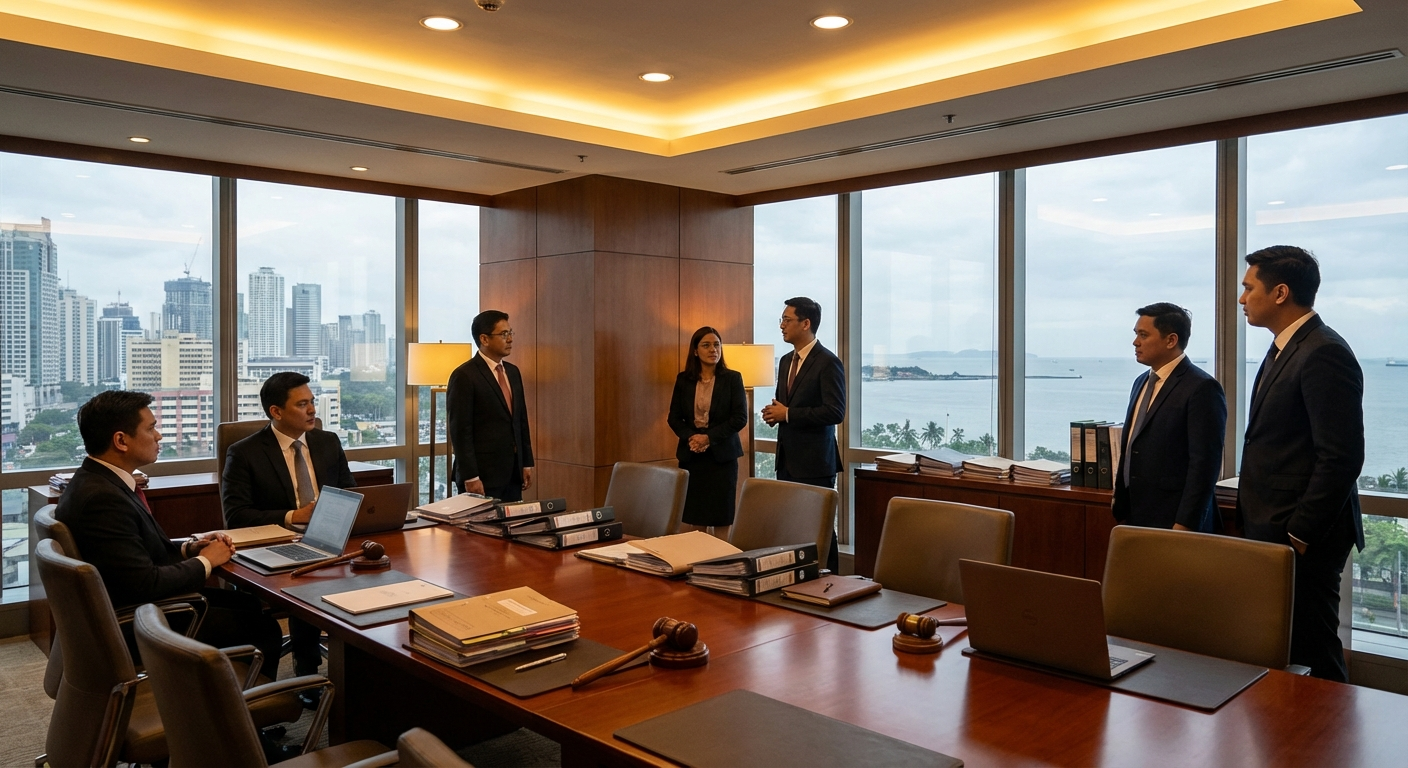
For foreign investors operating in the Philippines, the ability to resolve commercial disputes efficiently and enforceably is a critical concern. Whether arising from joint venture disagreements, contractual breaches, construction delays, or regulatory conflicts, disputes can significantly impact business operations, reputation, and profitability. Understanding the Philippine dispute resolution framework — and structuring agreements to take advantage of it — is essential for any foreign investor doing business in the country.
This guide provides a comprehensive overview of the Philippine dispute resolution landscape, with particular emphasis on arbitration as the preferred mechanism for cross-border commercial disputes.
The Philippine Legal Framework for Dispute Resolution
The Philippines maintains a well-developed legal framework governing alternative dispute resolution (ADR). The key legislation and rules include:
- Republic Act No. 876 — The Arbitration Law, enacted in 1953, which governs domestic arbitration
- Republic Act No. 9285 — The Alternative Dispute Resolution Act of 2004 (ADR Act), the primary legislation institutionalizing the use of ADR in the Philippines
- The Special Rules of Court on Alternative Dispute Resolution (Special ADR Rules) — Promulgated by the Supreme Court in 2009 to govern court proceedings related to ADR
- Executive Order No. 1008 — Creating the Construction Industry Arbitration Commission (CIAC), which has original and exclusive jurisdiction over construction disputes
- The 1958 New York Convention on the Recognition and Enforcement of Foreign Arbitral Awards, ratified by the Philippines on July 6, 1967
- The UNCITRAL Model Law on International Commercial Arbitration, adopted as the governing framework for international commercial arbitration under the ADR Act
Together, these laws establish a comprehensive system that supports both domestic and international arbitration, mediation, and other forms of ADR, while providing mechanisms for judicial enforcement of arbitral awards.
Republic Act No. 9285: The ADR Act of 2004
The ADR Act is the cornerstone of the Philippine ADR framework. Signed into law on April 2, 2004, it was enacted to promote party autonomy in dispute resolution, reduce court congestion, and bring Philippine ADR practices in line with international standards.
Key Provisions of the ADR Act
The ADR Act covers three principal ADR mechanisms:
Mediation — The ADR Act institutionalizes mediation as a voluntary process in which an impartial third party (the mediator) facilitates negotiations between disputing parties. Key features include:
- Mediation proceedings are confidential — Section 9 provides that information obtained through mediation is privileged and cannot be used as evidence in any judicial or administrative proceeding
- A mediated settlement agreement has the force of law between the parties and is immediately executory
- The mediator cannot be compelled to testify regarding the mediation
Arbitration — The ADR Act adopts the UNCITRAL Model Law on International Commercial Arbitration as the governing framework for international commercial arbitration in the Philippines. Under Section 19, international commercial arbitration shall be governed by the Model Law, while domestic arbitration continues to be governed by Republic Act No. 876. Key arbitration provisions include:
- Party autonomy — Parties are free to agree on the procedure to be followed by the arbitral tribunal, including the place and language of arbitration (Section 22)
- Competence-competence — The arbitral tribunal may rule on its own jurisdiction, including objections to the existence or validity of the arbitration agreement (Section 20)
- Separability — An arbitration clause that forms part of a contract shall be treated as an agreement independent of the other terms of the contract; a decision that the contract is null and void does not automatically invalidate the arbitration clause (Section 20)
- Interim measures — The arbitral tribunal may grant interim measures of protection as it may consider necessary in respect of the subject matter of the dispute (Section 28)
- Finality of awards — Arbitral awards are final and binding, and courts may only set aside or vacate awards on the limited grounds specified in the ADR Act and the Special ADR Rules
Other ADR Mechanisms — The ADR Act also recognizes conciliation, early neutral evaluation, mini-trial, and any combination of ADR forms as valid dispute resolution methods.
The Office for Alternative Dispute Resolution (OADR)
Section 49 of the ADR Act created the Office for Alternative Dispute Resolution (OADR), an agency attached to the Department of Justice (DOJ). The OADR is mandated to:
- Promote, develop, and expand the use of ADR in the private and public sectors
- Monitor, study, and evaluate the use of ADR by the public and private sectors
- Recommend to Congress appropriate measures to promote and improve ADR practices
- Compile and publish a list of qualified and accredited ADR practitioners and ADR provider organizations
- Charge fees for its services as may be necessary to defray its costs of operations
For foreign investors, the OADR serves as a useful resource for identifying accredited mediators, arbitrators, and ADR provider organizations in the Philippines.
Republic Act No. 876: The Arbitration Law
Republic Act No. 876, enacted on June 19, 1953, is the Philippines' original arbitration statute. While the ADR Act now governs international commercial arbitration through the UNCITRAL Model Law, RA 876 remains the applicable law for domestic arbitration — that is, arbitration between parties that does not involve an international commercial element.
Key Provisions
- Validity of arbitration agreements — Section 2 provides that two or more persons may submit to arbitration any existing controversy between them, and Section 4 permits the inclusion of arbitration clauses in contracts to cover future disputes
- Appointment of arbitrators — If the parties cannot agree on the appointment of arbitrators, the court may appoint them under Section 8
- Conduct of hearings — The arbitrators shall appoint a time and place for hearing and may adjourn the hearing from time to time as necessary (Section 12)
- Awards — The award must be in writing and signed by the arbitrators or a majority of them (Section 19). The award shall be final and unappealable except on grounds of corruption, fraud, evident partiality, misconduct, or exceeding the arbitrators' powers
- Judicial confirmation — Under Section 23, any party to the arbitration may petition the court to confirm the award within one month after the award is made
- Grounds for vacating — Section 24 provides limited grounds: (a) corruption or fraud, (b) evident partiality, (c) misconduct in refusing to postpone the hearing or refusing to hear pertinent evidence, or (d) the arbitrators exceeding their powers
The Special ADR Rules
In 2009, the Supreme Court of the Philippines promulgated the Special Rules of Court on Alternative Dispute Resolution (A.M. No. 07-11-08-SC), which took effect on October 30, 2009. These rules govern all judicial proceedings involving ADR and are designed to promote the efficiency of arbitration by limiting judicial intervention.
Judicial Policy Favoring Arbitration
Rule 2.2 of the Special ADR Rules articulates the policy that courts shall liberally construe the Special ADR Rules to promote party autonomy and encourage the use of ADR to achieve a fair, speedy, and efficient settlement of disputes. Rule 2.4 provides that the court shall not refuse to refer the parties to ADR for reasons including:
- The referral tends to oust a court of jurisdiction
- The court is in a better position to resolve the dispute
- The referral would result in multiplicity of suits
- The ADR proceeding has not been commenced
This judicial policy is significant for foreign investors, as it means that Philippine courts will generally uphold arbitration agreements and refer parties to arbitration rather than allowing the dispute to proceed in litigation.
Confirmation, Vacatur, and Correction of Domestic Awards
Rules 11 and 12 of the Special ADR Rules govern petitions to confirm, vacate, or correct domestic arbitral awards. A domestic arbitral award becomes final and executory upon the lapse of the period to file a petition to vacate (30 days from receipt of the award) or, if such a petition is filed, upon the court's denial of the petition.
Recognition and Enforcement of Foreign Arbitral Awards
Rule 13 of the Special ADR Rules governs the recognition and enforcement of foreign arbitral awards — a matter of paramount importance to foreign investors. Under Rule 13.1, a foreign arbitral award shall be recognized and enforced in the Philippines if it falls under the New York Convention or any other applicable treaty or convention.
The petition for recognition and enforcement must be filed with the Regional Trial Court (RTC) and must be accompanied by:
- The original or authenticated copy of the arbitral award
- The original or authenticated copy of the arbitration agreement
- A certification from the relevant arbitral institution, if applicable
Under Rule 13.4, the court may refuse recognition and enforcement only on the following grounds (mirroring Article V of the New York Convention):
- The parties to the arbitration agreement were under some incapacity, or the agreement is not valid under the law to which the parties subjected it
- The party against whom the award is invoked was not given proper notice of the appointment of the arbitrator or of the arbitral proceedings, or was otherwise unable to present its case
- The award deals with a dispute not contemplated by or not falling within the terms of the submission to arbitration
- The composition of the arbitral tribunal or the arbitral procedure was not in accordance with the agreement of the parties or the law of the country where the arbitration took place
- The award has not yet become binding on the parties, or has been set aside or suspended by a competent authority of the country in which it was made
- The subject matter of the dispute is not capable of settlement by arbitration under Philippine law
- Recognition or enforcement of the award would be contrary to public policy
Importantly, the party opposing enforcement bears the burden of proving any of these grounds. Philippine courts have consistently adopted a pro-enforcement approach to foreign arbitral awards, in line with the country's treaty obligations under the New York Convention.
The New York Convention in the Philippines
The Philippines signed the 1958 Convention on the Recognition and Enforcement of Foreign Arbitral Awards (the New York Convention) on June 10, 1958, and ratified it on July 6, 1967. The Philippines made two reservations upon ratification:
- Reciprocity reservation — The Philippines will apply the Convention only to the recognition and enforcement of awards made in the territory of another contracting state
- Commercial reservation — The Philippines will apply the Convention only to differences arising out of legal relationships, whether contractual or not, which are considered commercial under Philippine law
These reservations mean that for a foreign arbitral award to be enforced in the Philippines under the New York Convention, two conditions must be met: (1) the award must have been rendered in a country that is also a party to the New York Convention, and (2) the underlying dispute must be commercial in nature under Philippine law.
As of 2026, the New York Convention has over 170 contracting states, so the reciprocity reservation rarely presents a practical obstacle. The commercial reservation is also broadly interpreted — Philippine law considers most business and investment disputes to be commercial in nature.
The ICSID Convention
In addition to the New York Convention, the Philippines is a party to the Convention on the Settlement of Investment Disputes between States and Nationals of Other States (the ICSID Convention). The Philippines signed the ICSID Convention on September 26, 1978, and ratified it on November 17, 1978, with the Convention entering into force on December 17, 1978.
The ICSID Convention provides a framework for the resolution of investment disputes between foreign investors and host states through arbitration administered by the International Centre for Settlement of Investment Disputes (ICSID), a World Bank institution based in Washington, D.C. ICSID arbitration is significant for foreign investors in the Philippines because:
- Many of the Philippines' bilateral investment treaties (BITs) contain ICSID arbitration clauses, giving foreign investors direct recourse against the Philippine government for alleged treaty violations
- ICSID awards are directly enforceable in all ICSID Convention contracting states without the need for domestic court recognition proceedings
- ICSID proceedings are conducted independently of the Philippine judiciary, providing an additional layer of neutrality for foreign investors
Arbitral Institutions in the Philippines
Philippine Dispute Resolution Center, Inc. (PDRCI)
The PDRCI is the Philippines' premier private arbitral institution. Established in 1996, the PDRCI administers domestic and international arbitrations under its own rules, which are modeled on the UNCITRAL Arbitration Rules. The PDRCI maintains a roster of qualified arbitrators and mediators and provides case management services, including scheduling, venue arrangement, and administrative support.
For foreign investors, the PDRCI offers several advantages:
- International panel — The PDRCI roster includes both Filipino and foreign arbitrators with expertise in international commercial disputes
- Flexible procedures — The PDRCI Rules allow parties to customize the arbitral procedure, including the language of proceedings, applicable law, and evidentiary rules
- Cost efficiency — PDRCI arbitration fees are generally lower than those of major international institutions such as the ICC or SIAC, making it an attractive option for mid-sized disputes
- Enforceability — PDRCI awards are enforceable as domestic arbitral awards under RA 876 and the Special ADR Rules
Construction Industry Arbitration Commission (CIAC)
Under Executive Order No. 1008, the CIAC has original and exclusive jurisdiction over disputes arising from or connected with construction contracts in the Philippines, whether the parties are Filipino or foreign. This jurisdiction extends to disputes involving:
- Violations of the terms of construction contracts
- Interpretation and application of contractual provisions
- Claims for construction defects or delays
- Payment disputes (progress billing, retention, variations)
- Claims arising from joint ventures related to construction projects
For foreign construction companies or investors involved in Philippine infrastructure projects, CIAC arbitration is mandatory — courts will decline jurisdiction over construction disputes in favor of the CIAC. CIAC proceedings are generally faster than regular court litigation, with the CIAC Rules requiring the rendition of an award within six (6) months from the constitution of the arbitral tribunal.
Mediation as a Prerequisite
The Philippine legal system encourages mediation as a preliminary step before resorting to arbitration or litigation. Several mechanisms promote this approach:
Court-Annexed Mediation (CAM)
Under A.M. No. 01-10-5-SC-PHILJA (the Guidelines for the Implementation of Mediation Proceedings), cases filed in court are referred to mediation before the Philippine Judicial Academy (PHILJA)-accredited mediators. If mediation fails, the case proceeds to judicial dispute resolution (JDR) before the judge.
Katarungang Pambarangay (Barangay Justice System)
Under Sections 399-422 of the Local Government Code (Republic Act No. 7160), certain disputes between parties residing in the same city or municipality must first be submitted to the Lupong Tagapamayapa (barangay conciliation body) before a court action can be filed. While this requirement is generally limited to cases involving individuals (not corporations), foreign investors operating through locally incorporated entities should be aware that disputes with local counterparts may be subject to this requirement if the parties reside in the same barangay or adjacent barangays.
An amicable settlement reached through the Lupong Tagapamayapa has the force and effect of a court judgment and is enforceable by execution by the Lupon within six (6) months from the date of settlement, and by the appropriate court thereafter.
Structuring Dispute Resolution Clauses for Cross-Border Agreements
For foreign investors entering into commercial agreements in the Philippines, the dispute resolution clause is one of the most important — yet often overlooked — provisions of the contract. A well-drafted dispute resolution clause can mean the difference between a swift, enforceable resolution and years of costly litigation.
Key Considerations
1. Choice of arbitration versus litigation. Arbitration is generally the preferred mechanism for cross-border disputes in the Philippines due to the enforceability of arbitral awards under the New York Convention, the confidentiality of proceedings, the ability to select arbitrators with relevant expertise, and the avoidance of the Philippine court system's well-documented case backlogs.
2. Seat of arbitration. The "seat" of arbitration determines the procedural law governing the arbitration and the courts that have supervisory jurisdiction. Foreign investors may choose Manila as the seat (with the PDRCI as the administering institution), or an international seat such as Singapore (SIAC), Hong Kong (HKIAC), or Paris (ICC). The choice of seat should balance factors such as neutrality, enforceability, judicial support for arbitration, and proximity to the parties and evidence.
3. Applicable law. The dispute resolution clause should specify the substantive law governing the contract (typically Philippine law for transactions occurring in the Philippines) as well as the procedural rules for the arbitration. These are distinct concepts: the substantive law governs the rights and obligations of the parties, while the procedural rules govern the conduct of the arbitration itself.
4. Number of arbitrators. For smaller disputes, a sole arbitrator is more cost-effective. For larger, more complex disputes, a three-member tribunal (each party appointing one arbitrator, with the two party-appointed arbitrators selecting the presiding arbitrator) provides a greater sense of balance and is more common in international practice.
5. Language of arbitration. English is the language of commerce and law in the Philippines, and arbitrations seated in Manila are typically conducted in English. This is an advantage for foreign investors from English-speaking countries.
6. Multi-tiered clauses. Many cross-border agreements include multi-tiered dispute resolution clauses that require the parties to attempt negotiation or mediation before proceeding to arbitration. A typical clause might provide: (a) executive-level negotiation for 30 days, (b) mediation under PDRCI rules for 60 days, and (c) arbitration if mediation fails. Such clauses can be effective in resolving disputes early, but they must be carefully drafted to avoid creating unenforceable "agreements to negotiate."
Sample Arbitration Clause
A basic arbitration clause for a cross-border agreement involving the Philippines might read:
"Any dispute, controversy, or claim arising out of or relating to this Agreement, or the breach, termination, or invalidity thereof, shall be settled by arbitration administered by the Philippine Dispute Resolution Center, Inc. (PDRCI) in accordance with the PDRCI Arbitration Rules in force at the time of the commencement of the arbitration. The seat of arbitration shall be Makati City, Philippines. The tribunal shall consist of three (3) arbitrators. The language of the arbitration shall be English. The substantive law governing this Agreement shall be the laws of the Republic of the Philippines."
Enforcement of Arbitral Awards in the Philippines
One of the primary advantages of arbitration for foreign investors is the enforceability of awards. The enforcement regime differs depending on whether the award is domestic or foreign.
Domestic Awards
A domestic arbitral award (rendered in the Philippines) may be confirmed by the Regional Trial Court under Section 23 of RA 876. Once confirmed, the award has the same effect as a court judgment and may be enforced through execution proceedings. The losing party may file a petition to vacate within 30 days of receiving the award, but only on the narrow grounds specified in Section 24 of RA 876 (corruption, evident partiality, misconduct, or excess of authority).
Foreign Awards
A foreign arbitral award (rendered outside the Philippines) may be recognized and enforced under Rule 13 of the Special ADR Rules, in accordance with the New York Convention. The petition for recognition and enforcement is filed with the RTC. As noted above, the grounds for refusing enforcement are limited and the burden falls on the party opposing enforcement.
Philippine courts have demonstrated a consistently pro-enforcement stance toward foreign arbitral awards. The Supreme Court has emphasized that the public policy exception under the New York Convention is to be construed narrowly, and that mere errors of law or fact by the arbitral tribunal do not constitute grounds for refusing enforcement.
Practical Considerations for Enforcement
- Timeline — Enforcement proceedings typically take six (6) months to two (2) years, depending on the complexity of the case and whether the losing party raises objections
- Costs — Filing fees for enforcement petitions are based on the amount of the award, similar to fees for ordinary civil actions
- Interim measures — Under Rule 5.13 of the Special ADR Rules, a party may apply to the court for interim measures of protection (such as attachment, garnishment, or preliminary injunction) pending the recognition and enforcement of a foreign arbitral award
- Appeal — A decision on a petition to recognize and enforce a foreign arbitral award is immediately executory and may only be appealed on questions of law to the Court of Appeals, and ultimately to the Supreme Court
Bilateral Investment Treaties and Investor-State Arbitration
The Philippines has entered into numerous bilateral investment treaties (BITs) with countries including Japan, South Korea, Germany, the United Kingdom, France, Spain, Australia, and many others. Most of these BITs contain provisions for investor-state dispute settlement (ISDS), typically through ICSID arbitration or ad hoc arbitration under the UNCITRAL Rules.
Under a typical BIT, a foreign investor may initiate arbitration directly against the Philippine government if the government has allegedly breached its obligations under the treaty, such as:
- Expropriation without adequate compensation
- Fair and equitable treatment violations
- National treatment or most-favored-nation treatment violations
- Free transfer of funds restrictions
Foreign investors should review the applicable BIT between the Philippines and their home country to determine the available ISDS mechanisms and any preconditions (such as a cooling-off period or exhaustion of local remedies) before initiating arbitration.
Practical Tips for Foreign Investors
Based on the foregoing legal framework, the following practical recommendations are offered for foreign investors operating in the Philippines:
1. Always include arbitration clauses in commercial agreements. Given the efficiency of arbitration relative to Philippine court litigation and the enforceability of awards under the New York Convention, arbitration should be the default dispute resolution mechanism for cross-border transactions.
2. Consider institutional arbitration. While ad hoc arbitration (without an administering institution) is permissible, institutional arbitration through the PDRCI, SIAC, HKIAC, or ICC provides procedural safeguards, case management support, and a framework for resolving procedural disputes between the parties.
3. Keep detailed records. The success of any arbitration depends on the quality of the evidence. Foreign investors should maintain comprehensive records of all contractual communications, performance milestones, payments, and any breaches or disputes as they arise.
4. Be aware of limitation periods. Under Philippine law, the prescriptive periods for filing claims vary depending on the nature of the claim — written contracts (10 years under Article 1144 of the Civil Code), oral contracts (6 years under Article 1145), and quasi-delicts (4 years under Article 1146). Arbitration clauses should specify whether the commencement of arbitration tolls the running of the prescriptive period.
5. Engage local counsel early. Philippine dispute resolution involves nuances of local law and practice that may not be immediately apparent to foreign parties. Engaging experienced Philippine arbitration counsel early in the dispute — and ideally during the contract drafting phase — can prevent costly mistakes and ensure that the foreign investor's interests are adequately protected.
6. Review applicable BITs. Foreign investors should determine whether a BIT exists between the Philippines and their home country and understand the protections and ISDS mechanisms available under that treaty. BIT protections can serve as an additional layer of security for the investment.
Conclusion
The Philippines offers a robust and internationally recognized dispute resolution framework for foreign investors. With the ADR Act of 2004, the Special ADR Rules, and the country's adherence to the New York Convention and ICSID Convention, foreign investors can be confident that arbitral awards — whether rendered in the Philippines or abroad — will be recognized and enforced by Philippine courts.
However, the effectiveness of any dispute resolution mechanism depends on careful advance planning. Foreign investors are strongly encouraged to include well-drafted arbitration clauses in all commercial agreements, engage experienced local counsel, and familiarize themselves with the specific ADR mechanisms and institutions available in the Philippines.
At Tungol & Tan, our dispute resolution practice group has extensive experience advising foreign investors and multinational corporations on all aspects of commercial arbitration, mediation, and litigation in the Philippines. We regularly represent clients before the PDRCI, CIAC, and Philippine courts, and assist in the enforcement of both domestic and foreign arbitral awards. Contact us for a confidential consultation regarding your dispute resolution needs.
Related Articles

5 Tax Incentives Foreign Investors Can Claim Under the CREATE MORE Act
The CREATE MORE Act (RA 12066) overhauled the Philippines' tax incentive framework in late 2024. Here are five key benefits every foreign investor should know before registering with BOI or PEZA.

Can a Foreign Company Hire Filipino Remote Workers Without a Local Entity?
Many foreign startups and businesses hire Filipino talent remotely — but doing it legally requires understanding the line between independent contractors and employees under Philippine law.

SRRV Retirement Visa Philippines: 7 Questions Foreigners Always Ask
Thinking about retiring in the Philippines? Here are seven frequently asked questions about the Special Resident Retiree's Visa — including the 2025 rule changes that lowered the minimum age to 40.