Import and Export Regulations for Foreign Businesses in the Philippines: A Comprehensive Legal Guide
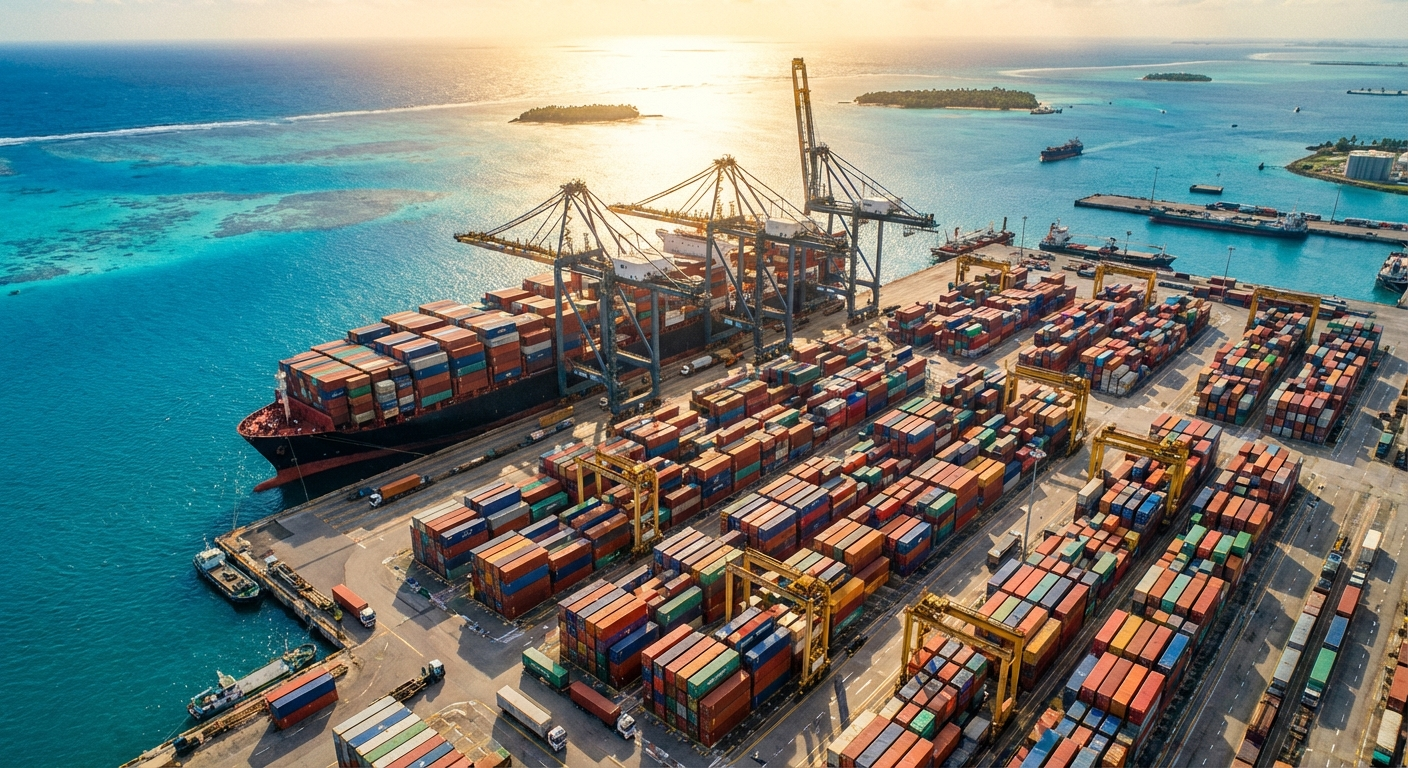
For foreign companies seeking to establish or expand trade operations in the Philippines, understanding the country's import and export regulatory framework is essential. The Philippines maintains a comprehensive system of customs laws, tariff schedules, and trade agreements that govern the movement of goods across its borders. Non-compliance can result in shipment seizures, substantial fines, and even criminal prosecution.
This guide provides a thorough overview of the Philippine import and export regulatory landscape, with particular emphasis on the obligations and opportunities relevant to foreign businesses and investors.
The Customs Modernization and Tariff Act (CMTA)
The primary legislation governing customs administration in the Philippines is Republic Act No. 10863, otherwise known as the Customs Modernization and Tariff Act (CMTA), signed into law on May 30, 2016. The CMTA replaced the outdated Tariff and Customs Code of the Philippines (Presidential Decree No. 1464) and brought Philippine customs practices in line with international standards, particularly the Revised Kyoto Convention of the World Customs Organization (WCO).
Key features of the CMTA include:
- Risk-based assessment — The Bureau of Customs (BOC) employs a risk management system to determine the level of inspection required for imported goods, reducing processing times for low-risk shipments
- Self-assessment system — Importers are responsible for the accurate declaration of their goods, with the BOC conducting post-clearance audits to verify compliance
- Advance rulings — Under Section 113 of the CMTA, importers and exporters may request advance rulings on tariff classification, valuation, and rules of origin before goods arrive, providing certainty in customs treatment
- Post-clearance audit (PCA) — Section 1000 of the CMTA empowers the BOC to conduct audits within three (3) years from the date of final payment of duties and taxes, or the date of final adjustment of the import entry, whichever is later
- De minimis threshold — Goods valued at ten thousand pesos (PHP 10,000) or below are generally exempt from duties and taxes under Section 423 of the CMTA
Bureau of Customs Accreditation and the CPRS
Before a foreign company can import goods into the Philippines, it must first secure accreditation from the Bureau of Customs. This process is managed through the Client Profile Registration System (CPRS), the BOC's electronic platform for registering and accrediting importers, exporters, customs brokers, and other stakeholders.
Accreditation Requirements for Foreign-Owned Companies
Foreign companies importing into the Philippines must operate through a locally registered entity — either a domestic corporation with foreign equity (subject to the Foreign Investment Negative List), a branch office registered with the Securities and Exchange Commission (SEC), or a regional operating headquarters. The accreditation requirements include:
- SEC Certificate of Registration and Articles of Incorporation
- Bureau of Internal Revenue (BIR) Certificate of Registration (BIR Form 2303)
- Mayor's Permit or Business Permit from the local government unit where the business operates
- Valid government-issued IDs of the company president and responsible officers (for foreign nationals, this includes the Alien Certificate of Registration and Alien Employment Permit)
- Proof of financial capacity to import, such as bank certificates or lines of credit
- List of importables with declared grand total value
- Surety bond as may be required by the BOC based on the volume and value of imports
The CPRS registration must be renewed periodically, and importers are required to maintain updated profiles reflecting any changes in corporate structure, responsible officers, or business operations. Failure to maintain active CPRS accreditation will result in the suspension of import privileges.
Tariff Classification and Duty Rates
The Philippines uses the ASEAN Harmonized Tariff Nomenclature (AHTN), which is based on the WCO's Harmonized Commodity Description and Coding System (HS). The AHTN classifies goods into chapters, headings, and subheadings, each assigned a specific duty rate.
Tariff rates in the Philippines are administered by the Tariff Commission, an independent body under the National Economic and Development Authority (NEDA). The current tariff schedule reflects both Most Favored Nation (MFN) rates — applicable to all WTO member countries — and preferential rates under various free trade agreements.
Types of Import Duties and Taxes
Foreign businesses importing goods into the Philippines should expect to pay the following:
- Customs duty — Ad valorem (percentage-based) or specific (fixed amount per unit) rates, depending on the classification of goods. Most goods are subject to ad valorem duties ranging from 0% to 30%
- Value-Added Tax (VAT) — Twelve percent (12%) applied to the total customs value plus customs duties, pursuant to the National Internal Revenue Code (NIRC) as amended by Republic Act No. 10963, otherwise known as the Tax Reform for Acceleration and Inclusion (TRAIN) Law
- Excise tax — Applicable to specific goods such as automobiles, petroleum products, alcohol, tobacco, sweetened beverages, and mineral products, as provided under the NIRC as amended by the TRAIN Law and Republic Act No. 11346 (Tobacco Tax Law of 2019)
- Import Processing Fee (IPF) — A fee charged by the BOC for processing import entries
Customs Valuation
The Philippines follows the WTO Agreement on Customs Valuation, adopting the transaction value method as the primary basis for determining the dutiable value of imported goods. Under Section 700 of the CMTA, the transaction value is the price actually paid or payable for the goods when sold for export to the Philippines, adjusted as necessary for certain additions (such as commissions, brokerage fees, packing costs, and royalties) and deductions.
Where the transaction value cannot be determined, the CMTA prescribes alternative methods in sequential order: identical goods, similar goods, deductive value, computed value, and the fallback method.
Restricted, Regulated, and Prohibited Imports
The Philippines maintains lists of goods that are either prohibited from importation entirely or regulated — requiring prior clearance, permits, or licenses from designated government agencies before they may be imported.
Prohibited Imports
Under Section 118 of the CMTA and various special laws, the following categories of goods are prohibited from importation:
- Dynamite, gunpowder, ammunition, and other explosives, firearms, and weapons of war (except as authorized under Republic Act No. 10591, the Comprehensive Firearms and Ammunition Regulation Act of 2013)
- Written or printed articles advocating treason, rebellion, insurrection, or sedition
- Obscene or immoral materials
- Articles manufactured in whole or in part of gold, silver, or other precious metals with deceptive markings
- Adulterated or misbranded food and drugs (as regulated under Republic Act No. 9711, the Food and Drug Administration Act of 2009)
- Gambling devices and paraphernalia (except those licensed for authorized casino operations)
- Used clothing and rags, except as permitted by special order
- Toxic and hazardous waste, as defined under Republic Act No. 6969 (Toxic Substances and Hazardous and Nuclear Wastes Control Act of 1990)
Regulated Imports Requiring Agency Clearance
A broad range of commodities require prior clearance from designated government agencies. Foreign businesses must secure these permits before goods arrive at Philippine ports — although the CMTA allows submission of certain documents after arrival but before release from customs custody. Key regulatory agencies and their jurisdictions include:
- Food and Drug Administration (FDA) — Food, drugs, medical devices, cosmetics, and household hazardous substances, pursuant to RA 9711
- Bureau of Plant Industry (BPI) — Plants, plant products, seeds, and soil, requiring Sanitary and Phytosanitary (SPS) Import Clearance
- Bureau of Animal Industry (BAI) — Live animals, meat, and animal products, requiring veterinary quarantine clearance
- Philippine Drug Enforcement Agency (PDEA) — Controlled precursors and essential chemicals under Republic Act No. 9165 (Comprehensive Dangerous Drugs Act of 2002)
- Firearms and Explosives Office (FEO), Philippine National Police — Firearms, ammunition, and explosive materials
- Bureau of Philippine Standards (BPS) — Electrical equipment, construction materials, and other goods subject to mandatory Philippine National Standards (PNS) certification under Republic Act No. 4109
- National Telecommunications Commission (NTC) — Telecommunications equipment, requiring type approval certificates
- Sugar Regulatory Administration (SRA) — Sugar imports, which are subject to quota allocations
- Optical Media Board (OMB) — Optical media, manufacturing equipment, and raw materials, under Republic Act No. 9239 (Optical Media Act of 2003)
Foreign businesses are advised to engage a licensed customs broker — a professional accredited by the BOC and licensed under Republic Act No. 9280 (Customs Brokers Act of 2004) — to navigate the complex permitting requirements and ensure full compliance.
Export Regulations and Requirements
While the Philippines generally maintains a liberal export policy to encourage foreign exchange earnings and economic growth, certain goods are subject to export controls, bans, or permit requirements.
Export Declaration and Processing
All goods exported from the Philippines must be accompanied by an Export Declaration filed with the BOC through its electronic system. The export declaration contains details of the goods, their value, destination, and the exporter's identity. Under Section 602 of the CMTA, the BOC processes export goods through a risk management system similar to that used for imports.
Banned and Regulated Exports
The following categories of goods are subject to export restrictions:
- Logs and lumber — Subject to a total log export ban under Executive Order No. 23, Series of 2011, and regulated lumber exports requiring permits from the Department of Environment and Natural Resources (DENR)
- Mineral ores — Subject to export duties and restrictions under Republic Act No. 7942 (Philippine Mining Act of 1995) and various executive orders promoting domestic processing
- Rice and corn — Export may be restricted during periods of domestic shortage, as regulated by the National Food Authority (NFA) and the Department of Agriculture
- Cultural properties and national treasures — Export is prohibited under Republic Act No. 10066 (National Cultural Heritage Act of 2009)
- Endangered species — Regulated under Republic Act No. 9147 (Wildlife Resources Conservation and Protection Act) and the Convention on International Trade in Endangered Species (CITES)
Export Incentives
To encourage exports, the Philippine government provides various incentives:
- Zero-rated VAT on exports — Under Section 106(A)(2) of the NIRC, the sale of goods and services to persons or entities engaged in international shipping or international air transport operations, as well as direct exports, are subject to zero percent (0%) VAT
- Tax and duty exemptions for export enterprises — Registered export enterprises under the Philippine Economic Zone Authority (PEZA), Board of Investments (BOI), and other investment promotion agencies enjoy duty-free importation of raw materials, capital equipment, and spare parts, as well as income tax holidays or preferential corporate income tax rates under Republic Act No. 11534 (Corporate Recovery and Tax Incentives for Enterprises Act, or CREATE Act)
- Customs bonded warehouses — Goods stored in customs bonded warehouses for re-export are exempt from duties and taxes, provided they are not entered into the domestic market
Free Trade Agreements and Preferential Tariffs
The Philippines is a party to several free trade agreements (FTAs) that provide preferential tariff rates for goods traded between member countries. Foreign businesses that source goods from FTA partner countries can significantly reduce their customs duty obligations by availing of these preferential rates.
ASEAN Trade in Goods Agreement (ATIGA)
As a founding member of the Association of Southeast Asian Nations (ASEAN), the Philippines is a signatory to the ASEAN Trade in Goods Agreement (ATIGA), which succeeded the Common Effective Preferential Tariff (CEPT) scheme under the ASEAN Free Trade Area (AFTA). Under ATIGA, tariff rates on goods originating from ASEAN member states have been substantially reduced — with the vast majority of tariff lines at zero percent (0%) for goods meeting the ATIGA Rules of Origin.
To avail of ATIGA preferential rates, importers must present a Certificate of Origin (Form D) or an ASEAN-Wide Self-Certification (AWSC) declaration, certifying that the goods meet the requisite local content or substantial transformation requirements.
Other Free Trade Agreements
The Philippines benefits from additional FTAs that provide preferential tariff access:
- ASEAN-China FTA (ACFTA) — Preferential rates on goods from China and other ASEAN states, requiring Certificate of Origin (Form E)
- ASEAN-Korea FTA (AKFTA) — Reduced duties on goods from South Korea, requiring Certificate of Origin (Form AK)
- ASEAN-Japan Comprehensive Economic Partnership (AJCEP) — Preferential rates on Japanese goods, requiring Certificate of Origin (Form AJ)
- Japan-Philippines Economic Partnership Agreement (JPEPA) — A bilateral FTA providing additional tariff concessions beyond AJCEP, requiring Certificate of Origin (Form JPEPA)
- ASEAN-Australia-New Zealand FTA (AANZFTA) — Preferential rates for goods from Australia and New Zealand
- ASEAN-India FTA (AIFTA) — Reduced tariffs on goods from India
- Regional Comprehensive Economic Partnership (RCEP) — The world's largest FTA, covering ASEAN member states plus China, Japan, South Korea, Australia, and New Zealand. The Philippines ratified RCEP under Senate Resolution No. 126, and it entered into force for the Philippines on June 2, 2023. RCEP provides cumulative rules of origin, allowing materials from multiple RCEP members to count toward the origin requirement
Foreign businesses planning to import goods into the Philippines from any of these partner countries should evaluate whether their products qualify for preferential tariff treatment under the applicable FTA, as the duty savings can be substantial.
Special Economic Zones and Freeports
The Philippines maintains several types of special economic zones that offer customs and tax privileges to qualifying businesses, including those engaged in import and export activities.
Philippine Economic Zone Authority (PEZA) Zones
Enterprises registered with PEZA under Republic Act No. 7916 (Special Economic Zone Act of 1995, as amended by RA 8748) enjoy significant customs benefits:
- Duty-free importation of capital equipment, raw materials, spare parts, and supplies directly used in registered activities
- Tax-free transfer of goods between PEZA-registered enterprises within the same zone or across different zones
- VAT zero-rating on local purchases by PEZA enterprises of goods and services directly attributable to their registered activities
- Streamlined customs processing through the PEZA One-Stop Shop, which coordinates with the BOC for faster clearance
Freeport Zones
The Philippines also operates several freeport zones with their own governing legislation:
- Subic Bay Freeport Zone — Governed by Republic Act No. 7227 (Bases Conversion and Development Act of 1992), administered by the Subic Bay Metropolitan Authority (SBMA)
- Clark Freeport Zone — Also under RA 7227, administered by the Clark Development Corporation (CDC)
- John Hay Special Economic Zone — Under RA 7227 as amended by RA 9400
- Aurora Pacific Economic Zone and Freeport (APECO) — Established under RA 9490
Enterprises in these freeport zones enjoy duty-free importation of goods, equipment, and raw materials, as well as exemption from local and national taxes in exchange for a preferential gross income tax rate of five percent (5%) under existing laws, subject to the rationalization provisions of the CREATE Act.
The CREATE Act and Investment Incentives for Traders
Republic Act No. 11534, the Corporate Recovery and Tax Incentives for Enterprises (CREATE) Act, signed into law on March 26, 2021, fundamentally reformed the Philippine fiscal incentives system. The CREATE Act established the Fiscal Incentives Review Board (FIRB) under the Department of Finance as the central body for granting and monitoring tax incentives.
Under the CREATE Act and its implementing rules, qualified export enterprises and domestic market enterprises may avail of:
- Income Tax Holiday (ITH) — Four (4) to seven (7) years of exemption from corporate income tax, depending on the type and location of the activity
- Special Corporate Income Tax (SCIT) — A reduced rate of five percent (5%) on gross income earned, in lieu of all national and local taxes, available after the ITH period for up to ten (10) years
- Enhanced Deductions (ED) — As an alternative to SCIT, enterprises may opt for enhanced deductions including additional depreciation allowances, reduced training expenses, and reinvestment allowances for a period of up to ten (10) years
- Duty exemption on importation of capital equipment, raw materials, spare parts, and accessories directly used in the registered activity
- VAT zero-rating or exemption on local purchases
Foreign businesses engaged in import and export activities should coordinate with the relevant investment promotion agency — whether BOI, PEZA, SBMA, CDC, or others — to determine the most advantageous incentive package for their operations.
Customs Enforcement and Penalties
The CMTA provides robust enforcement mechanisms and substantial penalties for violations of customs laws.
Common Customs Violations
- Smuggling — Under Section 1401 of the CMTA, smuggling is committed by fraudulently importing goods through any means to avoid the payment of lawful duties and taxes, or by importing prohibited goods. Smuggling is punishable by imprisonment of not less than six (6) years and one (1) day but not more than twelve (12) years, plus a fine of not less than twice the aggregate duties and taxes due but not more than three (3) times such amount
- Technical smuggling — Includes misdeclaration of goods, undervaluation, misclassification, and other fraudulent practices intended to reduce duty and tax liability. Penalties mirror those for outright smuggling
- Unlawful importation — Importing goods without the required permits, licenses, or clearances from regulatory agencies
- Failure to declare — Non-declaration or incomplete declaration of imported goods, subject to seizure and forfeiture proceedings
Seizure and Forfeiture
Under Title XII of the CMTA, the BOC has the authority to seize goods that are the subject of customs violations. Seized goods may be subject to forfeiture proceedings, resulting in their confiscation by the government. Importers whose goods are seized have the right to contest the forfeiture before the Collector of Customs, with appeal to the Commissioner of Customs, and ultimately to the Court of Tax Appeals (CTA).
Post-Clearance Audit (PCA)
One of the most significant features of the CMTA is the Post-Clearance Audit regime under Title X. The BOC's Post Clearance Audit Group (PCAG) is empowered to conduct audits of importers' records within three (3) years from the date of final payment of duties and taxes.
Foreign companies should maintain comprehensive records of all import transactions, including commercial invoices, bills of lading, packing lists, certificates of origin, import permits, and proof of payment of duties and taxes. Under Section 1003 of the CMTA, importers are required to keep such records for a period of three (3) years from the date of final payment.
Discrepancies discovered during a PCA may result in the assessment of additional duties and taxes, surcharges (up to 25% for negligence or up to 50% for fraud), and interest at the rate prescribed by the BOC.
Practical Compliance Strategies for Foreign Businesses
Based on the foregoing regulatory framework, foreign businesses engaged in import and export activities in the Philippines should consider the following compliance strategies:
- Engage a licensed customs broker — Philippine law requires that customs entries be filed by a licensed customs broker. Select a reputable broker with experience in your specific industry and commodity type
- Secure all necessary permits before shipment — Identify the regulatory agencies with jurisdiction over your goods and obtain all required clearances, licenses, and permits before goods are shipped to the Philippines
- Evaluate FTA eligibility — Determine whether your goods qualify for preferential tariff treatment under ATIGA, RCEP, or other applicable FTAs, and ensure proper Certificates of Origin are obtained from the exporting country
- Consider PEZA or freeport registration — If your business involves significant import and export volumes, registration with PEZA or a freeport zone authority can yield substantial duty and tax savings
- Maintain meticulous records — Keep complete documentation of all transactions for at least three (3) years to facilitate post-clearance audits
- Request advance rulings — For novel or complex tariff classification questions, utilize the CMTA's advance ruling mechanism to obtain binding guidance from the BOC before goods arrive
- Monitor regulatory changes — Philippine customs regulations, tariff rates, and trade policies are subject to frequent changes through executive orders, administrative orders, and customs memorandum orders. Regular monitoring is essential
Conclusion
The Philippine import and export regulatory framework, while complex, provides a well-structured system for foreign businesses to engage in legitimate trade. The CMTA, combined with the country's extensive network of free trade agreements and investment incentive programs, creates a favorable environment for foreign companies that are prepared to comply with the applicable rules and regulations.
At Tungol & Tan Law Offices, our trade and customs practice assists foreign investors and businesses in navigating the full spectrum of Philippine import and export regulations — from BOC accreditation and tariff classification to FTA utilization, PEZA registration, and customs dispute resolution. We work closely with licensed customs brokers, regulatory agencies, and investment promotion bodies to ensure that our clients' trade operations are fully compliant and optimally structured.
For tailored legal advice on your company's import and export operations in the Philippines, we invite you to contact our office for a confidential consultation.
Related Articles

5 Tax Incentives Foreign Investors Can Claim Under the CREATE MORE Act
The CREATE MORE Act (RA 12066) overhauled the Philippines' tax incentive framework in late 2024. Here are five key benefits every foreign investor should know before registering with BOI or PEZA.

Can a Foreign Company Hire Filipino Remote Workers Without a Local Entity?
Many foreign startups and businesses hire Filipino talent remotely — but doing it legally requires understanding the line between independent contractors and employees under Philippine law.

SRRV Retirement Visa Philippines: 7 Questions Foreigners Always Ask
Thinking about retiring in the Philippines? Here are seven frequently asked questions about the Special Resident Retiree's Visa — including the 2025 rule changes that lowered the minimum age to 40.