Real Estate Ownership Rules for Foreigners in the Philippines: What You Can and Cannot Buy
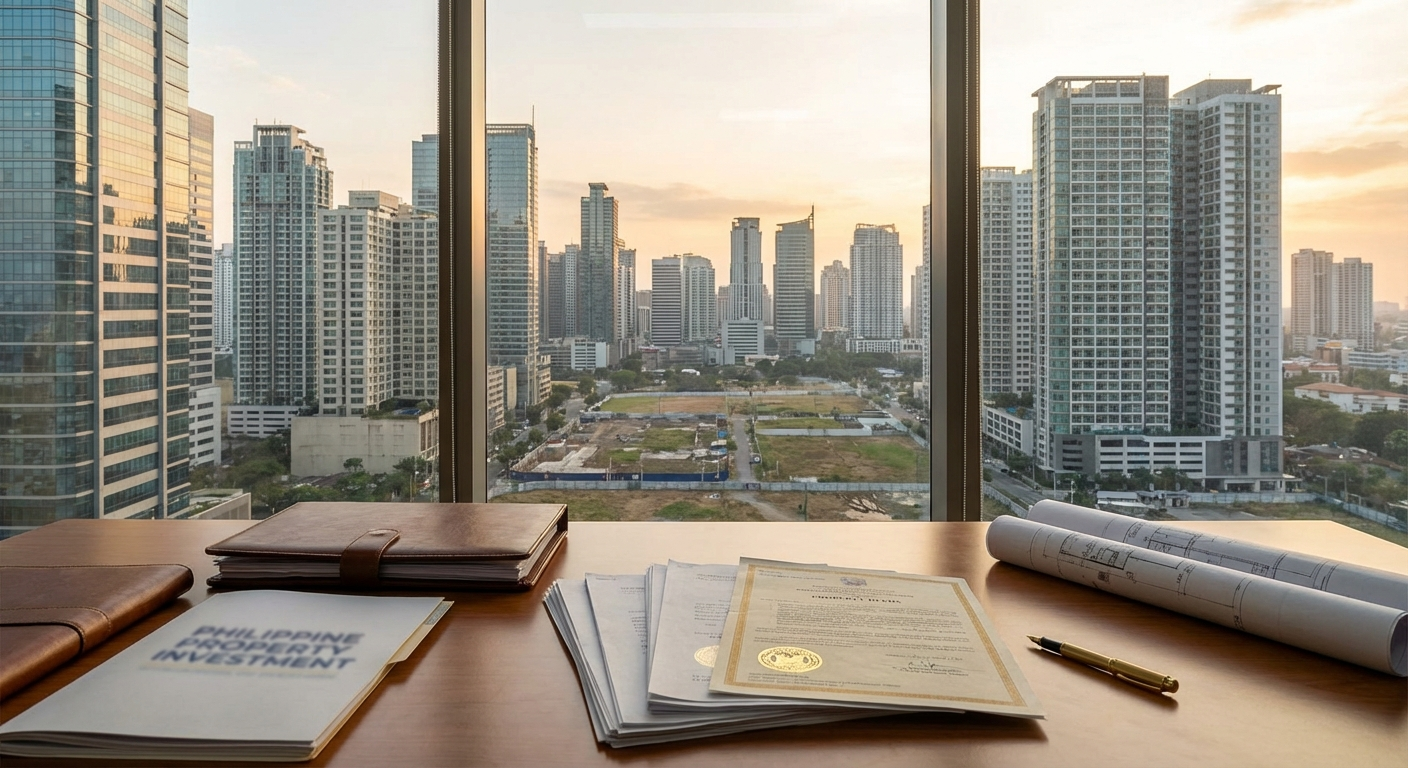
One of the most common questions we receive from foreign investors exploring the Philippine market is deceptively simple: Can I buy property in the Philippines? The answer, like most things in Philippine law, is nuanced. The short version is this — foreigners generally cannot own land in the Philippines, but they can own buildings, condominium units, and secure long-term rights over land through leasing and corporate structures.
This guide explains the constitutional and statutory framework governing foreign real estate ownership, the legal pathways available to foreign investors, and the common pitfalls that can turn a promising investment into a legal headache.
The Constitutional Prohibition: Article XII, Section 7
The starting point for any discussion of foreign property ownership in the Philippines is the 1987 Philippine Constitution. Article XII (National Economy and Patrimony), Section 7 states:
"Save in cases of hereditary succession, no private lands shall be transferred or conveyed except to individuals, corporations, or associations qualified to acquire or hold lands of the public domain."
Section 2 of the same Article further provides that only Filipino citizens, or corporations at least 60% owned by Filipino citizens, may acquire lands of the public domain. Read together, these provisions establish the bedrock principle of Philippine property law: land ownership is reserved for Filipinos.
This is not a regulation that can be waived by executive order or even by an act of Congress. It is a constitutional mandate. Changing it would require a constitutional amendment — a process that requires either a constitutional convention or a three-fourths vote of Congress sitting as a constituent assembly, followed by ratification through a national plebiscite.
What "Land" Means — and What It Does Not
It is critical to understand that the constitutional restriction applies specifically to land — not to all forms of real property. Under Philippine civil law, real property includes land, buildings, and other structures permanently attached to the soil. The constitutional prohibition targets ownership of the land itself.
This distinction creates an important opening. A foreign national can legally own a building or other improvement on land, even if they cannot own the land beneath it. This is why condominium ownership and long-term leasing arrangements are the primary vehicles through which foreigners participate in Philippine real estate.
Condominium Ownership Under RA 4726
Republic Act No. 4726, known as the Condominium Act (enacted June 18, 1966), is the single most important statute for foreign real estate investors in the Philippines. It creates a legal framework that allows foreigners to own property in a condominium project without violating the constitutional land ownership restriction.
How It Works
Under the Condominium Act, a condominium project separates ownership into two components:
- The individual unit — which can be owned outright by any person, including a foreign national.
- Common areas and the land — which are owned by the condominium corporation, a separate juridical entity.
When a foreign buyer purchases a condominium unit, they are acquiring ownership of the unit itself plus an undivided interest in the common areas, represented by shares of stock in the condominium corporation. They are not directly acquiring ownership of the land.
The 40% Foreign Ownership Cap
Section 5 of RA 4726 imposes a critical limitation: foreign nationals may acquire condominium units only if the total foreign ownership in the condominium corporation does not exceed 40% of the total and outstanding capital stock. This mirrors the 60-40 equity requirement found throughout Philippine economic legislation.
In practice, this means:
- In a condominium building with 100 units of equal value, no more than 40 units can be owned by foreigners.
- The condominium corporation's master deed and by-laws typically contain provisions implementing this restriction.
- Developers are required to monitor and enforce the 40% cap. If the cap has been reached, additional sales to foreign buyers are prohibited until Filipino ownership increases.
For foreign investors, this means that not all condominium projects will accept foreign buyers. Popular projects in Manila, Cebu, and Davao with significant foreign interest may reach their 40% cap, particularly in resort-oriented or luxury developments. Due diligence should always include verifying the current foreign ownership percentage with the condominium corporation.
Condominium Certificate of Title (CCT)
Foreign condominium owners receive a Condominium Certificate of Title (CCT) issued by the Register of Deeds. This is a Torrens title — the highest form of proof of ownership under Philippine law. It is fully enforceable and transferable, subject to the 40% cap on subsequent sales to foreign buyers.
Long-Term Leasing Under RA 7652
For foreign investors who need access to land — whether for manufacturing, commercial operations, or development — the primary legal pathway is the Investors' Lease Act, officially Republic Act No. 7652 (signed into law on June 4, 1993).
Key Provisions
RA 7652 allows foreign investors to enter into long-term lease agreements over private lands, subject to the following conditions:
- Maximum lease term: 50 years, renewable once for an additional 25 years — giving a total possible lease period of 75 years.
- Maximum area: The aggregate area leased by a single foreign investor cannot exceed 1,000 hectares for any single transaction or a total of 2,000 hectares for several transactions.
- Registration requirement: The lease agreement must be registered with the Registry of Deeds to be binding against third parties.
- Priority sectors: The law was designed to support foreign investment in sectors identified in the Investment Priorities Plan (IPP), though in practice it is applied broadly.
Practical Considerations
A well-structured long-term lease can provide a foreign investor with nearly the same practical benefits as ownership. The lessee can construct buildings and improvements on the leased land, and those improvements are owned by the lessee for the duration of the lease. The lessee can also sublease, assign, or mortgage their leasehold rights, subject to the terms of the lease agreement.
However, there are important risks to consider:
- Reversion: At the end of the lease term (including any renewal), all improvements on the land revert to the landowner unless the lease agreement provides otherwise. This must be explicitly addressed in the contract.
- Lessor cooperation: The 25-year renewal is not automatic. It requires the agreement of the landowner. Investors should negotiate renewal terms upfront and consider including provisions for compensation if renewal is denied.
- Valuation risk: Over a 50-75 year period, property values will change dramatically. The lease terms should anticipate this through properly structured rental escalation clauses.
The Hereditary Succession Exception
The Constitution's prohibition on foreign land ownership contains one express exception: hereditary succession. Article XII, Section 7 begins with the phrase "Save in cases of hereditary succession," which means a foreign national can acquire land through inheritance — whether through a will (testamentary succession) or by operation of law (intestate succession).
However, Philippine jurisprudence has placed important qualifications on this exception. In Muller v. Muller (G.R. No. 149615, August 29, 2006), the Supreme Court reaffirmed that while foreigners can inherit land, they generally cannot retain it indefinitely. The prevailing legal view is that a foreigner who inherits Philippine land should dispose of it within a reasonable period — typically by transferring it to a qualified Filipino citizen.
In practice, enforcement of the disposal requirement is inconsistent, and many foreign heirs hold inherited Philippine land for extended periods without challenge. Nevertheless, prudent legal counsel would advise foreign heirs to consider their long-term options, including transferring ownership to Filipino relatives or placing the property in a properly structured corporation.
Special Rules for Former Natural-Born Filipino Citizens
The Philippines recognizes a special category of property rights for former natural-born Filipino citizens — individuals who were born Filipino but subsequently acquired foreign citizenship. Two key laws govern their property rights:
Republic Act No. 8179 (Amending the Foreign Investments Act)
RA 8179, amending the Foreign Investments Act of 1991 (RA 7042), provides that former natural-born Filipino citizens may acquire private land for residential purposes, subject to area limitations:
- Urban land: Up to 1,000 square meters
- Rural land: Up to 1 hectare (10,000 square meters)
Batas Pambansa Bilang 185
Batas Pambansa Blg. 185 (enacted in 1982) further allows former natural-born Filipino citizens to acquire land for business or investment purposes, with higher area limits:
- Urban land: Up to 5,000 square meters
- Rural land: Up to 3 hectares (30,000 square meters)
These limits apply per individual. A former Filipino citizen who acquires land under both provisions can hold residential land under RA 8179 and business land under BP 185, subject to their respective area caps.
Republic Act No. 9225 (Dual Citizenship Act)
Republic Act No. 9225, the Citizenship Retention and Re-acquisition Act of 2003, provides another pathway. Former natural-born Filipino citizens who reacquire Philippine citizenship under RA 9225 are treated as Filipino citizens for all purposes, including property ownership. They are not subject to the area limitations that apply to former Filipinos under RA 8179 and BP 185.
This is a significant advantage. A former Filipino who takes the oath of allegiance under RA 9225 and reacquires dual citizenship can purchase land without any area restrictions — they are, for legal purposes, a Filipino citizen.
Corporate Structures: The 60-40 Approach
Another common strategy for foreign investors seeking to access Philippine land is to invest through a Philippine corporation that is at least 60% owned by Filipino citizens. Since such a corporation qualifies as a "Philippine national" under the law, it can own land.
How It Works
A foreign investor provides up to 40% of the equity capital of a Philippine corporation. Filipino partners provide the remaining 60%. The corporation acquires the land, and the foreign investor participates in the economic benefits through the corporation's operations, dividends, and management agreements.
Risks and Cautions
This approach carries significant legal risks that must be carefully managed:
- Anti-Dummy Law (Commonwealth Act No. 108): If the Filipino partners are mere dummies or nominees acting on behalf of the foreign investor, the arrangement violates the Anti-Dummy Law, which imposes criminal penalties including imprisonment and fines. The foreign investor who exercises actual control over land through dummy Filipino shareholders is committing a criminal offense.
- Beneficial ownership scrutiny: Philippine courts and regulatory agencies (including the SEC and the Anti-Money Laundering Council) increasingly scrutinize corporate structures to determine whether the 60-40 ownership is genuine or a sham arrangement designed to circumvent the constitutional prohibition.
- Loss of control: If the Filipino partners are genuine — as they must be to comply with the law — the foreign investor inherently has minority control. Disputes between partners can leave the foreign investor in a vulnerable position.
For these reasons, the 60-40 corporate structure should only be pursued with legitimate Filipino business partners in the context of genuine joint ventures. Using nominees or dummy shareholders is not a legal strategy — it is a crime.
PEZA Zones and Freeport Areas
Foreign investors operating within Philippine Economic Zone Authority (PEZA) zones or freeport areas such as the Subic Bay Freeport Zone, Clark Freeport Zone, and the Aurora Pacific Economic Zone enjoy certain advantages in accessing real estate, though they do not receive an exemption from the constitutional land ownership prohibition.
Within these zones, foreign enterprises can typically:
- Enter into long-term lease agreements with the zone authority
- Construct and own buildings and improvements on leased land
- Obtain sublease rights with favorable terms
- Benefit from streamlined permitting processes
The Bases Conversion and Development Authority (BCDA) and individual freeport zone authorities administer land within their respective areas. These zones are attractive for manufacturing, logistics, and export-oriented businesses, offering both real estate access and fiscal incentives including income tax holidays under the Corporate Recovery and Tax Incentives for Enterprises (CREATE) Act (Republic Act No. 11534).
Agricultural Land: An Absolute Restriction
The restrictions on foreign ownership are most absolute when it comes to agricultural land. Article XII, Section 3 of the Constitution limits the ownership of alienable lands of the public domain to Filipino citizens and Philippine corporations with at least 60% Filipino ownership. For agricultural lands specifically, there are additional restrictions:
- Individual Filipino citizens can own up to 12 hectares of alienable public agricultural land.
- Corporations can lease — but not own — up to 1,000 hectares of public agricultural land.
- Foreigners have no pathway to own agricultural land, whether public or private, outside of the hereditary succession exception.
Foreign agricultural enterprises must structure their operations through long-term lease agreements with Filipino landowners, typically combined with management or joint venture agreements that give the foreign investor operational control while respecting the ownership restrictions.
Common Pitfalls and How to Avoid Them
In our practice, we regularly encounter foreign investors who have been poorly advised or who have attempted to circumvent the ownership restrictions through informal arrangements. These situations frequently result in legal exposure and financial loss. The most common pitfalls include:
1. Buying Land in a Filipino Spouse's Name
Many foreign nationals married to Filipino citizens assume they can buy land in their spouse's name without legal consequences. While the Filipino spouse can indeed own land, the source of funds matters. The Supreme Court held in Muller v. Muller that a foreigner cannot recover funds used to purchase land in a Filipino spouse's name, as this would effectively allow the foreigner to enjoy the benefits of land ownership in violation of the Constitution. The foreigner's money is treated as a gift to the Filipino spouse.
2. Using Nominee Arrangements
As discussed above, using Filipino nominees to hold land on behalf of a foreign investor violates the Anti-Dummy Law (Commonwealth Act No. 108, as amended by Commonwealth Act No. 421 and Presidential Decree No. 715). Penalties include imprisonment of five to fifteen years and fines, and the property itself may be subject to forfeiture.
3. Failing to Verify the 40% Foreign Ownership Cap
Foreign buyers of condominium units sometimes discover after purchase that the condominium corporation has already reached its 40% foreign ownership cap. In such cases, the sale may be void or voidable, and the buyer may be unable to register the unit in their name. Always obtain a certification from the condominium corporation regarding the current foreign ownership percentage before executing a contract to sell.
4. Informal Lease Agreements
Foreign investors sometimes enter into unregistered lease agreements, relying on personal relationships with Filipino landowners. Under Philippine law, a lease agreement for a period exceeding one year must be in writing to be enforceable (Statute of Frauds), and leases exceeding one year should be registered with the Registry of Deeds to be binding on third parties. Unregistered leases leave the foreign investor vulnerable to subsequent sales of the property or competing claims.
Due Diligence Checklist for Foreign Real Estate Investors
Before committing to any real estate investment in the Philippines, foreign investors should complete the following due diligence steps:
- Title verification: Obtain a certified true copy of the Transfer Certificate of Title (TCT) or Condominium Certificate of Title (CCT) from the Registry of Deeds. Verify that the title is clean and free of encumbrances, liens, or adverse claims.
- Tax clearance: Confirm that all real property taxes are current. Unpaid taxes can result in tax liens or even government auction of the property.
- Zoning compliance: Verify with the local government unit (LGU) that the property's zoning classification permits the intended use.
- Foreign ownership verification: For condominium purchases, obtain a certification from the condominium corporation on the current foreign ownership percentage.
- Corporate due diligence: If investing through a Philippine corporation, verify the SEC registration, articles of incorporation, and actual equity structure to ensure compliance with the 60-40 rule.
- Environmental compliance: For commercial and industrial developments, verify compliance with the Philippine Environmental Impact Statement (EIS) System under Presidential Decree No. 1586.
- Legal counsel: Engage a Philippine law firm with experience in foreign investment and real estate law. The complexity of the regulatory environment makes professional legal guidance essential.
Conclusion
The Philippines presents significant opportunities for foreign real estate investors, but those opportunities exist within a strict constitutional and statutory framework. The prohibition on foreign land ownership is absolute, but the legal system provides workable alternatives — condominium ownership under RA 4726, long-term leasing under RA 7652, and properly structured corporate vehicles.
The key to successful foreign real estate investment in the Philippines is understanding these boundaries and working within them. Attempts to circumvent the law — through nominee arrangements, dummy corporations, or informal agreements — carry serious legal consequences and ultimately undermine the investor's own interests.
At Tungol, Tan, Fordan & Campos, we advise foreign investors on structuring their Philippine real estate investments in full compliance with the law. Whether you are purchasing a condominium unit in Makati, leasing industrial land for a manufacturing facility, or exploring a joint venture with a Filipino partner, our team can help you navigate the legal landscape with confidence.
Disclaimer: This article is for informational purposes only and does not constitute legal advice. For guidance on your specific situation, please consult with a qualified Philippine attorney.
Related Articles

5 Tax Incentives Foreign Investors Can Claim Under the CREATE MORE Act
The CREATE MORE Act (RA 12066) overhauled the Philippines' tax incentive framework in late 2024. Here are five key benefits every foreign investor should know before registering with BOI or PEZA.

Can a Foreign Company Hire Filipino Remote Workers Without a Local Entity?
Many foreign startups and businesses hire Filipino talent remotely — but doing it legally requires understanding the line between independent contractors and employees under Philippine law.

SRRV Retirement Visa Philippines: 7 Questions Foreigners Always Ask
Thinking about retiring in the Philippines? Here are seven frequently asked questions about the Special Resident Retiree's Visa — including the 2025 rule changes that lowered the minimum age to 40.