Environmental Compliance for Foreign Investors in the Philippines: ECC Requirements, DENR Permits, and the Complete Regulatory Framework
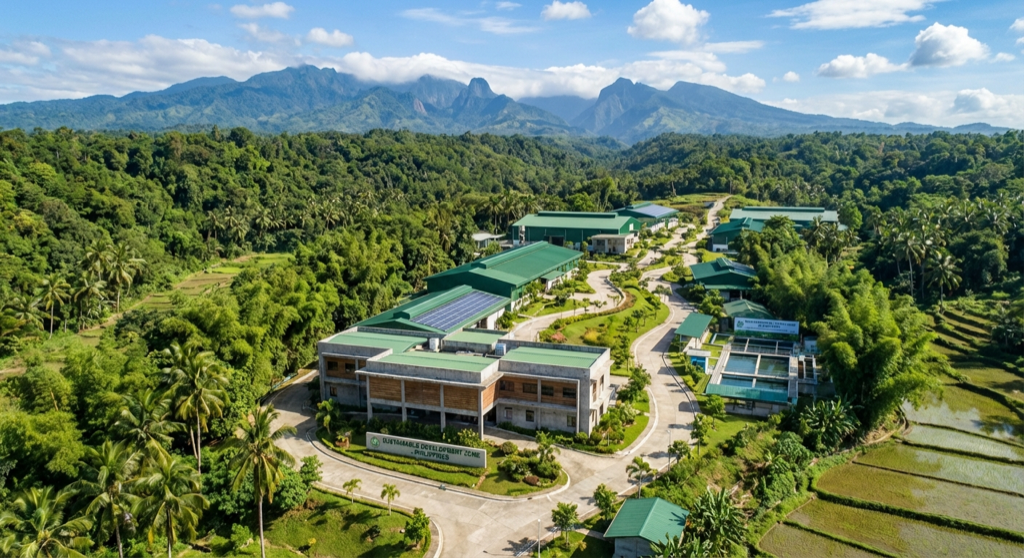
If you are a foreign investor planning to build a factory, develop a resort, operate a manufacturing plant, or launch any project with a physical footprint in the Philippines, environmental compliance is not something you deal with after construction — it is something you deal with before you break ground. Failure to secure the required environmental permits can result in project shutdowns, criminal penalties, deportation proceedings, and the permanent cancellation of your business registrations.
The Philippines has one of the most comprehensive environmental regulatory frameworks in Southeast Asia. At its center is Presidential Decree No. 1586, which established the Philippine Environmental Impact Statement System (PEISS) in 1978 and requires an Environmental Compliance Certificate (ECC) for projects that may significantly affect the environment. Around it sits a constellation of additional laws — the Clean Air Act, the Clean Water Act, the Toxic Substances Act, the Ecological Solid Waste Management Act, and the Extended Producer Responsibility Act — each imposing its own permitting requirements, compliance obligations, and penalties.
This guide walks foreign investors through the entire environmental compliance landscape: which permits you need, when you need them, how to obtain them, what they cost, and what happens if you fail to comply. If you are investing in the Philippines, this is essential reading.
I. The Environmental Compliance Certificate (ECC): The Gateway Permit
What Is an ECC?
The Environmental Compliance Certificate is the foundational environmental permit in the Philippines. Issued by the Department of Environment and Natural Resources (DENR) through its Environmental Management Bureau (EMB), the ECC certifies that a proposed project or undertaking will not cause significant negative environmental impact, or that the proponent has committed to specific measures to mitigate any such impact.
The ECC is not a mere formality. It is a pre-condition to obtaining other government permits — including building permits, business permits, and the operational permits required by the Bureau of Internal Revenue (BIR), the Securities and Exchange Commission (SEC), and local government units (LGUs). Without an ECC, your project cannot legally proceed.
The Legal Basis: Presidential Decree No. 1586
Presidential Decree No. 1586, signed on June 11, 1978, established the Philippine Environmental Impact Statement System. Section 4 of PD 1586 provides:
"No person, partnership or corporation shall undertake or operate any such declared environmentally critical project or area without first securing an Environmental Compliance Certificate issued by the President or his duly authorized representative."
The implementing rules for PD 1586 have been updated several times, with the most significant revision being DENR Administrative Order (DAO) No. 2003-30, which strengthened the EIS system and established the current procedural framework. This was further refined by EMB Memorandum Circular No. 2014-005, which revised the guidelines for coverage screening and standardized requirements under the PEISS.
Which Projects Require an ECC?
Not every business needs an ECC. The requirement depends on whether your project falls into one of two categories defined under Proclamation No. 2146 (1981) and the subsequent DENR issuances:
Category A — Environmentally Critical Projects (ECPs): These are projects that, by their nature, have significant potential to cause negative environmental impact regardless of where they are located. They include:
- Heavy industries (iron and steel mills, smelting plants, petroleum refineries)
- Resource-extractive industries (mining, quarrying, logging, fishpond development)
- Infrastructure projects (dams, power plants, reclamation projects, major roads and bridges)
- Golf course developments
- Industrial estates and export processing zones
- Major tourism developments (hotels with 50+ rooms, resorts over a certain land area)
For Category A projects, the proponent must prepare a full Environmental Impact Statement (EIS) — a comprehensive document that includes baseline environmental data, impact assessment, an environmental management plan (EMP), and the results of public consultations. The EIS is reviewed by the EMB Central Office or the relevant EMB Regional Office, depending on the project's scale.
Category B — Projects in Environmentally Critical Areas (ECAs): These are projects located in areas declared as environmentally sensitive, even if the projects themselves are not inherently high-impact. ECAs include:
- Areas declared as national parks, watershed reserves, wildlife sanctuaries, or mangrove forests
- Areas with slopes of 18% or more
- Areas identified as prime agricultural lands
- Recharged areas of aquifers
- Areas near water bodies classified for domestic or municipal water supply
- Coral reef areas, natural habitats of endangered species, and areas prone to natural hazards
For Category B projects, the requirements are generally less onerous than for Category A. Depending on the project size and type, the proponent may be required to submit an Initial Environmental Examination (IEE) — a simpler assessment document — rather than a full EIS.
Projects That Do Not Require an ECC
If your project is neither an ECP nor located in an ECA, you may instead apply for a Certificate of Non-Coverage (CNC). The CNC confirms that your project is outside the scope of the EIS system and does not require an ECC. This typically applies to small-scale commercial and service operations — offices, retail shops, restaurants in commercial zones, and similar low-impact businesses.
The CNC application is filed with the EMB Regional Office and is usually processed within 15 working days. There is no processing fee for CNC applications at most EMB offices.
The ECC Application Process
For projects that do require an ECC, the application process follows these general steps:
Step 1: Coverage Screening. Submit a project description to the EMB to determine whether your project requires an EIS, IEE, or qualifies for a CNC. The EMB will issue a Procedural Screening determination within 15 working days.
Step 2: Preparation of Environmental Assessment Documents. Depending on the screening result:
- For EIS-required projects: Engage an accredited Environmental Impact Assessment (EIA) consultant to prepare the full EIS document, including environmental baseline studies, impact analysis, the Environmental Management Plan, and a Social Acceptability report based on public consultations.
- For IEE-required projects: Prepare the IEE checklist and supporting documents, which may still require site-specific environmental data and mitigation commitments.
Step 3: Submission and Review. File the EIS or IEE with the appropriate EMB office. Category A projects are typically reviewed at the EMB Central Office in Quezon City; Category B projects are reviewed at the EMB Regional Office with jurisdiction over the project location.
Step 4: Technical Review and Public Participation. The EMB conducts a technical review and may require revisions. For EIS-level projects, a public hearing or scoping meeting may be required, and the EMB will establish an Environmental Investigation and Referral Committee (EIRC) or EIA Review Committee (EIARC) to evaluate the application.
Step 5: Issuance of the ECC. If the EMB is satisfied that the environmental assessment is adequate and the proposed mitigation measures are sufficient, it issues the ECC. The ECC includes specific conditions that the proponent must comply with throughout the project's lifecycle — from construction through operation and, in some cases, decommissioning.
ECC Processing Timelines and Fees
Under DAO 2003-30 and its revised procedural manual, the indicative processing timelines are:
- CNC applications: 15 working days
- IEE-based ECC applications: 45 working days from receipt of a complete application
- EIS-based ECC applications: 90–120 working days, depending on the complexity of the project and the need for additional studies or public hearings
Processing fees vary by project type and scale. As of the most recent EMB fee schedule, ECC application fees range from approximately ₱5,000 to ₱100,000, depending on project cost and category. Environmental monitoring fees and the Environmental Guarantee Fund (EGF) — a financial deposit that the proponent must post to ensure compliance — add to the total cost. The EGF amount is determined by the EMB based on the potential environmental risk of the project.
II. The Clean Air Act: Permits to Operate Air Emission Sources
Republic Act No. 8749 — The Philippine Clean Air Act of 1999
Republic Act No. 8749, enacted on June 23, 1999, established a comprehensive air quality management framework. For foreign investors operating manufacturing plants, power generation facilities, or any business with stationary air emission sources, compliance with the Clean Air Act is mandatory.
Key Permits Under RA 8749
Permit to Operate (PO): Any establishment that operates a stationary source of air pollution — including boilers, generators, furnaces, incinerators (where still permitted), and industrial processing equipment — must secure a Permit to Operate from the EMB. The PO is renewable annually and requires the submission of emissions test results showing compliance with the National Ambient Air Quality Standards and the National Emission Standards set under the Act.
Section 17 of RA 8749 requires that all operators of emission sources must register with the DENR and obtain either a PO or a permit exemption (for sources below the minimum threshold). The application is filed with the EMB Regional Office where the emission source is located.
Prohibited Acts and Penalties
The Clean Air Act imposes severe penalties for non-compliance:
- Section 45 (Fines for Violations): For actual exceedance of emission standards, the Pollution Adjudication Board (PAB) may impose a fine of not more than ₱100,000 for every day of violation until the source complies.
- Section 46 (Criminal Penalties): Violations of other provisions — including operating without a permit — carry fines of ₱10,000 to ₱100,000 and imprisonment of six months to six years, or both.
- Section 47 (Gross Violations): Knowingly causing air pollution resulting in widespread injury to persons, livestock, or property is punishable by imprisonment of six to ten years and fines of up to ₱500,000 per day of violation.
For foreign nationals, environmental violations can also trigger deportation proceedings under the Philippine Immigration Act, particularly if the violation involves willful or gross negligence.
III. The Clean Water Act: Discharge Permits and Wastewater Compliance
Republic Act No. 9275 — The Philippine Clean Water Act of 2004
Republic Act No. 9275 established a comprehensive water quality management framework and imposed strict obligations on any person or entity that discharges wastewater into water bodies or public sewerage systems.
Key Requirements
Discharge Permit: Under Section 13 of RA 9275, no person or entity shall discharge wastewater into any water body or land without first securing a Discharge Permit from the DENR. This applies to manufacturing plants, food processing facilities, hotels, hospitals, commercial laundries, and essentially any business that generates wastewater in volumes above household levels.
The Discharge Permit specifies:
- The allowable volume of discharge
- The effluent quality standards that the discharge must meet (typically including biochemical oxygen demand, total suspended solids, pH levels, oil and grease, and heavy metals, among others)
- Self-monitoring and reporting requirements
- The required treatment facilities
Wastewater Charge System: RA 9275 also established a wastewater charge system (Section 13), under which dischargers pay fees based on the volume and quality of their effluent. This creates a financial incentive to reduce pollution loads.
Penalties Under the Clean Water Act
The penalties under RA 9275 are among the harshest in Philippine environmental law:
- Administrative fines: The DENR Secretary, upon recommendation of the PAB, may impose fines of ₱10,000 to ₱200,000 for every day of violation. These fines increase by 10% every two years to account for inflation.
- Criminal penalties: Discharging prohibited substances into water bodies carries imprisonment of six years and one day to twelve years and a fine of ₱500,000 per day that the violation continues.
- Failure to clean up: If a discharge causes contamination of surface or marine water, the responsible party who fails to undertake cleanup faces imprisonment of six years and one day to twelve years and a fine of ₱500,000 per day of continued contamination or omission.
IV. Toxic Substances and Hazardous Waste: RA 6969
Republic Act No. 6969 — Toxic Substances and Hazardous and Nuclear Waste Control Act of 1990
Republic Act No. 6969 regulates the importation, manufacture, processing, sale, distribution, use, and disposal of chemical substances and mixtures that present unreasonable risk to public health or the environment. For foreign investors in manufacturing, chemicals, electronics, or any industry that uses or generates hazardous materials, RA 6969 compliance is critical.
Key Requirements for Foreign Investors
- Chemical Control Order (CCO) Compliance: Certain substances are subject to Chemical Control Orders issued by the DENR. If your business imports, uses, or manufactures any listed substance — including asbestos, cyanide compounds, mercury, lead, and polychlorinated biphenyls (PCBs) — you must comply with the specific CCO requirements, which may include usage limits, reporting obligations, and phase-out schedules.
- Hazardous Waste Registration: Any business that generates hazardous waste must register as a Hazardous Waste Generator with the EMB and obtain a Hazardous Waste Generator ID. This registration is required before you can legally transport or dispose of hazardous waste.
- Transport and Disposal: Hazardous waste must be transported only by DENR-accredited hazardous waste transporters and disposed of at DENR-accredited Treatment, Storage, and Disposal (TSD) facilities. The proponent must maintain a manifest system tracking hazardous waste from generation to final disposal.
Penalties Under RA 6969
Violations carry fines of ₱50,000 to ₱500,000 and imprisonment of six months to six years. For violations resulting in injury or death, the penalties increase to imprisonment of six years and one day to twelve years and fines of up to ₱500,000 per day.
V. Ecological Solid Waste Management: RA 9003
Republic Act No. 9003 — Ecological Solid Waste Management Act of 2000
Republic Act No. 9003 established a comprehensive solid waste management program and imposes obligations on all waste generators, including commercial and industrial establishments. While foreign investors often focus on the ECC and air/water permits, RA 9003 compliance is equally mandatory and frequently overlooked.
Key Obligations
- Waste Segregation: All commercial and industrial establishments must segregate waste at source into at least four categories: biodegradable, recyclable, residual, and special/hazardous waste. Failure to segregate is a prohibited act under Section 48 of the Act.
- Compliance with LGU Solid Waste Management Plans: Businesses must comply with the solid waste management ordinances of the LGU where they operate, including collection schedules, recycling requirements, and reporting obligations.
- Prohibition on Open Dumping and Incineration: RA 9003 prohibits open dumping of waste (Section 37) and the use of incineration for solid waste disposal (Section 20), except for specific exemptions granted under RA 8749 (the Clean Air Act).
Penalties
Fines under RA 9003 range from ₱300 to ₱1,000,000 depending on the severity of the violation. Imprisonment ranges from one day to six years. For repeat offenders, penalties are doubled.
VI. The Extended Producer Responsibility (EPR) Act: RA 11898
A New Obligation for Foreign Companies Using Plastic Packaging
Republic Act No. 11898, the Extended Producer Responsibility Act of 2022, amended RA 9003 and introduced a new compliance obligation for companies that use plastic packaging in the Philippines. This law is particularly important for foreign consumer goods companies, food and beverage manufacturers, and e-commerce businesses operating in the Philippine market.
Who Is Covered?
RA 11898 applies to "obliged enterprises" — defined as large enterprises engaged in the importation, manufacture, or sale of products using plastic packaging. If your company generates plastic packaging waste in the Philippines above the threshold set by the DENR, you are an obliged enterprise and must comply.
Key Requirements
- Plastic Footprint Audit: Obliged enterprises must conduct an annual audit of their plastic footprint — the total volume of plastic packaging they introduce into the Philippine market.
- Recovery Targets: Companies must recover a percentage of their plastic footprint each year. The recovery targets are phased: the initial target was set at 20% and increases progressively, reaching 80% by 2028.
- EPR Compliance Audit Report (ECAR): Obliged enterprises must submit an annual ECAR, certified by an independent third-party auditor, to the DENR by June 30 of each year. The first ECAR submission deadline was in 2024.
- EPR Programs: Companies may comply by establishing their own collection and recycling programs, joining a Producer Responsibility Organization (PRO), or purchasing plastic credits from accredited facilities.
Penalties for Non-Compliance
Failure to comply with EPR requirements can result in fines and, for repeat violations, suspension of business operations. The DENR has been progressively tightening enforcement since 2024.
VII. Environmental Permits Checklist for Foreign Investors
The following table summarizes the key environmental permits a foreign investor may need, depending on the nature of their project:
| Permit / Certificate | Governing Law | Issuing Agency | Who Needs It |
|---|---|---|---|
| Environmental Compliance Certificate (ECC) | PD 1586, DAO 2003-30 | DENR-EMB | All environmentally critical projects or projects in environmentally critical areas |
| Certificate of Non-Coverage (CNC) | PD 1586, EMB MC 2014-005 | DENR-EMB | Projects outside ECC coverage (confirmation of exemption) |
| Permit to Operate (Air Emission Source) | RA 8749 | DENR-EMB | Any establishment with stationary air emission sources |
| Discharge Permit (Wastewater) | RA 9275 | DENR-EMB | Any entity discharging wastewater into water bodies or sewerage systems |
| Hazardous Waste Generator ID | RA 6969 | DENR-EMB | Any business generating hazardous waste |
| EPR Compliance (ECAR) | RA 11898 | DENR | Large enterprises using plastic packaging |
VIII. Common Compliance Pitfalls for Foreign Investors
In our practice, we regularly encounter foreign investors who run into environmental compliance problems — often because they assumed the rules in the Philippines would mirror those in their home country, or because they relied on local partners who were unfamiliar with the requirements. The most common pitfalls include:
1. Commencing Construction Without an ECC
This is the single most common violation we see among foreign-backed projects. The investor secures SEC registration, obtains a building permit from the LGU (some LGUs, particularly in provinces, issue building permits without verifying ECC status), and begins construction — only to receive a Cease and Desist Order from the DENR months later. At that point, the project is halted and the proponent must retroactively apply for an ECC, which the EMB may or may not grant. If the project has already caused environmental damage, the ECC may be denied entirely.
2. Assuming the ECC Covers All Environmental Permits
The ECC is a project-level clearance. It does not substitute for the specific operational permits required under RA 8749 (air), RA 9275 (water), or RA 6969 (hazardous waste). We have seen manufacturing companies that diligently obtained an ECC but never applied for a Discharge Permit or Permit to Operate, only to face violations during the operational phase.
3. Ignoring LGU Environmental Ordinances
In addition to national-level permits, many LGUs in the Philippines have their own environmental ordinances — including waste management regulations, noise ordinances, tree-cutting restrictions, and zoning rules with environmental components. Foreign investors who comply with DENR requirements but ignore local ordinances can find their business permits denied at the LGU level.
4. Failing to Maintain Ongoing Compliance
Environmental compliance in the Philippines is not a one-time exercise. ECC conditions typically include requirements for:
- Self-Monitoring Reports (SMRs): Quarterly or semi-annual environmental monitoring reports submitted to the EMB
- Compliance Monitoring and Audit (CMA) inspections: Periodic site inspections conducted by the EMB to verify compliance with ECC conditions
- Multi-Partite Monitoring Team (MMT) participation: For major projects, the EMB may require the establishment of an MMT composed of representatives from the proponent, the LGU, affected communities, and the DENR
Failure to submit SMRs or to cooperate with CMA inspections can result in ECC suspension or cancellation.
5. Underestimating the EPR Act
Foreign consumer goods companies entering the Philippine market through importation or local manufacturing often overlook RA 11898. The EPR law is relatively new (2022), but enforcement is accelerating. If your company introduces significant volumes of plastic packaging into the Philippine market, you must register as an obliged enterprise and begin meeting recovery targets immediately.
IX. Environmental Compliance for PEZA-Registered Foreign Enterprises
Foreign investors registered with the Philippine Economic Zone Authority (PEZA) are not exempt from environmental requirements — but the process is streamlined. PEZA zones typically have an existing zone-level ECC that covers the general environmental impact of the economic zone. Individual locators within the zone may still need to secure their own ECCs or comply with zone-specific environmental management requirements, depending on the nature of their operations.
PEZA coordinates with the DENR-EMB on environmental compliance, and the zone administrator typically assists locators in navigating the permitting requirements. However, operational permits — including Discharge Permits and Permits to Operate — remain the responsibility of each individual locator. PEZA registration does not waive these obligations.
X. Penalties Summary: What Foreign Investors Risk for Non-Compliance
The following is a summary of the maximum penalties under each major environmental law:
| Law | Administrative Fine | Criminal Penalty | Other Sanctions |
|---|---|---|---|
| PD 1586 (EIS System) | Up to ₱50,000 per violation | Suspension or cancellation of ECC | Cease and Desist Order; project shutdown |
| RA 8749 (Clean Air) | Up to ₱100,000/day of violation | 6 months to 10 years imprisonment; fines up to ₱500,000/day | Closure of emission source |
| RA 9275 (Clean Water) | ₱10,000–₱200,000/day of violation | 6 years to 12 years imprisonment; fines up to ₱500,000/day | Revocation of Discharge Permit |
| RA 6969 (Toxic Substances) | ₱50,000–₱500,000 | 6 months to 12 years imprisonment | Confiscation and forfeiture of substances |
| RA 9003 (Solid Waste) | ₱300–₱1,000,000 | 1 day to 6 years imprisonment | Doubled penalties for repeat offenses |
For foreign nationals specifically, the consequences go beyond fines and imprisonment. Environmental violations constitute grounds for cancellation of work permits (AEP), revocation of investor visas (SIRV, 47(a)(2)), and deportation proceedings before the Bureau of Immigration. The DENR regularly coordinates with the BI on enforcement actions involving foreign-owned enterprises.
XI. Practical Recommendations for Foreign Investors
Based on our experience advising foreign companies on Philippine environmental compliance, we recommend the following approach:
1. Conduct environmental due diligence before site selection. Determine whether your proposed project site is located in an ECA. This affects both the type of ECC you need and the timeline for obtaining it. In some cases, a site in an ECA may not be suitable for your project at all.
2. Engage an accredited EIA consultant early. For EIS-level projects, the environmental assessment process can take 6–12 months from initial baseline studies to ECC issuance. Factor this into your project timeline from the beginning — not as an afterthought.
3. Budget for the Environmental Guarantee Fund. The EGF is a financial deposit that remains with the DENR for the life of the project. For large industrial projects, the EGF can be substantial. Include this in your financial projections.
4. Map all required operational permits at the outset. Do not assume the ECC is the only environmental permit you need. Work with your legal counsel to identify all applicable permits — air, water, hazardous waste, solid waste, and EPR — before you begin operations.
5. Establish a compliance monitoring system. Assign an environmental officer or engage an environmental consultancy to handle ongoing compliance — including SMR preparation, coordination with EMB inspectors, and tracking of permit renewal deadlines.
6. Keep updated on regulatory changes. Philippine environmental regulations are updated frequently through DENR Administrative Orders, EMB Memorandum Circulars, and legislative amendments. The EPR Act (RA 11898) is a recent example of a new law that created significant new obligations for businesses. Staying current is essential.
XII. Conclusion: Environmental Compliance Is Non-Negotiable
Environmental compliance in the Philippines is not a box-checking exercise — it is a substantive legal obligation backed by severe penalties, including imprisonment and deportation for foreign nationals. The regulatory framework is comprehensive, covering everything from project-level environmental assessments under PD 1586 to operational permits under the Clean Air Act and Clean Water Act, hazardous waste management under RA 6969, solid waste obligations under RA 9003, and the new EPR requirements under RA 11898.
For foreign investors, the critical takeaway is that environmental permitting should be integrated into your project planning from day one — not treated as a secondary concern after business registration and construction are underway. The cost of retroactive compliance is always higher than the cost of doing it right the first time, and in many cases, retroactive compliance is simply not possible.
At Tungol Tan & Fordan Campos, we advise foreign investors on the full spectrum of Philippine environmental compliance — from initial ECC applications to ongoing operational permit management and enforcement defense. If you are planning a project in the Philippines and need guidance on your environmental obligations, contact our team for a consultation.
This article is for general informational purposes only and does not constitute legal advice. Environmental compliance requirements vary by project type, location, and industry. For advice specific to your situation, consult with a qualified Philippine environmental law practitioner.
Related Articles
Foreign Investment in Philippine Renewable Energy: A Complete Legal Guide to 100% Ownership, Service Contracts, and Fiscal Incentives
The Philippines now allows 100% foreign ownership in solar, wind, hydro, and ocean energy projects. This comprehensive guide covers the legal basis under DOJ Opinion No. 21, DOE Circular No. DC2022-11-0034, the Revised Omnibus Guidelines, RA 9513 fiscal incentives, service contract requirements, and step-by-step entry strategies for foreign renewable energy investors.

Transfer Pricing Compliance for Foreign Companies in the Philippines: A Complete Legal Guide
Foreign companies with Philippine subsidiaries or branches must comply with strict transfer pricing rules. This comprehensive guide covers the arm's length principle, BIR documentation requirements, materiality thresholds, approved pricing methods, penalties, and advance pricing arrangements under Philippine law.

Annual Compliance Checklist for Foreign Companies in the Philippines
From SEC filings to BIR tax returns, here are the yearly deadlines and requirements every foreign-owned company in the Philippines must meet to stay in good standing.