Foreign Investment in Philippine Renewable Energy: A Complete Legal Guide to 100% Ownership, Service Contracts, and Fiscal Incentives
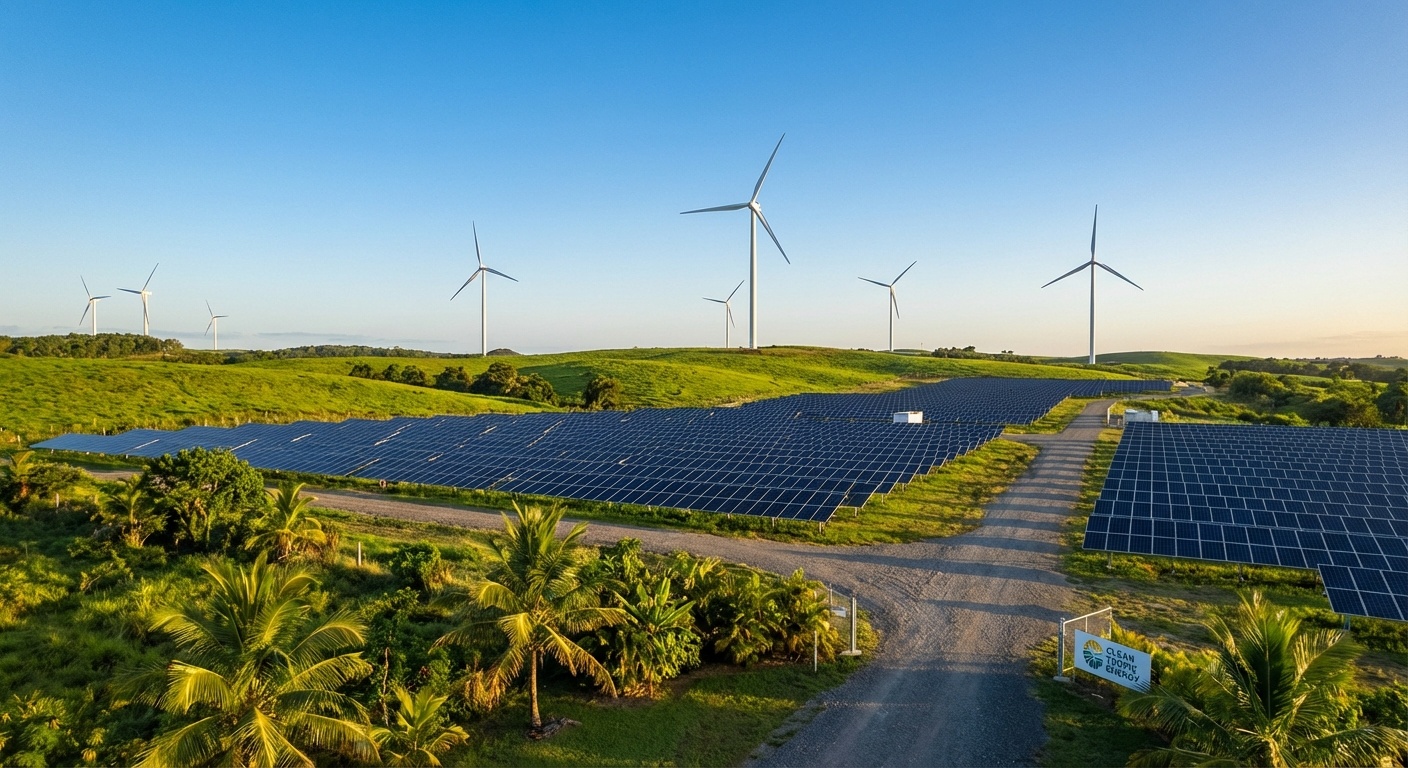
For decades, the Philippines was one of the most restrictive markets in Southeast Asia for foreign energy investors. The 1987 Constitution capped foreign participation in the exploration, development, and utilization of natural resources at 40%, and for most of the renewable energy sector's early growth, that cap applied without exception. Foreign developers could participate — but only as minority shareholders in Filipino-controlled corporations, or through complex financial or technical assistance agreements (FTAAs) negotiated directly with the President.
That changed in late 2022, when the Department of Justice and the Department of Energy issued a pair of landmark rulings that opened solar, wind, hydro, and ocean energy to 100% foreign ownership. The policy shift was formalized through DOE Department Circular No. DC2022-11-0034, and subsequently codified in the Revised Omnibus Guidelines issued in June 2024 (DOE DC2024-06-0018). As of February 2025, the DOE had awarded more than 1,400 renewable energy service contracts with a combined potential capacity of approximately 154 gigawatts — including, for the first time, contracts granted to wholly foreign-owned companies.
This guide provides a comprehensive legal analysis of the Philippine renewable energy investment framework as it now stands. We cover the constitutional basis for liberalization, the specific technologies open to foreign investors, the service contract system, the fiscal incentives available under Republic Act No. 9513 (the Renewable Energy Act of 2008), the practical steps required to enter the market, and the restrictions that still apply. If you are a foreign developer, fund, or corporation considering a renewable energy project in the Philippines, this is the legal roadmap you need.
I. The Constitutional Framework: Why Renewable Energy Was Restricted — and Why It No Longer Is
The 40% Foreign Equity Cap Under Article XII
The starting point for any discussion of foreign investment in Philippine natural resources is Section 2, Article XII of the 1987 Constitution, which provides:
"All lands of the public domain, waters, minerals, coal, petroleum, and other mineral oils, all forces of potential energy, fisheries, forests or timber, wildlife, flora and fauna, and other natural resources are owned by the State. With the exception of agricultural lands, all other natural resources shall not be alienated. The exploration, development, and utilization of natural resources shall be under the full control and supervision of the State. The State may directly undertake such activities, or it may enter into co-production, joint venture, or production-sharing agreements with Filipino citizens, or corporations or associations at least sixty per centum of whose capital is owned by such citizens."
For years, this provision was interpreted to mean that all energy resources — including solar, wind, and other renewables — were "natural resources" subject to the 60-40 Filipino-to-foreign ownership requirement. The original Implementing Rules and Regulations (IRR) of RA 9513 reflected this interpretation. Section 19(a) of the IRR required that applicants for Renewable Energy Service or Operating Contracts be "Filipino citizens, or if corporations, at least sixty percent (60%) of the capital of which is owned by Filipino citizens."
DOJ Opinion No. 21, Series of 2022: The Game-Changer
The legal landscape shifted fundamentally on September 29, 2022, when the Department of Justice issued Opinion No. 21, Series of 2022. In this landmark opinion, the DOJ concluded that solar, wind, hydro (surface water), and ocean or tidal energy are not "natural resources" within the meaning of Section 2, Article XII of the Constitution.
The DOJ's reasoning turned on a critical distinction: the Constitutional provision refers to resources that are depletable — minerals, coal, petroleum, timber, and similar finite assets that, once extracted, are gone. Solar radiation, wind, flowing surface water, and ocean currents, by contrast, are inexhaustible. They rely on kinetic rather than potential energy. The DOJ concluded that these renewable energy sources are fundamentally different in character from the natural resources contemplated by the framers of the 1987 Constitution, and that the 40% foreign equity limitation should therefore not apply to their exploration, development, and utilization.
This interpretation was not without precedent. Executive Order No. 30, Series of 2022 (issued by President Marcos Jr. on August 25, 2022) had already directed the DOJ to review the constitutional nationality requirements for renewable energy, signaling the administration's intent to liberalize the sector. The DOJ opinion provided the legal foundation for that liberalization.
What About Geothermal Energy?
It is critical to understand that geothermal energy was not included in the DOJ's liberalization opinion. Geothermal resources are heat extracted from beneath the Earth's surface — they are a subsurface mineral resource that is depletable in the sense that a specific geothermal reservoir can be exhausted over time. The DOJ considered geothermal energy to fall within the scope of "natural resources" under Article XII, and the 60-40 Filipino ownership requirement continues to apply.
The Revised Omnibus Guidelines (DOE DC2024-06-0018) confirm this distinction explicitly. Section 5 provides that applicants for Geothermal Service Contracts (GSCs) must be Filipino citizens, or corporations with at least 60% Filipino capitalization. Foreign investors may still participate in geothermal projects — but only as minority stakeholders in Filipino-controlled entities, or potentially through FTAAs under Section 2, Article XII of the Constitution (though FTAAs for geothermal are rare in practice).
II. DOE Circular No. DC2022-11-0034: Implementing the Liberalization
Following the DOJ opinion, the Department of Energy moved swiftly to implement the policy change. On November 15, 2022, the DOE issued Department Circular No. DC2022-11-0034, which amended the Implementing Rules and Regulations of RA 9513 to remove the Filipino ownership requirements for the exploration, development, and utilization of the following renewable energy resources:
- Solar energy
- Wind energy
- Hydro energy (surface water — run-of-river and impounding hydropower)
- Ocean or tidal energy
The circular took effect on December 8, 2022, fifteen days after its publication in two newspapers of general circulation and filing with the UP Law Center — Office of the National Administrative Register (ONAR).
After DC2022-11-0034, foreign nationals and 100% foreign-owned corporations became eligible, for the first time, to apply for and be awarded Renewable Energy Service Contracts (RESCs) and Renewable Energy Operating Contracts (REOCs) for the four technologies listed above — without any Filipino equity partner.
III. The Revised Omnibus Guidelines (DOE DC2024-06-0018)
On June 4, 2024, the DOE issued the Revised Omnibus Guidelines Governing the Award and Administration of Renewable Energy Contracts and the Registration of Renewable Energy Developers through Department Circular No. DC2024-06-0018. This replaced the previous guidelines (DC2019-10-0013) and integrated all policy developments since 2019, including the foreign ownership liberalization.
Key Provisions Relevant to Foreign Investors
1. Open Nationality for RE Contracts (Except Geothermal)
Under the Revised Omnibus Guidelines, any person, whether Filipino or foreigner, may apply for Renewable Energy Contracts. The applicant may be a Filipino and/or foreign citizen, or a Filipino- and/or foreign-owned corporation or association that is authorized by its articles or deed of incorporation to engage in the development and utilization of renewable energy.
However, an applicant whose project involves ancillary activities reserved to Filipino citizens — such as land ownership, lease of public land, or appropriation of water directly from the source — must still comply with the nationality requirements under applicable laws. In practice, this means that a 100% foreign-owned RE developer can hold the service contract but may need to lease private land (rather than own it) and secure water rights through compliant structures.
2. Certificate of Authority (COA) — Pre-Development Phase
The Revised Omnibus Guidelines introduced a new instrument called the Certificate of Authority (COA). Before the formal 25-year RE Contract term begins, the DOE now issues a COA that allows developers to conduct reconnaissance, pre-feasibility activities, and secure the necessary permits, certifications, and tenurial instruments.
The COA validity periods vary by technology:
| Technology | COA Validity |
|---|---|
| Biomass, Geothermal, Hydropower, Ocean, Onshore Wind, Offshore Wind | 3 years |
| Floating Solar | 2 years |
| Land-based Solar | 1 year |
The COA period is not extendible. Foreign investors should factor this into their project timelines — particularly for offshore wind and hydropower projects that require extensive environmental and social impact assessments.
3. Enhanced EVOSS System — Online Application Processing
All RE Contract applications are now processed through the Energy Virtual One-Stop Shop (EVOSS) System, an online platform that allows developers to submit applications, upload documentation, track application status, and receive updates in real time. The DOE resumed acceptance of applications through EVOSS on November 25, 2024, following a five-month enhancement period.
For foreign investors, EVOSS significantly reduces transaction costs and bureaucratic opacity. Applications, proof of payment, and supporting documents can be submitted remotely — a practical advantage for foreign developers who may not yet have a physical presence in the Philippines.
4. Streamlined Assignment Rules
The Revised Omnibus Guidelines relax the rules on assignment of RE Contracts. An RE Contract may be assigned to an Affiliate of the developer at any time and for any number of times during its term. Assignments to non-affiliates are permitted once during the Pre-Development Stage (after two years from effectivity), subject to DOE approval. This provides foreign investors with exit flexibility and the ability to restructure project holdings within their corporate group.
IV. Fiscal Incentives Under RA 9513 (The Renewable Energy Act of 2008)
One of the most compelling reasons for foreign investment in Philippine renewable energy — beyond the liberalized ownership rules — is the robust package of fiscal incentives provided under Republic Act No. 9513, also known as the Renewable Energy Act of 2008. These incentives are available to all registered RE Developers, regardless of nationality, provided they comply with the DOE's registration and certification requirements.
A. Income Tax Holiday (ITH) — Section 15(a)
RE Developers are entitled to an income tax holiday for the first seven (7) years of commercial operations. During this period, the developer pays zero income tax on income derived from RE operations. This is a powerful incentive, particularly for capital-intensive projects like offshore wind and large-scale solar, where the first seven years of operations often coincide with the period of highest debt service.
Additional investments in the same project are entitled to additional ITH on the income attributable to that investment. The discovery and development of new RE resources is treated as a new investment and entitles the developer to a fresh seven-year ITH package.
B. Reduced Corporate Income Tax — Section 15(e)
After the seven-year ITH period expires, RE Developers pay a corporate income tax rate of only 10% on net taxable income. This is a significant reduction from the standard corporate income tax rate, which — as amended by the CREATE Act (RA 11534) — is 25% for most corporations (or 20% for domestic corporations with net taxable income not exceeding PHP 5 million and total assets not exceeding PHP 100 million). The preferential 10% rate applies for the remaining term of the RE Contract.
C. Duty-Free Importation — Section 15(b)
Within the first ten (10) years from the issuance of a Certificate of Registration, RE Developers may import machinery, equipment, and materials for RE projects free of import duties. Under the Revised Omnibus Guidelines, this process has been streamlined — developers of certain project types may now receive their Certificate of Registration upon contract signing or proof of financial closing, enabling them to avail of duty-free importation incentives earlier in the development cycle.
D. Special Realty Tax Rate — Section 15(c)
RE Developers are entitled to a special realty tax rate of not more than 1.5% of the original cost of equipment and facilities used in the RE project. This is computed on original cost rather than fair market value, providing significant savings on what can be a substantial ongoing expense for large-scale installations.
E. Zero-Rated Value-Added Tax (VAT) — Section 15(f)
The sale of fuel or power generated from RE sources is subject to zero percent (0%) VAT. This means that RE Developers do not charge output VAT on their electricity sales, and they can claim input VAT credits on their purchases of goods and services related to RE operations. For foreign developers who may initially have more input VAT (from construction and equipment procurement) than output VAT, this can result in significant VAT refund claims.
F. Net Operating Loss Carry-Over (NOLCO) — Section 15(d)
Net operating losses incurred in any of the first three (3) years of commercial operations may be carried over as a deduction from gross income for the next seven (7) consecutive years immediately following the year of such loss. This extended NOLCO period (compared to the standard three-year carry-over under the NIRC) helps ensure that RE projects, which often operate at a loss during their early years, can offset those losses against future income.
G. Tax Exemption on Carbon Credits — Section 15(h)
All proceeds from the sale of carbon emission credits by RE Developers are exempt from any and all taxes. As carbon markets continue to develop in the Asia-Pacific region, this exemption adds an additional revenue stream that is entirely tax-free.
H. Tax Credit on Domestic Capital Equipment — Section 15(g)
RE Developers who purchase capital equipment and services from domestic manufacturers are entitled to a tax credit equivalent to 100% of the value of the VAT and customs duties that would have been paid had the equipment been imported. This incentive encourages local procurement while ensuring that developers are not penalized for sourcing domestically.
Important Note: CREATE MORE Act Interaction
The CREATE MORE Act (RA 12066), signed into law in November 2024, modified the fiscal incentive framework administered by the Fiscal Incentives Review Board (FIRB). RE Developers registered with the Board of Investments (BOI) under the Strategic Investment Priority Plan (SIPP) may be entitled to additional or alternative incentives. However, RE incentives under RA 9513 are administered primarily through the DOE, and the specific incentives enumerated in Section 15 of RA 9513 remain available. Developers should work with legal counsel to determine the optimal incentive structure — whether under RA 9513, the CREATE MORE Act, or a combination of both — based on their specific project parameters.
V. The Renewable Energy Service Contract System
Unlike many jurisdictions where renewable energy development is governed primarily by permitting and zoning, the Philippines operates a service contract system. Under this framework, the State retains ownership of the energy resource, and developers operate under a contract with the government — specifically, the DOE — that grants them the exclusive right to explore, develop, and utilize the RE resource within a defined contract area.
Types of RE Contracts
The Revised Omnibus Guidelines recognize two primary types of RE Contracts:
- Renewable Energy Service Contract (RESC): Covers the exploration, development, and utilization of RE resources. This is the standard contract type for most RE projects.
- Renewable Energy Operating Contract (REOC): Covers the operation and utilization of existing RE facilities. This is less common and typically applies to projects that have already completed development.
Contract Duration
RE Contracts have a term of up to 25 years, renewable for another 25 years under the same terms and conditions, subject to compliance with the contract terms. The contract term begins from the effectivity of the RE Contract — not from the COA period, which precedes it.
Application Process for Foreign Investors
The application process under the Revised Omnibus Guidelines follows these general stages:
- Letter of Intent (LOI): The developer submits an LOI to the DOE through the EVOSS System, identifying the proposed contract area and the RE technology to be developed.
- Pre-Application Requirements: The DOE evaluates the LOI and, if the area is available, issues a notification to proceed. The developer then submits pre-application requirements, including proof of technical and financial capability.
- Application and Evaluation: The developer submits a formal application with all required documents, including a work program, environmental compliance commitment, and proof of community consultation (where applicable).
- Award of COA: If the application is approved, the DOE issues a Certificate of Authority allowing the developer to conduct pre-development activities.
- Award of RE Contract: Upon completion of pre-development milestones and submission of required deliverables, the DOE awards the RE Contract.
- Registration as RE Developer: The developer is registered with the DOE, which entitles it to avail of fiscal and non-fiscal incentives under RA 9513.
Financial and Technical Requirements
Foreign applicants must demonstrate:
- Technical capability: Proven track record in RE development, or technical partnerships with experienced developers. The DOE evaluates the applicant's organizational structure, management team, and technical personnel.
- Financial capability: Audited financial statements, bank certifications, or proof of committed financing sufficient to undertake the proposed project. The specific financial threshold varies by project scale and technology.
- Legal standing: If the applicant is a foreign corporation, it must be duly organized under the laws of its country of origin and authorized to do business in the Philippines. This typically requires registration with the Securities and Exchange Commission (SEC) as a foreign corporation licensed to do business in the Philippines, or incorporation of a Philippine subsidiary.
VI. Remaining Restrictions and Practical Considerations for Foreign Investors
While the ownership liberalization is transformative, foreign RE investors must still navigate several important restrictions and practical considerations.
A. Land Ownership Restrictions
The most significant ongoing restriction is that foreigners cannot own land in the Philippines. This is a constitutional prohibition under Section 7, Article XII of the 1987 Constitution, which limits land ownership to Filipino citizens and corporations at least 60% Filipino-owned.
For RE projects that require significant land area — particularly utility-scale solar and onshore wind — foreign developers must secure land through one of the following mechanisms:
- Long-term lease: Under RA 12252 (signed into law in 2025), foreigners may now enter into lease agreements for private land for up to 99 years, a significant extension from the previous 50-year limit under the Investor's Lease Act (RA 7652). This provides long-term tenure security for large-scale RE projects.
- Lease of public land: The lease of alienable and disposable public lands is restricted to Filipino citizens or corporations at least 60% Filipino-owned. Foreign developers may need to partner with a Filipino-controlled entity to secure public land leases.
- Usufruct or right-of-way agreements: These provide the right to use land without owning it, and can be structured to comply with foreign ownership restrictions.
B. Water Rights
For hydropower projects, the appropriation of water directly from natural sources is regulated under the Water Code of the Philippines (PD 1067). While the RE Contract grants the right to develop the hydro resource, the developer must separately obtain a water permit from the National Water Resources Board (NWRB). Foreign-owned developers should confirm that their water permit applications are processed under the current liberalized framework, and should be prepared for the possibility that the NWRB may apply additional scrutiny to applications from non-Filipino entities.
C. Environmental Compliance
All RE projects require an Environmental Compliance Certificate (ECC) from the Department of Environment and Natural Resources (DENR) before construction can commence. The ECC process involves the preparation and submission of an Environmental Impact Assessment (EIA) or Initial Environmental Examination (IEE), depending on the project's scale and potential environmental impact. Offshore wind projects, in particular, are subject to extensive environmental review, including assessments of impact on marine biodiversity, fishing communities, and shipping lanes.
D. Indigenous Peoples' Consent (FPIC)
Projects located within or affecting ancestral domains require the Free, Prior, and Informed Consent (FPIC) of affected indigenous communities, obtained through a process administered by the National Commission on Indigenous Peoples (NCIP). The FPIC process can take 6 to 18 months and involves extensive community consultation. Foreign developers should conduct early due diligence on whether their proposed project area overlaps with any ancestral domain claims.
E. Grid Connection and Off-Take
Generating renewable energy is only half the equation — selling it requires grid connection and a bankable off-take arrangement. The key mechanisms include:
- Green Energy Auction Program (GEAP): The DOE conducts periodic Green Energy Auctions (GEAs) in which RE Developers bid to supply electricity to distribution utilities at pre-determined reserve prices set by the Energy Regulatory Commission (ERC). The GEA provides a competitive, transparent process for securing off-take contracts. As of 2025, the DOE has conducted multiple GEA rounds, with GEA-3 awarding over 6,000 MW of RE capacity in June 2025.
- Bilateral Power Supply Agreements (PSAs): RE Developers may negotiate directly with distribution utilities, electric cooperatives, or contestable customers for the sale of electricity. PSAs must be filed with and approved by the ERC.
- Wholesale Electricity Spot Market (WESM): Developers may sell electricity on the spot market, though this exposes them to price volatility. WESM participation requires registration with the Independent Electricity Market Operator of the Philippines (IEMOP).
- Green Energy Option Program (GEOP): End-users consuming at least 100 kW can source their electricity directly from RE generators through the GEOP, administered by the ERC.
F. Local Government Permits
Beyond national-level approvals, RE projects require numerous local government unit (LGU) permits, including building permits, locational clearances, and business permits. Foreign developers should engage local counsel and community relations specialists early in the process, as LGU requirements vary significantly by municipality and province.
VII. Corporate Structure Options for Foreign RE Investors
Foreign investors entering the Philippine RE market typically choose one of the following structures:
Option 1: Philippine Subsidiary (100% Foreign-Owned)
The most straightforward structure is to incorporate a Philippine subsidiary under the Revised Corporation Code (RA 11232). Since the liberalization, this subsidiary can be 100% foreign-owned for solar, wind, hydro, and ocean energy projects. The subsidiary registers with the SEC, obtains local business permits, and applies for the RE Contract in its own name.
Advantages: Full operational control; clear legal standing for contracts and permits; ability to avail of all RA 9513 incentives; limited liability protection.
Considerations: Minimum paid-up capital requirements for foreign-owned domestic corporations (generally USD 200,000, or USD 100,000 if the company uses advanced technology or has at least 50 Filipino employees); subject to Philippine corporate governance requirements.
Option 2: Branch Office of Foreign Corporation
A foreign corporation may register a branch office with the SEC to conduct business in the Philippines. The branch operates as an extension of the foreign parent and can hold RE Contracts directly.
Advantages: No need to form a separate legal entity; may be simpler for companies already incorporated abroad.
Considerations: Higher minimum inward remittance requirement (USD 200,000); the foreign parent has unlimited liability for the branch's obligations; some lenders and off-takers may prefer contracting with a Philippine-incorporated entity.
Option 3: Joint Venture with Filipino Partner
Although no longer required for solar, wind, hydro, and ocean projects, some foreign investors may still choose to partner with a Filipino company for strategic reasons — local knowledge, community relationships, existing land tenure, or political risk mitigation.
Advantages: Access to local expertise and relationships; potential access to public land leases; shared risk.
Considerations: Requires careful structuring of governance rights, profit-sharing, and dispute resolution mechanisms; potential misalignment of interests over the project's multi-decade life.
VIII. The Green Energy Auction Program: A Gateway for Foreign Developers
The Green Energy Auction Program (GEAP) is one of the most important market mechanisms for foreign RE investors. Established under DOE Department Circular No. DC2021-11-0036, the GEAP provides a competitive, transparent process through which the DOE procures RE capacity to meet the country's Renewable Portfolio Standards (RPS) targets.
Under the RPS, electricity suppliers — including distribution utilities and electric cooperatives — are mandated to source an increasing proportion of their electricity from RE sources. The GEAP matches this demand with supply by auctioning off capacity allocations at reserve prices set by the ERC.
The DOE has conducted multiple GEA rounds:
- GEA-1 (2022): The first round awarded approximately 2,000 MW of RE capacity across solar, wind, biomass, and hydropower technologies.
- GEA-2 (2023-2024): Expanded the auctioned capacity and technologies.
- GEA-3 (June 2025): Awarded over 6,000 MW of RE capacity, marking a significant scale-up.
- GEA-4 and GEA-5 (2025-2026): Additional rounds have been conducted or announced, reflecting the DOE's aggressive procurement schedule.
For foreign developers, winning a GEA allocation provides a bankable off-take arrangement — the awarded developer enters into a Power Supply Agreement with distribution utilities at the auction clearing price, providing revenue certainty that is critical for project financing.
IX. Offshore Wind: The Next Frontier
The Philippines has an estimated offshore wind potential of 178 GW, according to the World Bank's assessment. The DOE has designated several offshore wind development areas in the waters off Luzon, Visayas, and Mindanao, and has awarded service contracts for offshore wind projects to both domestic and foreign developers.
Offshore wind represents a particularly attractive opportunity for foreign investors because:
- The technology and project management expertise required for offshore wind is concentrated among a relatively small number of global developers, most of which are foreign.
- The capital requirements are enormous — a typical offshore wind project costs USD 2-5 billion — which favors well-capitalized international players.
- The 100% foreign ownership allowance eliminates the need to find a Filipino majority partner for what is inherently an international endeavor.
However, offshore wind projects face unique regulatory challenges in the Philippines, including the need for maritime zone approvals from the Philippine Navy and the Maritime Industry Authority (MARINA), fisheries impact assessments, and coordination with the Department of Transportation for shipping lane considerations.
X. Tax Compliance Obligations for Foreign RE Developers
While the incentives are generous, foreign RE Developers must comply with the full range of Philippine tax obligations:
- BIR Registration: All RE Developers must register with the Bureau of Internal Revenue (BIR) and obtain a Tax Identification Number (TIN).
- Annual Income Tax Returns: Even during the ITH period, developers must file annual income tax returns showing exempt income.
- Withholding Tax Compliance: Developers must withhold and remit taxes on payments to employees, contractors, and suppliers as required under the NIRC.
- Transfer Pricing Documentation: Foreign-owned RE subsidiaries transacting with related parties abroad must comply with the transfer pricing documentation requirements under Revenue Regulations No. 2-2013.
- BIR Revenue Regulation No. 7-2022: This regulation, issued on June 22, 2022, provides the specific policies and guidelines for availing of the tax incentive provisions of RA 9513. Developers must secure a Certificate of Endorsement from the DOE prior to the first year of availment of the 10% corporate income tax rate.
XI. Practical Step-by-Step Checklist for Foreign RE Investors
Based on the current legal framework, here is a practical checklist for a foreign company seeking to invest in renewable energy in the Philippines:
- Engage Philippine legal counsel experienced in energy and foreign investment law.
- Determine corporate structure: Incorporate a Philippine subsidiary or register a branch office with the SEC. Ensure the articles of incorporation authorize engagement in RE development.
- Register with the BOI (if seeking additional CREATE MORE Act incentives) and/or with the DOE as an RE Developer.
- Identify project site and technology: Conduct preliminary resource assessment to confirm the technical feasibility of the project.
- Submit Letter of Intent to the DOE through the EVOSS System, identifying the proposed contract area.
- Secure Certificate of Authority (COA) from the DOE to conduct pre-development activities.
- Obtain Environmental Compliance Certificate (ECC) from the DENR.
- Secure FPIC from indigenous communities (if applicable).
- Negotiate land access: Execute long-term lease agreements (up to 99 years under RA 12252) or usufruct arrangements for the project site.
- Obtain RE Contract from the DOE upon completion of pre-development milestones.
- Register as RE Developer with the DOE to avail of fiscal incentives under RA 9513.
- Secure off-take arrangement: Participate in a Green Energy Auction or negotiate bilateral PSAs with distribution utilities.
- Obtain local government permits: Building permits, locational clearance, business permits from the LGU.
- Commence construction and proceed to commercial operations.
XII. Conclusion
The Philippines has undergone a remarkable transformation in its approach to foreign investment in renewable energy. In less than three years, it moved from a regime that required 60% Filipino ownership of virtually all RE projects to one that permits 100% foreign ownership in solar, wind, hydro, and ocean energy. The legal foundation — DOJ Opinion No. 21, DOE Circular No. DC2022-11-0034, and the Revised Omnibus Guidelines — is robust, and the fiscal incentives under RA 9513 are among the most generous in Southeast Asia.
The opportunity is real and large. The Philippines needs massive investment in renewable energy to meet its targets of 35% RE in the generation mix by 2030 and 50% by 2040. The country has excellent solar and wind resources, a large and growing electricity demand, and a government that has signaled — through both policy and action — that foreign capital is welcome.
But the regulatory environment remains complex. Land restrictions, environmental compliance, indigenous peoples' rights, grid connection, and local government permitting all require careful navigation. Foreign investors who approach the Philippine RE market with thorough legal preparation, experienced local counsel, and a realistic understanding of the regulatory timeline will find a market that rewards patience with significant returns.
At TTFC Law, we advise foreign renewable energy developers on corporate structuring, DOE service contract applications, SEC registration, land tenure arrangements, tax incentive optimization, and regulatory compliance throughout the project lifecycle. If you are considering a renewable energy investment in the Philippines, contact us for a consultation.
Related Articles

Transfer Pricing Compliance for Foreign Companies in the Philippines: A Complete Legal Guide
Foreign companies with Philippine subsidiaries or branches must comply with strict transfer pricing rules. This comprehensive guide covers the arm's length principle, BIR documentation requirements, materiality thresholds, approved pricing methods, penalties, and advance pricing arrangements under Philippine law.

Annual Compliance Checklist for Foreign Companies in the Philippines
From SEC filings to BIR tax returns, here are the yearly deadlines and requirements every foreign-owned company in the Philippines must meet to stay in good standing.

Can a Foreigner Run an E-Commerce Business in the Philippines? FAQ
From ownership rules to the new DTI Trustmark, here are the most common questions foreigners ask about launching an online business in the Philippines.